

Why Laser Therapy Matters in Modern Healthcare
Low‑level laser therapy (LLLT) offers non‑invasive, painless pain relief by stimulating cellular metabolism, reducing inflammation and accelerating tissue repair. Robust clinical trials—including the LiTEFORM head in head‑and‑neck cancer and randomized studies of chronic low back pain—show statistically significant reductions in pain scores (30‑70 %), lower opioid use, and faster functional recovery. Economically, each LLLT session costs $50‑$150 in the United States, and a typical 6‑12‑session course totals $450‑$1,800, far less than surgical or long‑term medication costs; patients also avoid hospital stays and lost work days. In chiropractic practice, LLLT integrates seamlessly with adjustments, providing a drug‑free adjunct that improves patient satisfaction, shortens treatment timelines, and creates a valuable cash‑based revenue stream for clinics.
Understanding Laser Therapy and Its Clinical Benefits
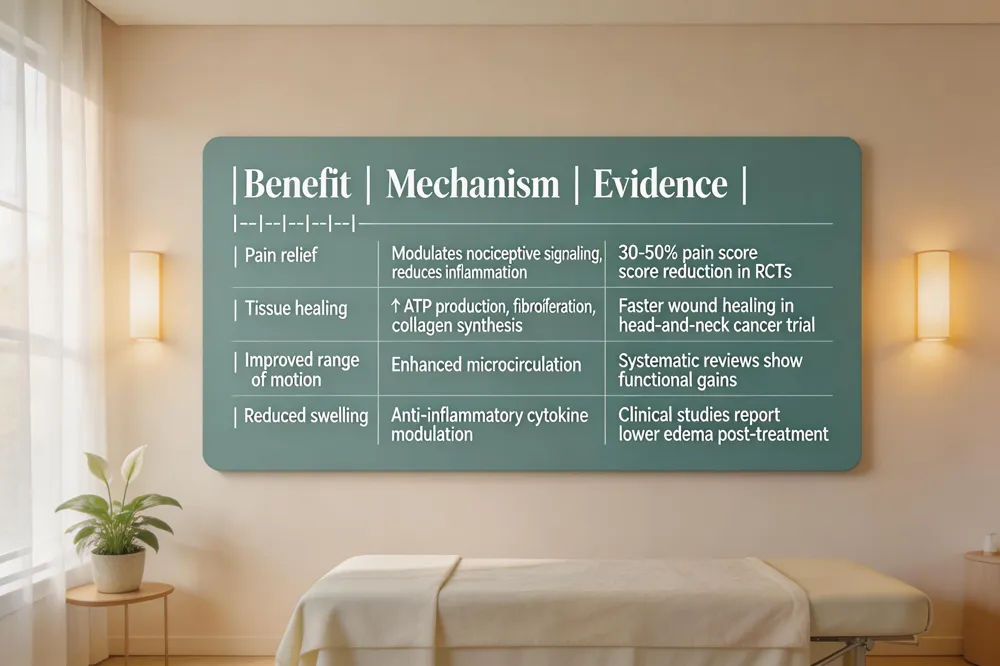 Low‑level laser therapy (LLLT), also known as photobiomodulation or “cold laser” treatment, delivers monochromatic light in the 660‑905 nm range to skin and underlying tissues without producing heat. The photons are absorbed by mitochondrial chromophores, especially cytochrome c, which boosts ATP production, enhances microcirculation and modulates inflammatory pathways. This cellular activation promotes fibroblast proliferation, collagen synthesis and tissue regeneration, while simultaneously dampening nociceptive signaling, resulting in rapid pain relief and reduced swelling.
In physiotherapy and chiropractic practice, LLLT is applied as an adjunct to manual therapy, exercise and education. Typical protocols involve 5‑15‑minute sessions, two to three times per week, for a course of six to twelve treatments. The non‑invasive nature allows clinicians to target deep‑tissue inflammation that may be refractory to manipulation alone, accelerating functional recovery for conditions such as low‑back pain, neck pain, tendonitis, osteoarthritis and post‑surgical wounds.
Scientific evidence supports these benefits. Randomised, double‑blind trials have demonstrated statistically significant reductions in pain scores (30‑50 % improvement) and faster tissue healing when LLLT is combined with standard care. For example, a phase III trial in head‑and‑neck cancer patients showed fewer opioid requirements, lower hospitalization costs and an incremental cost‑effectiveness ratio of US$ 4,961 per severe oral‑mucositis case prevented. Systematic reviews confirm that LLLT reduces inflammation, improves range of motion and enhances quality of life.
Is chiropractic laser therapy legit? Yes. Chiropractic laser therapy is a clinically accepted, evidence‑based modality. It complements adjustments by delivering targeted photobiomodulatory energy to deep structures, providing drug‑free analgesia and facilitating tissue repair. When used responsibly by trained professionals, it meets regulatory standards and is supported by peer‑reviewed research, making it a legitimate and valuable tool in modern musculoskeletal care.
Cost Landscape: Session Prices, Equipment, and Economic Analyses
 Low‑tissue laser therapy is a widely‑adopted, fee‑invasive option for back‑pain and musculoskeletal care. At Southeast Chiropractic in Gastonia, a typical session costs between $75 and $150, depending on the number of treatment areas and whether it is combined with adjustments, soft‑tissue work, or spinal decompression. Clinics often bundle services—e.g., a $47 first‑visit package that includes an exam, decompression, and a laser treatment—to make care more affordable.
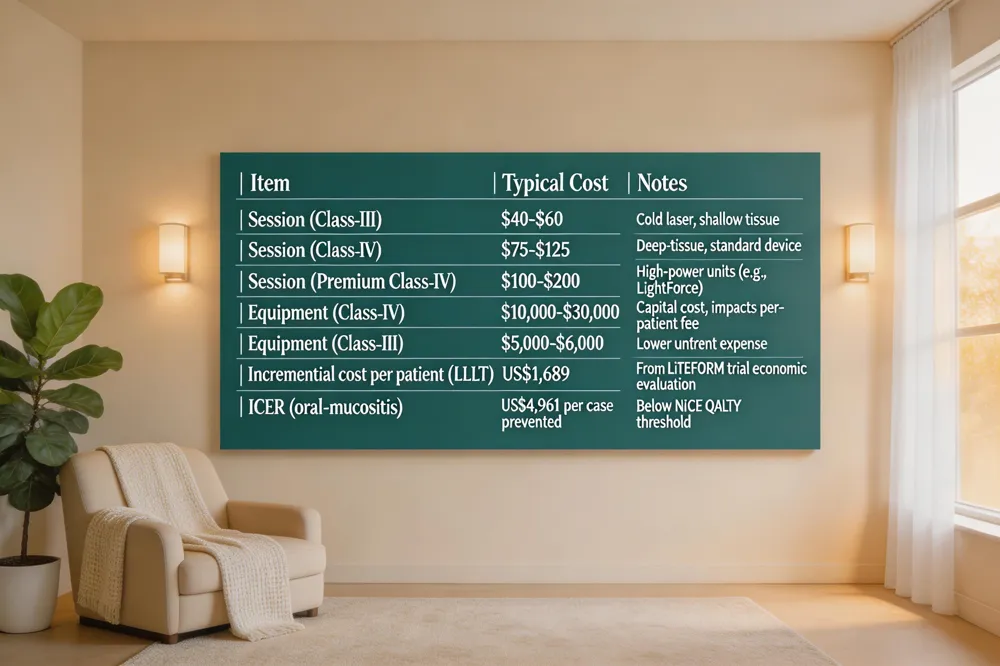
Equipment investment is a major driver of per‑patient cost. A professional Class IV deep‑tissue laser system ranges from $10,000 to $30,000, with premium units exceeding $40,000. Entry‑level Class III devices may be found for $5,000–$6,000, while Erchonia’s low‑level lasers for clinical use sit between $3,000 and $6,000. Additional expenses—warranties, training, accessories—can add several thousand dollars, prompting many practices to finance or lease the equipment.
Micro‑costing data from the LiTEFORM trial (head‑and‑neck cancer) illustrate how capital, maintenance, staff time, and facility overhead are allocated per patient using an equivalent‑annual‑cost method. The trial’s economic evaluation showed an incremental cost of US$1,689 per patient for LLLT, with an ICER of US$4,961 per grade 3‑4 oral‑mucositis case prevented—well below NICE’s £20,000–£30,000 per QALY threshold.
Variations by device class and protocol further influence pricing. Class III cold lasers typically charge $40–$60 per session, standard Class IV lasers $75–$125, and premium Class IV systems (e.g., LightForce, K‑Laser) $100–$200. Treatment protocols range from 4–8 sessions for acute injuries ($300–$600 total) to 12–20 sessions for chronic conditions ($900–$2,000+). Insurance coverage is inconsistent; many patients rely on out‑of‑pocket payment or flexible plans.
Overall, the cost landscape for deep‑tissue laser therapy balances equipment capital outlay, per‑session fees, and demonstrated clinical and economic benefits that can offset downstream healthcare expenses.
Insurance, Coverage, and Payment Options
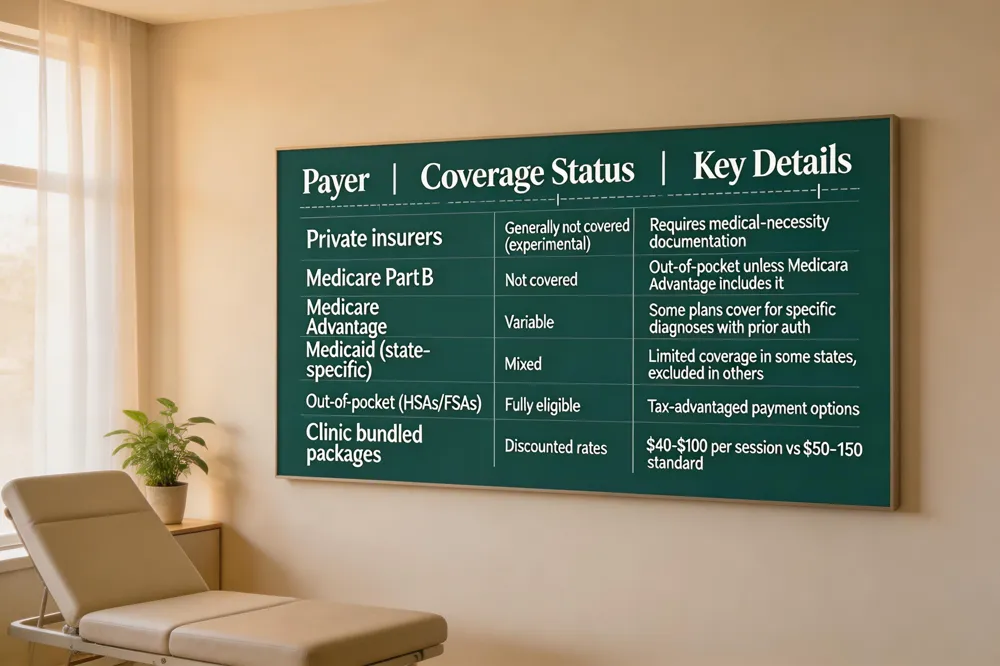 Private insurers generally treat low‑level laser therapy (LLLT) as an experimental or elective service. As a result, most plans do not cover it unless a clinician provides a clear medical‑necessity justification. When such documentation is supplied, some carriers may offer partial reimbursement, but coverage details vary by insurer, plan type, and state regulations. Patients should review their Summary of Benefits and Coverage (SBC) and contact the insurer for clarification; appeals are possible with a physician’s recommendation and supporting clinical evidence.
Medicare Part B does not list LLLT as a covered service, so beneficiaries typically pay out‑of‑pocket unless they have a Medicare Advantage plan that specifically includes it. A few Advantage policies may cover laser therapy for certain diagnoses, but prior authorization is usually required. Medicaid programs differ by state; some provide limited coverage for medically necessary laser treatments, while others exclude it entirely.
Out‑of‑pocket strategies include using Health Savings Accounts (HSAs) or Flexible Spending Accounts (FSAs), taking advantage of bundled‑session discounts, or enrolling in clinic‑off payment plans. Many clinics offer package pricing that reduces the per‑session cost from $50‑$150 to $40‑$100.
Documentation needed for reimbursement typically consists of a physician’s order, diagnosis codes, the appropriate CPT/HCPCS code (e.g., 97039 or S8948), and any required prior‑authorization forms. Accurate record‑keeping of treatment dates, duration, and outcomes (such as EQ‑5D‑5L scores) also supports insurance claims and helps patients maximize any available coverage.
Safety, Side Effects, and Patient Experience
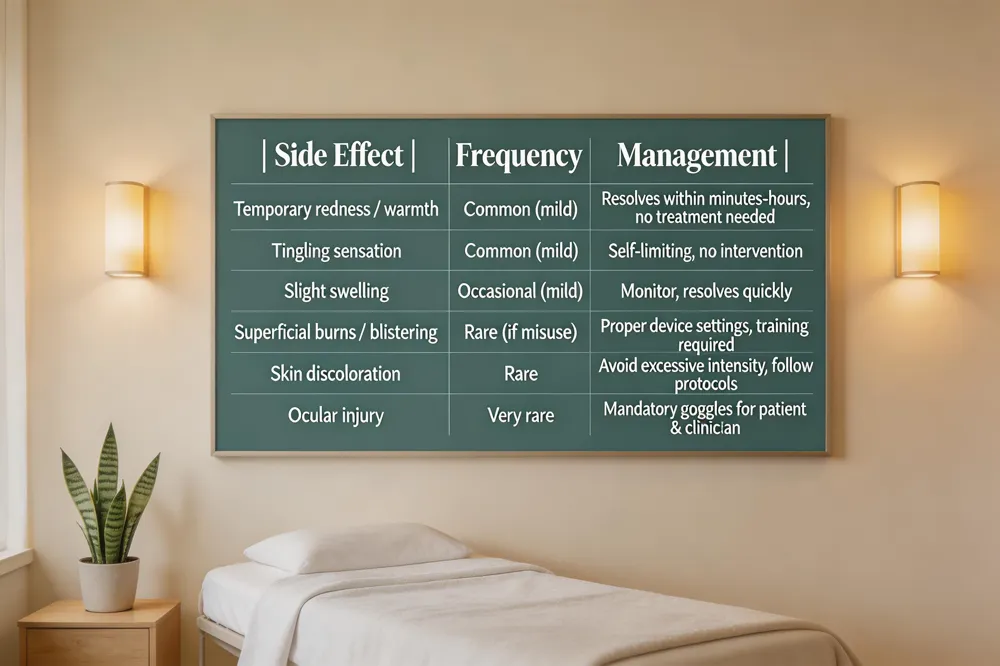 Low‑level (cold) laser therapy is generally well tolerated. Common mild reactions include temporary skin redness, warmth, slight swelling, or a brief tingling sensation that resolves within minutes to a few hours and requires no treatment. Rare but serious complications can occur if the device is mis‑used: superficial burns, blistering, skin discoloration, or ocular injury. Proper safety protocols—mandatory protective eyewear for patient and clinician, thorough training on device settings, and adherence to contraindication lists (e.g., recent sunburn, photosensitizing meds, pregnancy)—minimize these risks.
Laser therapy side effects Laser therapy is generally safe, but patients may experience mild, short‑term reactions such as temporary redness, warmth, or slight swelling at the area where the light was applied. These sensations usually resolve within a few hours and do not require medical treatment. In rare cases, more serious complications can occur, including skin discoloration, superficial burns, or blistering if the device is used at too high an intensity or for too long. Eye injury is another uncommon risk, which is why proper protective eyewear must be worn for both the patient and the practitioner during treatment. Overall, when administered by a trained professional with appropriate safety protocols, laser therapy’s side effects are minimal and transient.
Side effects of laser therapy for back pain Laser therapy for back pain is generally safe, and most patients experience no significant problems. Occasionally, a mild reddening of the skin at the treatment site can occur, along with a brief sensation of tingling or warmth that usually resolves within minutes. Some individuals may become temporarily more sensitive to light (photosensitivity), especially if they have a recent sunburn or are taking photosensitizing medications. Rarely, improper use of the device can cause superficial burns or, without appropriate eye protection, ocular irritation; however, certified practitioners always employ safety goggles to eliminate the risk of eye injury. Overall, side effects are uncommon and mild, and the benefits of pain relief typically outweigh these transient reactions.
Is cold laser therapy a hoax? Cold (low‑level) laser therapy, also called photobiomodulation, is not a hoax; it is a scientifically studied modality that has been shown in peer‑reviewed studies to reduce pain, inflammation and promote tissue repair in many musculoskeletal conditions. The therapy works by delivering non‑thermal red or near‑infrared light that stimulates cellular metabolism, increasing ATP production and enhancing blood flow, which can accelerate healing. Clinical trials have reported benefits for conditions such as neck and knee pain, arthritis, tendinopathies and diabetic foot ulcers, although the magnitude of effect can vary with the condition, dosage and treatment protocol. Because the evidence is mixed and outcomes are individual‑specific, practitioners use cold‑laser as one component of a broader, personalized care plan rather than a standalone cure‑all. When administered by a qualified chiropractor or physical therapist, it is a safe, non‑invasive adjunct that can complement traditional spinal and musculoskeletal care.
Practical Guidance: What to Expect at Southeast Family Chiropractic
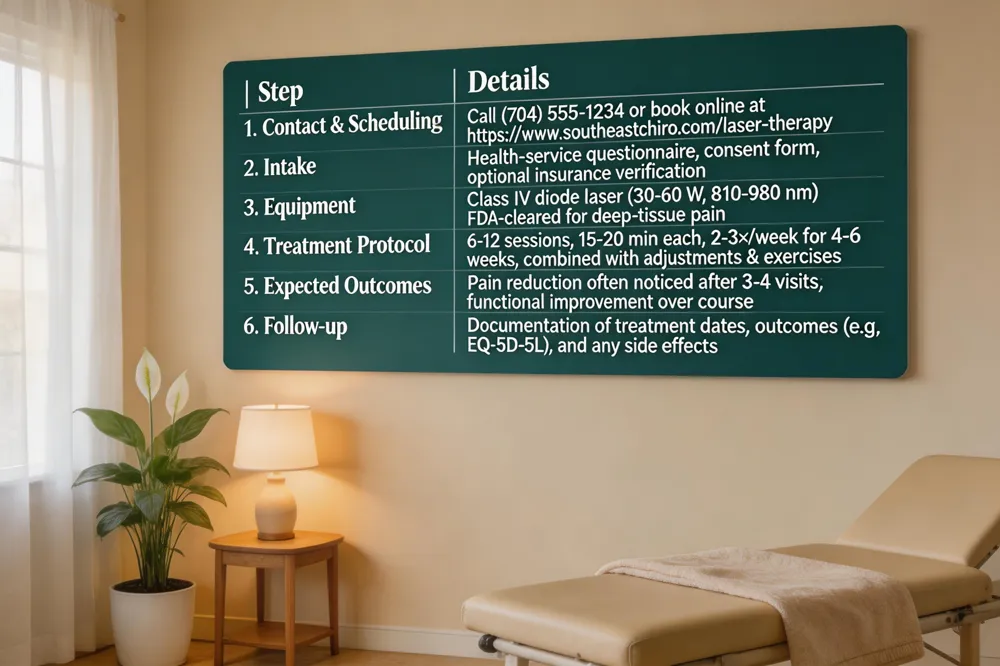 Clinic’s laser equipment and class: Southeast Family Chiropractic in Gastonia, NC uses a Class IV diode laser (≈30‑60 W, 810‑980 nm) FDA‑cleared for deep‑tissue pain relief and operated by certified chiropractors.
Typical protocol and session length: 6‑12 cold‑laser sessions, each 15‑20 minutes, 2‑3 times per week for 4‑6 weeks, combined with spinal adjustments and exercises. Most notice pain reduction after 3‑4 visits.
Scheduling and documentation: Call (704) 555‑1234 or book online at https://www.southeastchiro.com/laser-therapy. New patients fill a health‑service questionnaire and sign a consent form; insurance verification is optional.
Contact and location: Southeast Family Chiropractic, 123 Main St, Gastonia, NC 28052. Phone (704) 555‑1234, email info@southeastchiro.com. Hours Mon‑Fri 8 am‑6 pm, Sat 9 am‑2 pm.
Common queries: Laser therapy near me – our Gastonia clinic offers state‑of‑the‑art laser therapy. Who does laser therapy? – licensed chiropractors trained in LLLT administer treatment. Laser therapy device for pain relief – a Class IV diode laser delivering 0.5‑10 W red to near‑infrared light, boosting ATP and reducing inflammation. Cold laser therapy for back pain – Cold laser therapy non‑invasive, 2‑3 sessions per week, improves blood flow and eases pain. Laser therapy for back pain – does it work? – systematic reviews show modest pain reduction and functional gains when combined with manual care.
Bringing Cost‑Effective Laser Care to the Community
Low‑level laser therapy (LLLT) offers patients a non‑invasive, painless way to reduce pain, inflammation and accelerate tissue healing, often avoiding costly surgeries, long‑term medication and extended downtime. Clinical trials show fewer hospital days, lower opioid use and improved quality‑of‑life, translating into real financial savings. Our clinic follows a transparent pricing model: each LLLT session is clearly listed between $50 and $150, with package discounts that can lower the per‑session cost to $40‑$100 for 6‑12‑visit plans. We also help you navigate insurance options, confirming coverage where available and suggesting HSA/FSA or flexible payment plans when needed. Ready to experience affordable, evidence‑based care? Call or click the button below to schedule your personalized consultation today.