Introduction
Prenatal chiropractic care is a gentle, drug‑free approach that aims to keep the spine and pelvis in optimal alignment as a woman’s body changes during pregnancy. Certified practitioners—often holding DACCP, CACCP, or Webster Certification—use low‑force adjustments and pregnancy‑specific tables to avoid pressure on the abdomen while addressing lumbar lordosis, pelvic tilt, and ligament laxity caused by relaxin. Safety is a primary concern; reputable organizations such as the American Pregnancy Association and the International Chiropractic Pediatric Association affirm that adjustments are safe for most pregnancies when contraindications (e.g., placenta previa, severe preeclampsia, active bleeding) are screened out and the practitioner coordinates with the obstetrician. By supporting nervous‑system function and creating more intrauterine space, chiropractic care complements conventional prenatal care, helping reduce back pain, improve fetal positioning, and potentially shorten labor without replacing medical monitoring or medication.
Safety, Professional Standards, and Evidence
 Is chiropractic safe during pregnancy?
Yes. Prenatal‑trained chiropractors use low‑force, abdomen‑friendly adjustments on pregnancy tables. Studies report relief of back, neck, and pelvic pain with no fetal risk. Always discuss care with your obstetrician.
Is chiropractic safe during pregnancy?
Yes. Prenatal‑trained chiropractors use low‑force, abdomen‑friendly adjustments on pregnancy tables. Studies report relief of back, neck, and pelvic pain with no fetal risk. Always discuss care with your obstetrician.
ACOG stance on chiropractic care: ACOG notes back pain is common in pregnancy and that qualified chiropractic care is a safe, drug‑free option. The organization encourages collaboration with trained chiropractors who employ gentle, pregnancy‑adjusted techniques.
Pros and cons of chiropractic care during pregnancy: Benefits include reduced musculoskeletal pain, better pelvic balance, improved fetal positioning, shorter labor, and lower cesarean risk. Limitations are modest evidence and the need to avoid aggressive thrusts early in pregnancy.
What does a prenatal chiropractor do? They assess postural shifts, ligament laxity, and pelvic tilt, then apply gentle side‑lying adjustments to restore spinal and pelvic alignment. They also teach posture, exercises, and tips for a smoother labor.
Trimester‑Specific Care and Timing
 Chiropractor while pregnant 1st trimester
Visiting a prenatal‑trained chiropractor in the first trimester is safe when gentle, low‑force techniques and pregnancy‑friendly tables are used. Early adjustments can relieve low‑back pain, nausea‑related tension, and pelvic strain from relaxin and postural shifts. Monthly visits focus on spinal alignment, pelvic balance and nervous‑system support; choose a provider with DACCP, CACCP, or Webster certification and keep your obstetrician informed.
Chiropractor while pregnant 1st trimester
Visiting a prenatal‑trained chiropractor in the first trimester is safe when gentle, low‑force techniques and pregnancy‑friendly tables are used. Early adjustments can relieve low‑back pain, nausea‑related tension, and pelvic strain from relaxin and postural shifts. Monthly visits focus on spinal alignment, pelvic balance and nervous‑system support; choose a provider with DACCP, CACCP, or Webster certification and keep your obstetrician informed.
Chiropractor while pregnant 2nd trimester In the second trimester, adjustments continue to ease hip, pelvic, and back discomfort as the uterus expands. The Webster Technique may increase intra‑uterine space and promote head‑down fetal positioning. Regular monthly care improves posture and can shorten labor.
Chiropractor while pregnant 3rd trimester Third‑trimester care remains safe with side‑lying positioning and specialized tables. Adjustments ease lower‑back and sciatica pain and support optimal fetal positioning; frequency may rise to 1‑2 visits per month.
When to stop or pause care If complications such as placenta previa, bleeding, pre‑eclampsia, or preterm‑labor risk develop, pause care until after delivery. Otherwise, continue through labor and transition to post‑partum care.
Frequency of Visits and Starting Early
 Prenatal chiropractic care is safe throughout pregnancy when performed by a trained practitioner using low‑force, pregnancy‑specific tables. Most women begin care in the first trimester—ideally by weeks 8‑12—to address early nerve irritation, nausea, and lumbar strain. During this stage a visit every 2‑4 weeks establishes a neurological baseline and eases discomfort. As hormonal relaxin loosens ligaments and the pelvis endures greater stress in the second and third trimesters, many chiropractors shift to bi‑weekly or weekly appointments, especially if back, pelvic or sciatica symptoms arise. If pain is minimal, monthly visits may suffice; persistent aches warrant more frequent adjustments. The schedule is individualized, reflecting symptom severity, pre‑existing conditions, and how the nervous system responds, always coordinating with the obstetrician to ensure a smoother, healthier labor.
Maternal and Fetal Benefits
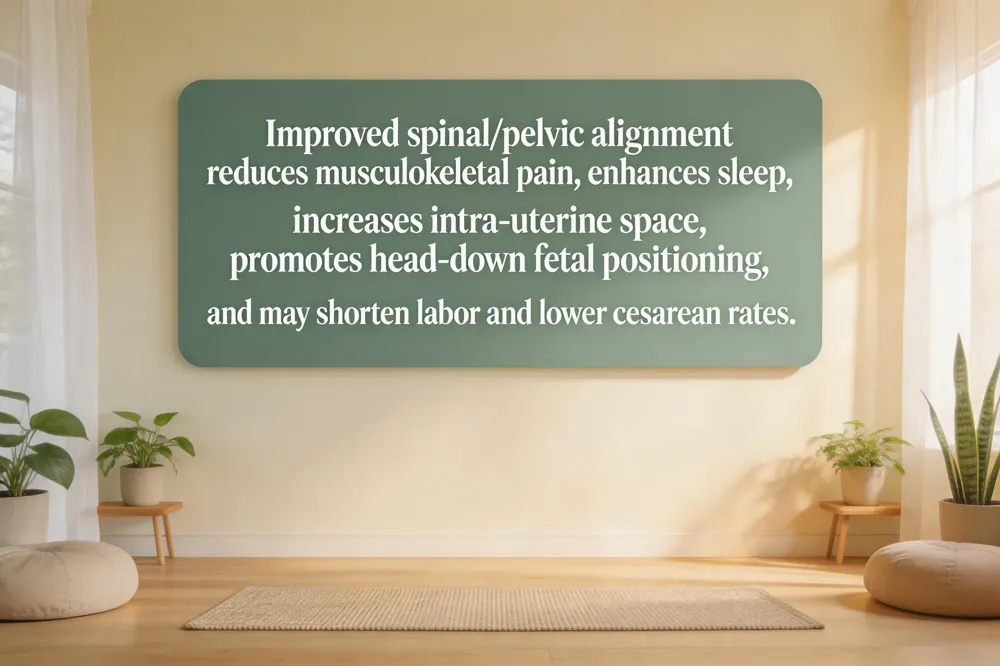 What are the benefits of prenatal chiropractic care? Aligning spine and pelvis reduces nerve stress, eases back, neck, and joint pain, and lessens nausea and sleep disturbances. Better pelvic balance creates more intra‑uterine space, encouraging head‑down fetal positioning and lowering breech risk. Regular care often shortens labor and cuts cesarean rates.
Benefits of chiropractic care during pregnancy Proper alignment eases musculoskeletal discomfort and improves sleep quality. Pelvic balance promotes optimal fetal placement, decreasing breech presentations and facilitating smoother delivery. Reduced pain and improved posture support maternal well‑being.
Why go to a chiropractor when pregnant? Hormonal ligament laxity and shifted gravity cause low‑back and pelvic pain; gentle adjustments restore alignment, with 84 % reporting relief. Maintaining pelvic balance gives the baby room to turn, reducing cesarean likelihood and back labor.
Chiropractic and pregnancy research Studies show chiropractic is safe, with up to 90 % feeling better after treatment. The Webster Technique has reported 82‑92 % success turning breech babies. Larger trials are needed, but evidence supports pain reduction, better fetal positioning, and shorter labor.
Techniques, Success Rates, and Practical Details
 The Webster Technique is a low‑force, sacrum‑focused adjustment that corrects sacral subluxations and sacroiliac misalignments, creating more intra‑uterine space and helping the baby turn to a head‑down position. Prenatal chiropractic adjustments are performed on pregnancy‑specific tables or side‑lying, using gentle thrusts that avoid abdominal pressure. They relieve low‑back, hip, pelvic and sciatica pain and support nervous‑system health for a smoother delivery. To find a qualified practitioner, seek chiropractors with DACCP, CACCP, or ICPA‑Webster certification; these credentials are usually listed online. Most major insurers cover prenatal chiropractic when CPT codes 98940‑98942 are used, though pre‑authorization may be required. Chiropractors safely treat low‑back pain, sciatica, sacroiliac dysfunction, pubic‑symphyseal pain, and round‑ligament strain. During visits avoid high‑velocity thrusts on the abdomen, flat‑back positioning after the first trimester, and any modality involving radiation or aggressive deep‑tissue work near the pelvis.
Conclusion
Chiropractic care is safe for pregnant women when performed by a practitioner with prenatal training, and research consistently shows it can relieve back, neck and pelvic pain, improve fetal positioning, shorten labor and lower the likelihood of cesarean delivery. Gentle, low‑force adjustments using pregnancy‑specific tables avoid abdominal pressure while supporting nervous‑system function, which can also reduce nausea, improve sleep and boost overall well‑being. Expectant mothers are encouraged to choose chiropractors who hold certifications such as DACCP, CACCP, or Webster Certification, ensuring expertise in pelvic balance and the Webster Technique. Southeast Family Chiropractic welcomes you to experience these benefits in a compassionate, drug‑free environment. Schedule a consultation today and let us help you enjoy a healthier, more comfortable pregnancy journey. Our team tailors each visit to your trimester stage.