Why Movement Beats Medication
Walking, stationary cycling, swimming or elliptical training keeps synovial fluid circulating, delivering nutrients to cartilage and reducing inflammation without loading joint (NHS, Healthline, Cleveland Clinic). Chiropractic care can enhance these benefits by correcting alignment and providing feedback that supports movement patterns (Healthline, AARP). The program rests on three core principles: (1) exercises must be pain‑free; any sharp or worsening discomfort signals the need to stop and seek professional advice (NHS, AAOS). (2) Gradual progression—start with 2‑3 repetitions, add 1‑2 reps every few days, and build to two sets of 15 (NHS). (3) Consistency—perform the routine 4‑5 times weekly, using movement snacks to maintain strength and range of motion (Healthline).
Start Smart: Gentle Mobility and Pain‑Free Stretching
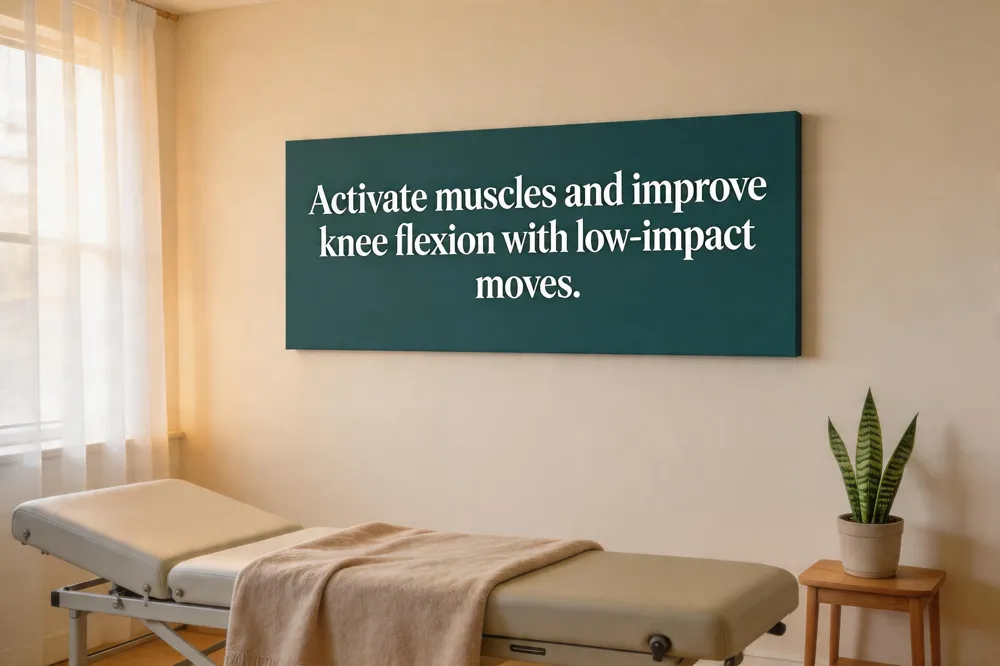 Begin with low‑impact, range‑of‑motion moves that keep the joint pain while promoting blood flow. Heel slides, quad sets, straight‑leg raises and seated marching can be performed 10‑12 times per set, 2‑3 sets daily, to activate the quadriceps and improve knee flexion. Add calf raises (standing or seated) to engage the gastrocnemius‑soleus complex, which supports ankle‑knee alignment. Follow each strengthening block with static stretches held 20‑30 seconds—hamstring, quadriceps, and IT‑band stretches—repeated 2‑3 times per leg to release tight tissues that pull on the knee.
Knee pain exercises at home – Gentle mobility (Heel slides, quad sets, straight‑leg raises, seated marching) reduces pain and restores motion without joint loading. Complement with calf raises and 20‑30 second hamstring, quad, and IT‑band stretches. Progress to wall‑ squats, one‑leg stands, and side‑lying leg lifts, aiming for 10‑12 reps per set and 2‑3 daily repetitions. Consistency between chiropractic visits can markedly lessen discomfort and regain function.
Knee pain exercises to avoid – Skip deep squats or lunges beyond a 90‑degree knee bend, high‑impact jumps, prolonged hard‑surface standing, rapid weighted leg extensions, and sudden twisting pivots while inflamed, as these overload the joint and may worsen symptoms.
Building Strength: Core and Hip Support
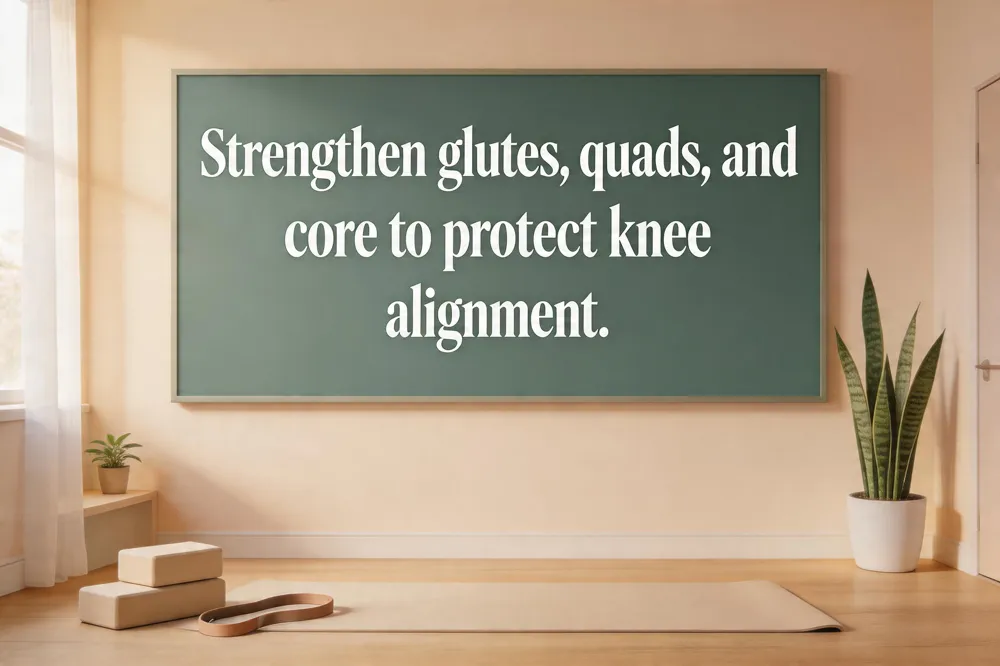 Begin each session with a 5‑10‑minute warm‑up (walking or stationary cycling) to increase circulation. Follow with gentle stretches – a standing quadriceps stretch and a supine hamstring stretch held 30‑60 seconds each – to improve range of motion. For hip stability, perform clamshells, bridges, and side‑lying hip abductions; these activate the gluteus medius and muscles that control knee alignment. Quadriceps endurance can be built with wall sits, mini‑squats, and heel raises, keeping knee in a position. Start with 2‑3 repetitions per movement, then progress every few days by adding 1‑2 reps until you reach two sets of 8‑15 reps. Pain should stay within a 0‑5/10 rating; if it exceeds this, reduce intensity or rest.
Physiotherapy exercise for knee pain – warm‑up, stretch, then hip‑strengthening (clamshells), quadriceps activation (short‑arc quad, seated extensions), and hamstring curls 2‑3 times weekly.
5 knee strengthening exercises – quad sets, straight‑leg raises, side‑lying hip abductions, mini‑squats, heel raises.
#1 mistake for bad knees – prolonged inactivity, which weakens supportive muscles and adds joint load, leading to pain and degeneration.
Quick Relief Techniques: Ice, Elevation, and Compression
 When knee pain flares, a fast three‑step protocol can blunt the ache while you prepare for longer‑term rehab.
30‑second ice‑pack method – Wrap a reusable ice pack (or a bag of frozen peas) in a thin towel and press it onto the painful knee for about 30 seconds. Cold causes vasoconstriction, numbing pain and limiting swelling.
Elevating the leg with a breathable wrap – While the ice is on, place the lower leg on a pillow so the knee is above heart level. This promotes fluid drainage. Secure a light, breathable compression bandage over the joint to keep the cold in place without restricting circulation.
Acupressure points ST35 and ST36 – Gently press the “Calf’s Nose” (ST35) on the lower leg, just above the ankle, and the “Three Mile” (ST36) point four finger‑breadths below the kneecap on the shin. Hold each point for 20‑30 seconds to add a soothing neuromodulatory effect.
How to relieve knee pain in 30 seconds – Apply the ice pack, elevate the leg, and add the compression wrap in a single, fluid motion; the combined cold, drainage, and gentle pressure can dull pain within half a minute.
Fastest way to relieve knee pain – Follow the ice‑elevate‑compress sequence, then perform a brief pain‑free heel slide or hamstring stretch, and finish with a 20‑second press on ST35/ST36. This layered approach quickly reduces inflammation, restores modest mobility, and primes the joint for the next phase of therapeutic exercise.
Natural Anti‑Inflammatory Strategies
 Rest, elevation, and ice are the first line for acute knee pain: keep the joint elevated, apply an ice pack for 15‑20 minutes several times a day, and after 48 hours introduce a warm compress to loosen stiff muscles. Gentle low‑impact activity (5‑10 minutes of walking or stationary cycling) followed by stretching of the calf, quadriceps, and hamstrings improves circulation and synovial fluid flow, supporting cartilage health. Soaking the knee in an Epsom‑salt bath allows magnesium to relax surrounding tissue and reduce inflammation. An anti‑inflammatory diet—rich in berries, leafy greens, fatty fish, walnuts, flaxseed, and spices such as turmeric and ginger—provides antioxidants and omega‑3s that curb joint swelling. Weight loss of even 5 % cuts knee load by ~40 % enhances the benefits of exercise. Combining these home remedies with regular chiropractic adjustments and a structured strengthening program (straight‑leg raises, wall sits, hip abductions) can markedly lessen pain, improve range of motion, and protect knee cartilage without surgery.
Advanced Non‑Surgical Options
 Low‑level laser (cold) therapy and extracorporeal shockwave therapy are emerging, non‑invasive modalities that deliver light or acoustic energy into the knee to reduce inflammation, stimulate cellular repair and improve circulation. Typically delivered in 8‑30 short sessions, they are painless, drug‑free and have minimal side‑effects, making them attractive for osteoarthritis, tendinitis or post‑injury discomfort.
Hydrotherapy and aquatic aerobic exercise use buoyancy to off‑load up to 90 % of body weight, allowing full‑range movements with minimal joint stress. Warm water (92‑98 °F) also soothes inflamed tissues, while gentle resistance builds quadriceps, hamstrings and calf strength, enhancing stability without pain.
Weight‑loss reduces knee joint loading dramatically—each pound lost cuts compressive force by roughly eight pounds, translating to a 30‑40 % reduction in stress for overweight patients. This mechanical relief amplifies the benefits of all exercise‑based programs.
New treatment for knee pain without surgery: Low‑level laser and shockwave therapy provide drug‑free, pain‑relieving options that promote tissue healing without surgery.
Best single exercise for knee pain: A properly performed air or half‑squat emphasizes alignment, strengthens the quadriceps, glutes and hamstrings, and teaches correct knee tracking.
Best exercise for painful knees: Water aerobics—walking, jogging or leg lifts in waist‑deep, warm water—offers resistance with near‑zero impact, making it ideal for restoring knee function while minimizing discomfort.
Putting It All Together: A Sample 6‑Week Program with Visual Guides
 Weekly schedule blends mobility, strength, cardio and recovery. Days 1‑3 focus on gentle range‑of‑motion (heel slides, quad sets, seated marching) and cardio (5‑10 min stationary bike). Days 4‑6 add strengthening (straight‑leg raises, wall sits, mini‑squats) and hip‑stability work (clamshells, side‑leg raises. Repeat the cycle for six weeks, resting one day per week.
Progressive repetition starts with 2‑3 reps per movement, performed several times daily. After a few days increase to 1‑2 reps each session, aiming for two sets of 8‑15 reps by week 3–4, then three sets if tolerated.
Our guide shows step‑by‑step photos for heel slides, quad sets, straight‑leg raises, seated marching and wall sits. Visit southeastchiro.com/knee‑exercises for gallery and tips. Contact Gastonia office for help.
Your Path to Pain‑Free Knees Starts Today
Begin each day with a warm‑up—5‑10 minutes of low‑impact activity such as stationary cycling—then rotate through low‑impact strengthening moves like straight‑leg raises, wall sits, and side‑leg raises. Pair this routine with a diet rich in omega‑3 fatty acids, leafy greens, and antioxidant‑packed berries to lessen inflammation and support cartilage health. Advanced modalities such as hydrotherapy, therapeutic ultrasound, and occasional knee‑brace compression can further reduce pain. Keep Southeast Family Chiropractic in the loop; their adjustments and personalized rehab plans ensure proper biomechanics and prevent compensatory patterns. Finally, regularly log pain levels, range of motion, and exercise tolerance weekly, and modify repetitions, sets, or intensity whenever scores plateau or discomfort rises.