Introducing Dual‑Modality Pain Care
Combining acupuncture with low‑level laser therapy creates a dual‑modality approach that attacks pain on several biological levels. Acupuncture stimulates peripheral nerves, releases endogenous opioids, and modulates central pain pathways, while laser photobiomodulation boosts mitochondrial ATP, improves microcirculation, and reduces inflammatory cytokines. Together they provide neuro‑chemical relief and cellular healing, a synergy documented in multiple trials that showed 30‑40 % greater pain reduction than either modality alone.
Core principles of multimodal pain management call for at least two non‑opioid interventions that target different steps of the nociceptive cascade. By pairing a neuro‑stimulatory technique (acupuncture) with a photobiomodulatory one (LLLT), clinicians can lower required session numbers, decrease reliance on medications, and enhance functional recovery. The strategy aligns with chiropractic guidelines that prioritize non‑invasive, evidence‑based therapies and integrates smoothly with adjustments, exercise, and patient education.
At Southeast Family Chiropractic in Gastonia, NC, patients receive an initial assessment, followed by 6‑12 weekly sessions that blend needle insertion (or laser‑only for needle‑phobic individuals) with 5‑10 minutes of targeted laser application per point. Expect immediate relaxation, VAS score drops, and improved range of motion within four to six weeks, all delivered in a safe, drug‑free environment.
Understanding Dual‑Modality Pain Management
 Pharmacological vs non‑pharmacological pain management
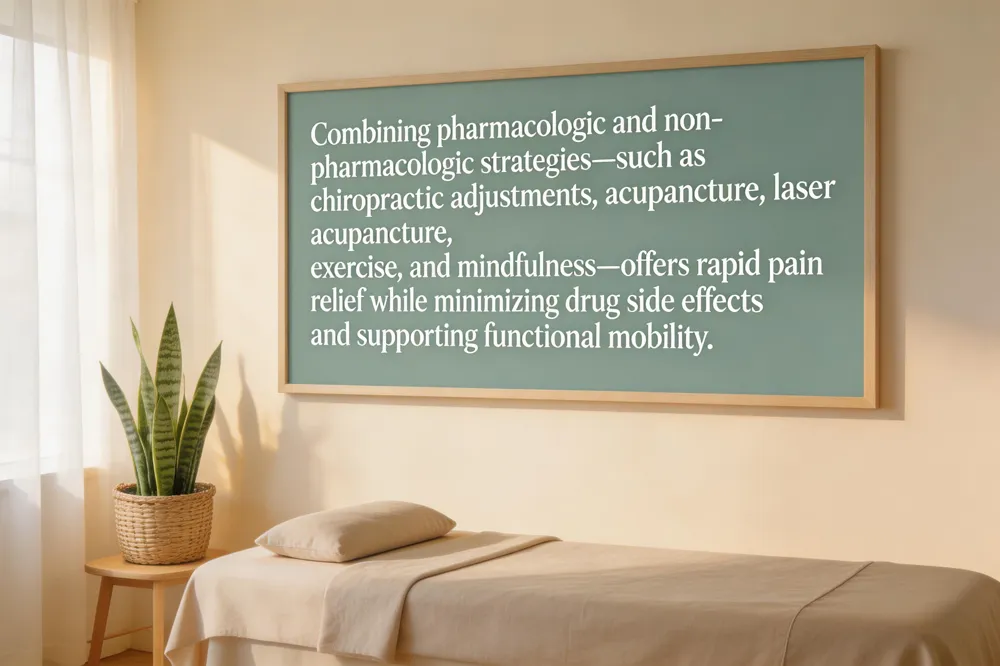
Pharmacological pain management relies on drugs—NSAIDs, opioids, muscle relaxants, and topical agents—to block or dampen pain signals, delivering rapid relief but carrying risks of side effects, dependence, and drug interactions. Non‑pharmacological strategies activate the body’s own healing mechanisms through chiropractic adjustments, physical therapy, massage, acupuncture, heat‑cold therapy, mindfulness, and exercise (Harvard Health; NIH). By reducing reliance on medication, these approaches improve functional mobility and address emotional components of pain without the adverse effects of drugs. A multimodal plan that blends both options allows clinicians to tailor treatment to each patient’s condition, preferences, and health status.
Non‑pharmacological pain relief
Non‑pharmacological modalities manage discomfort without drugs. Chiropractic adjustments realign the spine and lessen nerve irritation, while acupuncture and laser acupuncture (LLLT) stimulate specific points to modulate pain pathways and release endogenous opioids (MedCentral; APA). Physical therapy, yoga, and regular exercise strengthen muscles, improve posture, and prevent chronic aches. Mind‑body techniques—mindfulness meditation, deep‑breathing, and CBT—retrain the brain’s pain perception. Adjuncts such as TENS, massage, and cold‑laser photobiomodulation further enhance neuromodulation and tissue repair (LLLT Review). These safe, drug‑free methods provide a holistic pathway to pain control.
Multimodal pain management for chronic pain
Multimodal chronic‑pain management combines evidence‑based strategies to target multiple pain pathways while minimizing opioid use. Typical regimens include non‑opioid medications (acetaminophen, NSAIDs, gabapentinoids) plus non‑pharmacologic therapies—chiropractic adjustments, therapeutic exercise, laser acupuncture, and traditional acupuncture (American Chiropractic Association). Behavioral counseling and CBT address the emotional dimension of pain. Early, individualized integration of these modalities yields comparable pain relief with fewer side‑effects, aligning with the patient‑focused, drug‑free philosophy of Southeast Family Chiropractic (Multimodal Pain Management Review).
Laser Acupuncture: Evidence and Clinical Outcomes
Laser acupuncture benefits
Laser acupuncture delivers low‑level laser light to traditional acupoints, providing pain relief comparable to needle acupuncture while eliminating needle discomfort. It reduces inflammation and promotes tissue repair by stimulating cellular metabolism and increasing local blood flow. The non‑invasive, painless nature makes it safe for children, the elderly, and those with needle phobia or bleeding disorders. Clinical studies have reported significant reductions in musculoskeletal and neuropathic pain, such as shoulder, knee, elbow, and peripheral nerve discomfort.
Does laser acupuncture actually work?
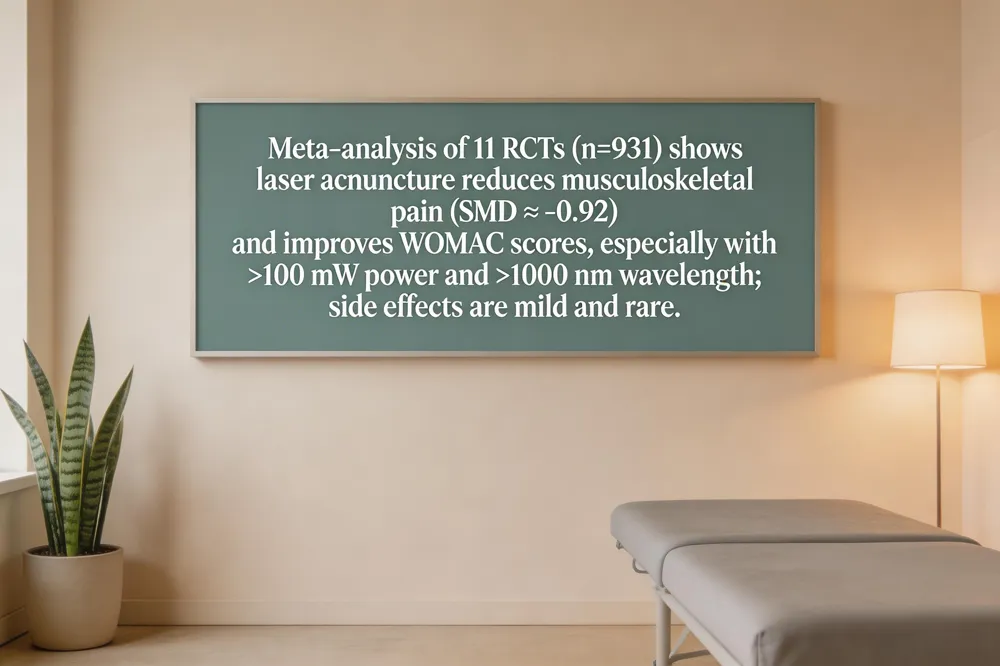
Research confirms genuine analgesic effects. A meta‑analysis of 11 RCTs (931 participants) showed statistically significant pain reductions (SMD = ‑0.924) and improved WOMAC scores versus sham laser. Benefits are strongest short‑term (up to 8 weeks) and are enhanced with lasers >100 mW and wavelengths >1,000 nm. While long‑term data are limited, the evidence supports laser acupuncture as a non‑invasive adjunct in chiropractic pain management.
Laser acupuncture side effects
Adverse events are rare and mild: transient skin redness, tingling, or brief fatigue. Proper eye protection prevents ocular irritation. Serious complications are exceedingly uncommon, making it a well‑tolerated option.
What are two drawbacks of laser therapy?
Potential drawbacks include skin reactions (erythema, mild burns) if dosing is excessive and the risk of eye injury without proper eyewear. Precise dosing requires trained practitioners, and equipment costs can increase overall treatment expense.
Laser acupuncture IVF
Limited data suggest modest improvements in clinical pregnancy rates when laser acupuncture is applied around embryo transfer, likely via enhanced uterine blood flow and stress reduction. However, evidence remains variable, and it is best used as a low‑risk adjunct rather than a standalone therapy.
Needle Acupuncture vs Laser Acupuncture
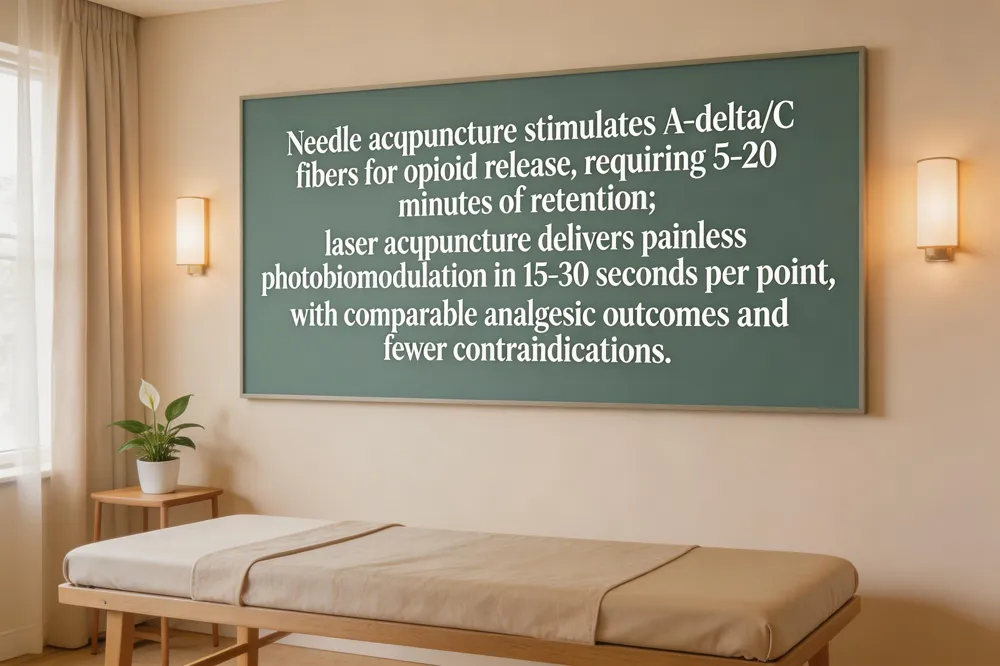 Laser acupuncture (LApuncture) and needle acupuncture both seek to balance Qi and ease pain, but they differ in stimulus. Needle acupuncture inserts ultra‑fine filaments into points, activating A‑delta and C fibers and prompting endogenous opioid release. Laser acupuncture delivers low‑level laser light to the same points, boosting ATP, microcirculation and reducing inflammation without skin penetration. A laser can be applied in 15‑30 seconds per point, so a session lasts 2‑4 minutes, whereas needle sessions require 5‑20 minutes of retention.
The four golden rules of acupuncture are lifestyle habits supporting Qi balance: eat only when hungry, drink only when thirsty, rest when tired, and go to bed early.
Side effects are rare; most patients have no lasting issues. Mild soreness, occasional bruising or brief dizziness may occur, but serious complications such as infection or organ injury are extremely uncommon when sterile, single‑use needles are employed by practitioners.
For chronic pain near you, Southeast Family Chiropractic in Gastonia, NC offers acupuncture using points LI4, ST36, GB20, SP6 and LV3 to target muscle discomfort. Studies show acupuncture for chronic back pain can reduce pain by 30‑50 % and improve function with spinal adjustments.
Practical Application in Chiropractic Care
 Class 4 laser therapy
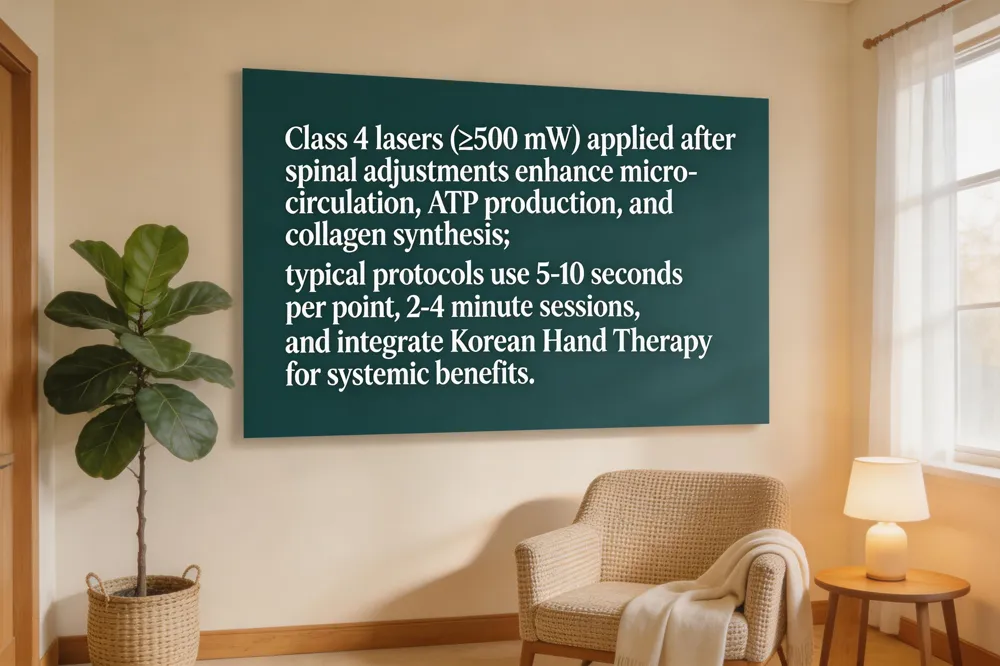
Class 4 therapeutic lasers deliver ≥ 500 mW power at red (630‑680 nm) and near‑infrared (800‑904 nm) wavelengths. Energy density of 4‑10 J/cm² per point penetrates muscle, tendon, ligament and bone, boosting ATP, collagen synthesis, angiogenesis and nerve regeneration. Typical dosing per point is 5‑10 seconds for high‑output devices, allowing a 2‑4 minute session to treat multiple sites.
Safety protocols and equipment
Because Class 4 beams can cause ocular injury and superficial burns, strict safety is mandatory: clinicians wear wavelength‑blocking eyewear, use calibrated dosimetry, and verify patient contraindications (photosensitivity, pacemakers, active cancer). The laser is FDA‑cleared and equipped with automatic dose‑control software to prevent overtreatment. Mild transient redness or a warm tingling sensation is common; serious adverse events are rare.
Integration with adjustments and Korean Hand Therapy (KHT)
After a spinal adjustment, laser acupuncture is applied to the same meridian points, enhancing micro‑circulation and opioid release. Korean Hand Therapy (KHT)Treat the hand as a micro‑cosmos; laser puncture of 14 micro‑meridians and 345 hand points can influence internal organs, with studies showing up to 96 % response rates and measurable cerebral‑blood‑flow changes.
Treatment protocols and session timing
A typical protocol includes 6‑12 weekly sessions. Each visit combines a 10‑15 minute adjustment, 2‑4 minutes of laser acupuncture (5‑10 seconds per point), and optional hand‑therapy laser puncture (15‑20 seconds per point). Patients often notice a 30‑40 % reduction in VAS pain scores within 4‑6 weeks, with minimal side‑effects and no drug‑related risks.
Patient‑Centric Treatment Plans at Southeast Family Chiropractic
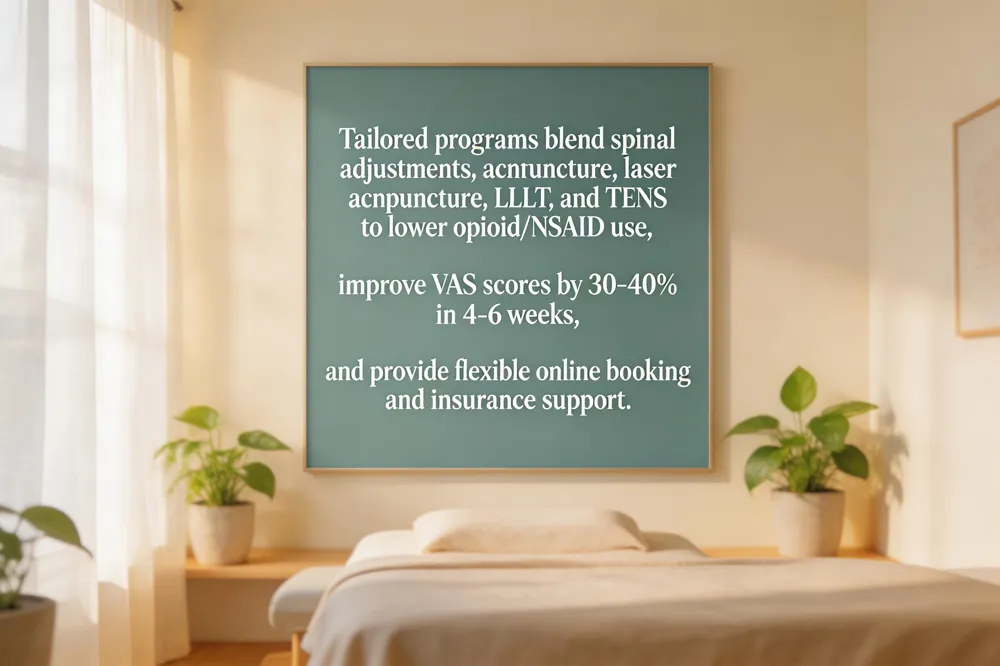 At Southeast Family Chiropractic in Gastonia we design patient‑centric plans that blend adjustments with evidence‑based Acupuncture, low‑level laser therapy (LLLT), laser acupuncture, and TENS. Integrating these non‑pharmacologic options addresses pain on neural, cellular and micro‑circulatory levels, lowering opioid and NSAID use. Online 24/7 booking and insurance verification or package discounts simplify scheduling.
Chiropractic laser therapy near me – FDA‑cleared Class IV lasers (600‑1000 nm) increase ATP, improve microcirculation and reduce inflammation, offering rapid relief for neck, shoulder, back and joint pain.
Acupuncture near me – Certified clinicians use sterile needles on traditional points to stimulate endogenous opioids and blood flow, effective for chronic low‑back, neck pain and tension headaches.
Laser acupuncture near me – Red/infrared lasers treat the same points without needles, ideal for needle‑phobic patients, children and seniors; 15‑20 minute sessions target pain, stiffness and post‑injury healing.
Acupuncture for chronic fatigue – Points such as ST36 and CV4 modulate autonomic balance, improving energy and sleep; trials show significant fatigue‑score drops after 4‑8 weekly sessions.
Transcutaneous electrical nerve stimulation – TENS delivers mild pulses that gate‑close pain signals and boost endorphins, complementing adjustments for back, osteoarthritis and fibromyalgia pain.
Future Directions and Research Gaps
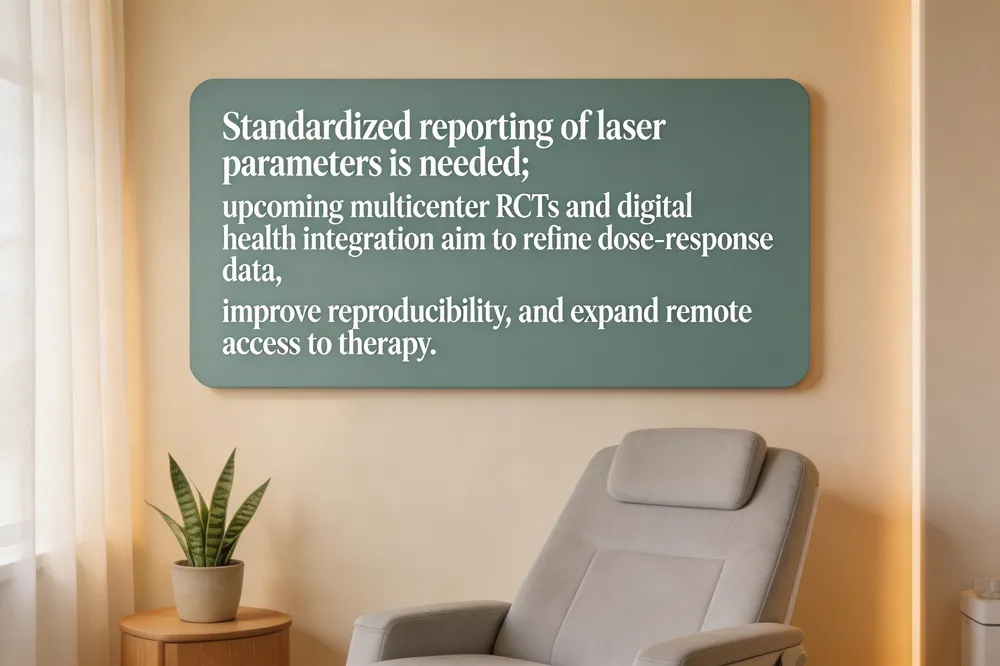 Standardized reporting for laser acupuncture parameters remains a critical gap. Recent systematic reviews highlight inconsistent documentation of wavelength, power density, energy dose, and treatment duration, impeding reproducibility and dose‑response analysis. Developing a dedicated reporting guideline—akin to STRICTA for needle acupuncture—will enable meta‑analyses that reliably compare protocols across studies.
Emerging high‑quality trials are beginning to address these deficiencies. Large, multicenter randomized controlled trials with adequate blinding and sham laser controls are now enrolling diverse musculoskeletal pain populations, offering stronger evidence for efficacy and safety than earlier small‑scale investigations.
Integration with digital health and tele‑rehab presents a novel frontier. Wearable sensors and mobile apps can track patient‑reported pain scores, range‑of‑motion metrics, and adherence to home‑based laser or acupuncture protocols, allowing clinicians to adjust dosimetry in real time and expand access to remote communities.
Patient education and systematic outcome tracking are essential for sustained benefit. Structured counseling on self‑care, combined with electronic outcome registries, empowers patients to monitor progress and supports clinicians in refining individualized treatment plans.
Acupuncture for chronic pain: individual patient data meta‑analysis – Acupuncture outperformed both sham and no‑acupuncture controls for chronic musculoskeletal pain, with pooled effect sizes of ~0.5 SD versus no treatment and ~0.2 SD versus sham. Benefits persisted with only a 15% decline after one year, and effects cannot be attributed solely to placebo.
Non pharmacological pain management peer reviewed articles – Key reviews (e.g., Hoffman et al., 2020; Zhang et al., 2021; Wang et al., 2025) provide robust evidence for integrating acupuncture, chiropractic care, exercise, and digital therapeutics into holistic pain programs. More on multimodal pain management
What are the 5 A's of chronic pain? – Analgesia, Activities of daily living, Adverse effects, Affect (emotional state), and Aberrant drug‑related behaviors.
What is the strongest pain relief on the market? – Carfentanil, approximately 10 000 times more potent than morphine, is the most powerful opioid available, used exclusively in veterinary medicine.
Your Path to Drug‑Free, Holistic Pain Relief
Key take‑aways on acupuncture‑laser synergy – Acupuncture activates peripheral nerves, releases endogenous opioids and modulates spinal pain pathways, while low‑level laser therapy (LLLT) delivers photobiomodulation that boosts ATP production, reduces inflammatory cytokines and improves microcirculation. Clinical trials consistently show that the dual‑modality approach yields 30‑45 % greater reductions in Visual Analogue Scale pain scores and faster functional recovery than either modality alone for low‑back pain, knee osteoarthritis, radicular pain and other musculoskeletal disorders. The synergistic effect stems from acupuncture’s neuro‑stimulation paired with laser‑induced cellular repair, offering a non‑invasive, drug‑free analgesic option with only mild, transient side effects.
How Southeast Family Chiropractic can guide your journey – At Southeast Family Chiropractic in Gastonia, NC, our board‑certified chiropractors are trained in both needle acupuncture and modern laser acupuncture (including auricular and Korean Hand Therapy). We integrate these modalities with spinal adjustments, therapeutic exercise and patient education to create a personalized, multimodal pain‑management plan that aligns with chiropractic principles of holistic, conservative care.
Next steps for scheduling a personalized assessment – Call our office or use the online portal to book a 30‑minute initial consultation. During the visit we will review your medical history, perform a focused musculoskeletal exam, and discuss a tailored acupuncture‑laser protocol. Follow‑up appointments are typically 2‑4 minutes per session, with 6‑12 sessions over 4‑6 weeks to achieve optimal, lasting relief.