The Widespread Reality of Back Pain and a Natural Path to Relief
Back pain is one of the most common medical problems, affecting a vast number of people worldwide. In the United States alone, about 80% of adults will experience low back pain at some point in their lives. Globally, spine pain affects over 11% of the population, making it a leading cause of activity limitation and years lost to disability.
A Prevalent and Limiting Condition
This condition ranges from a dull, constant ache to sudden, sharp pain that can radiate into the legs. It limits mobility, disrupts sleep, and negatively impacts mental health and daily function. For most people, back pain resolves within weeks with simple home care, but for many, it becomes a persistent, chronic issue lasting three months or longer.
Common Causes Are Varied
Back pain often stems from mechanical problems within the spine's complex structure. Common causes include:
- Muscle or ligament strains from improper lifting or sudden movements.
- Degenerative conditions like arthritis, osteoarthritis, and degenerative disc disease.
- Disc issues such as bulging or herniated discs that can press on nerves.
- Structural problems like spinal stenosis or spondylolisthesis. Lifestyle factors like poor posture, lack of exercise, excess weight, and even high stress levels are significant contributors.
The Holistic Chiropractic Approach
Modern chiropractic care offers a primary, conservative, and non-invasive path to relief. It is a healthcare profession focused on diagnosing and treating mechanical disorders of the musculoskeletal system, particularly the spine. The core philosophy centers on the relationship between spinal alignment, nervous system function, and overall health.
A Mainstream, Evidence-Based Option
Chiropractic care has evolved from complementary medicine to a mainstream treatment option frequently recommended in clinical guidelines. It emphasizes a holistic, drug-free approach that encourages the body's natural healing by improving alignment, reducing inflammation, and relieving nerve pressure.
| Key Statistic | Global Impact | Common U.S. Experience | Primary Treatment Focus |
|---|---|---|---|
| Population Affected | Over 11% worldwide | ~80% of adults in lifetime | Non-specific spine pain |
| Leading Cause Of | Activity limitation | Disability & missed work | Mechanical/structural issues |
| First-Line Care | Conservative management | Before injections/surgery | Spinal health & alignment |
This article will explore the common causes of back pain and demystify the effective, natural treatment methods used in contemporary chiropractic care to address both the symptoms and root causes.
Unraveling the Common Culprits Behind Your Back Pain

The Mechanical Origins of Ache
Back pain often stems from mechanical or structural issues within the spine itself. A muscle or ligament strain from heavy lifting, perhaps from heavy lifting or a sudden awkward movement, is one of the most frequent causes of back pain, resulting in localized pain and stiffness. Problems with the spinal discs are also common causes of back pain; a bulging disc occurs when the disc material protrudes, while a herniated disc involves a tear, both potentially pressing on nerves and causing radiating pain.
Degenerative changes over time contribute significantly. Degenerative disc disease involves the wear and tear of the cushioning discs, often causing intermittent pain. When arthritis affects the spine, known as spondylosis or osteoarthritis, it can lead to bone spurs and a narrowing of the spinal canal, called spinal stenosis. This narrowing puts pressure on nerves, potentially causing pain, numbness, or weakness in the legs. Another condition, spondylolisthesis, involves one vertebra slipping forward over another, which can pinch nerves.
Sciatica is not a diagnosis itself but a symptom often caused by these underlying issues. It describes sharp, shooting pain that travels from the lower back down one leg, typically due to compression or irritation of the sciatic nerve, frequently by a herniated disc or spinal stenosis.
Inflammatory and Other Medical Conditions
Inflammatory diseases are a less common but important cause. Ankylosing spondylitis is a type of arthritis that primarily inflames the joints of the spine, leading to stiffness and pain, especially in the morning.
It is also crucial to recognize that back pain can sometimes be referred from other areas. Conditions affecting abdominal organs, such as kidney infections or stones, or issues like abdominal aortic aneurysms, can manifest as back pain. However, this section focuses primarily on musculoskeletal origins.
Lifestyle and Risk Factors That Compound the Problem
Daily habits and personal health significantly influence back pain risk. Poor posture, whether from slouching at a desk or improper standing, places uneven stress on the spine. Similarly, improper lifting techniques is a classic trigger for strain.
A sedentary lifestyle weakens the core and back muscles that support the spine, while excess body weight increases the mechanical load. Smoking impairs blood flow and can hinder healing. Psychological factors like chronic stress, anxiety, and depression can heighten muscle tension and pain perception.
Age is a major factor, with back pain becoming more common starting around ages 30 to 40. Genetics also play a role in predisposing individuals to conditions like disc degeneration or certain types of arthritis.
Classifying Back Pain: Specific, Non-Specific, and Duration
For the vast majority of patients, a clear, specific pathology for back pain cannot be identified through standard testing. This is labeled as non-specific back pain, which is often mechanical in nature.
Back pain is also categorized by its duration, which helps guide treatment approaches:
- Acute: Lasts less than 4 to 6 weeks.
- Subacute: Persists for 4 to 12 weeks.
- Chronic: Continues for more than 12 weeks.
Most episodes of acute low back pain improve with simple home treatment within several weeks.
| Category | Examples | Common Characteristics |
|---|---|---|
| Mechanical / Structural | Muscle strain, Herniated disc, Spinal stenosis, Spondylolisthesis | Pain often worsens with movement or specific activities; may radiate. |
| Inflammatory | Ankylosing spondylitis | Stiffness and pain, often worse after rest; systemic involvement. |
| Lifestyle & Risk Factors | Poor posture, Obesity, Sedentary job, Smoking | Modifiable contributors that increase susceptibility to other causes. |
Red Flags: When Your Back Pain Needs Immediate Attention
Differentiating Normal from Serious Pain
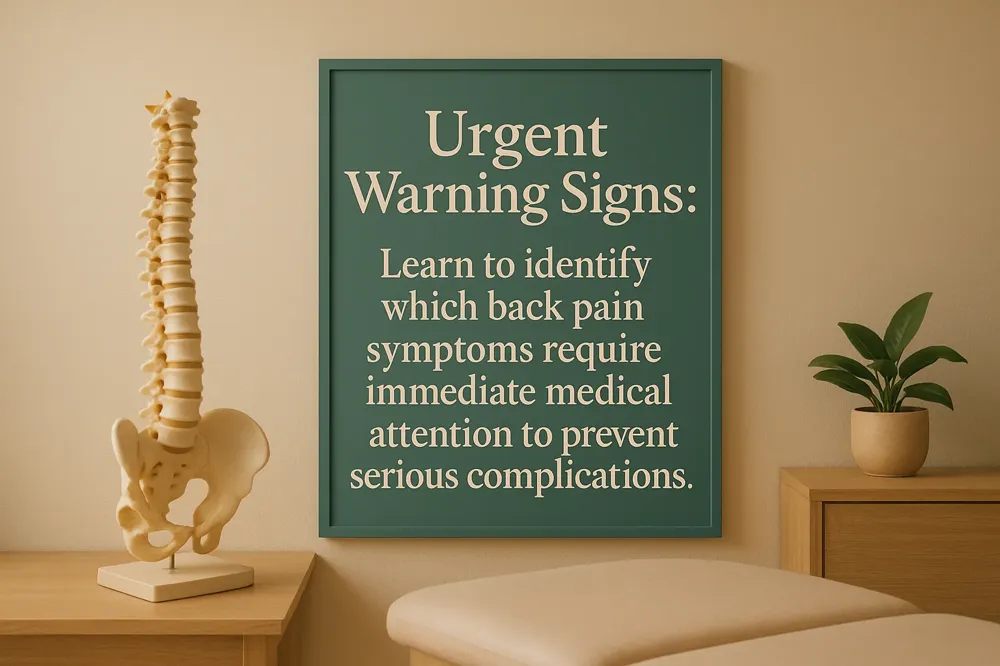
Back pain is extremely common, and many episodes resolve on their own within weeks. However, certain symptoms indicate a potentially serious underlying condition. It's crucial to distinguish between typical muscle aches and signs of infection, severe nerve compression, or structural damage. Most back pain is related to muscle strains or joint issues, but 'red flag symptoms' require immediate professional evaluation.
Emergency Symptoms That Need Immediate Care
If you experience any of the following symptoms, you should seek emergency medical attention without delay.
- Loss of Bowel or Bladder Control: This includes urinary retention (inability to urinate), loss of bladder control, or loss of bowel control, especially when combined with back pain. This can be a sign of a medical emergency called cauda equina syndrome.
- Progressive Weakness or Numbness in Both Legs: This refers to increasing weakness, numbness, or tingling in both legs, or difficulty walking or maintaining balance issues with back pain.
- Fever, Nausea, or Vomiting with Back Pain: A fever paired with back pain can signal an infection like a spinal epidural abscess or vertebral osteomyelitis.
- Severe or Unrelenting Abdominal Pain: Back pain that occurs with sudden, severe abdominal pain with back pain could indicate a problem like an abdominal aortic aneurysm.
- Pain Following Major Trauma: Back pain that starts after a serious accident, such as a car crash or a significant fall.
Warning Signs for a Prompt Doctor’s Visit
You should schedule a visit with your healthcare provider if your back pain is accompanied by the following warning signs, even if they seem less dramatic.
- Pain that lasts for more than 4 weeks or is steadily worsening.
- Unexplained, sudden weight loss.
- A history of cancer.
- Severe pain that wakes you up at night or does not improve when lying down.
- Pain that radiates down a leg, especially if accompanied by weakness, numbness, or tingling (sciatica).
- Pain that is severe and constant.
The Importance of Professional Screening
At your initial chiropractic consultation, a thorough screening is a vital safety step. A qualified chiropractor will perform a detailed health history and exam, including neurological and orthopedic tests. This process is designed to identify these very red flags. Chiropractors are trained to recognize when a patient's symptoms fall outside the scope of conservative care. In such cases, they will not proceed with chiropractic treatment and will refer you to the appropriate medical specialist, such as an emergency department physician, orthopedic surgeon, or neurologist.
| What to Look For | Action to Take | Potential Underlying Cause |
|---|---|---|
| Bowel/bladder dysfunction | Go to ER immediately | Cauda equina syndrome, severe nerve compression |
| Fever with back pain | Seek urgent medical care | Spinal infection (abscess, osteomyelitis |
| Weakness in both legs | Requires prompt evaluation | Spinal cord compression, severe stenosis |
| Pain after major trauma | See a doctor immediately | Vertebral fracture, serious ligament injury |
| Unrelenting night pain | Schedule doctor's visit | Possible tumor, severe inflammation |
| Leg pain with numbness | Needs professional assessment | Herniated disc, spinal stenosis, sciatica |
The Chiropractic First Visit: Assessment, Diagnosis, and Your Personalized Plan
What to Expect in Your Initial Consultation
Your first chiropractic visit typically lasts 30 to 60 minutes. It is a comprehensive session focused on understanding you and your pain. You will discuss your health history, including past injuries, illnesses, and current medications. The chiropractor will ask about your lifestyle factors such as your diet, sleep patterns, exercise routine, and stress levels. A key part of this conversation is establishing your personal treatment goals, whether that's reducing pain, improving mobility, or returning to specific activities.
The Detailed Physical Examination
Following the consultation, a physical exam is conducted. The chiropractor will assess your spinal mobility, posture, and muscle tone. They may perform specific orthopedic and neurological tests. These can include checking your reflexes, muscle strength, and sensation to identify any nerve-related symptoms like numbness or tingling. This hands-on evaluation helps pinpoint areas of dysfunction contributing to your back pain.
The Role of Diagnostic Imaging
Diagnostic imaging, such as X-rays or MRI scans, is not always necessary at the first visit. It is used selectively when clinically indicated. For instance, imaging may be ordered if there is a history of trauma, suspicion of a fracture, or if symptoms suggest a specific structural issue. The goal is to use imaging to inform a safer, more precise treatment plan, not as a routine screening tool.
Classifying Your Back Pain
Chiropractors classify back pain to guide appropriate care. The main categories are non-specific mechanical pain (the most common type, with no clear structural cause), nerve-related pain (like sciatica from a compressed nerve), and pain from serious underlying conditions (requiring medical referral). Understanding this classification helps determine if chiropractic care is suitable and which techniques will be most effective for your specific case.
Crafting Your Personalized Treatment Plan
The visit concludes with a collaborative discussion to create your personalized treatment plan. Based on the assessment findings, your chiropractor will explain the diagnosis and propose a course of action. This plan outlines the recommended techniques, such as spinal adjustments or soft tissue therapy, and the expected frequency of visits. Goals are set for both short-term pain relief and long-term functional improvement, empowering you to participate actively in your recovery.
When to See a Chiropractor for Lower Back Pain
You should see a chiropractor for lower back pain if your pain persists beyond a week or two of self-care, or if it begins to interfere with daily activities like bending, sitting, or lifting. Immediate chiropractic evaluation is also advisable following an accident or injury, such as from a car crash or fall. Pain that radiates into your hips, buttocks, or legs is another strong indicator to seek care. However, if you experience severe symptoms like numbness/weakness in the legs or loss of bladder/bowel control, seek immediate medical attention first.
| Visit Stage | Key Components | Typical Duration & Details |
|---|---|---|
| Initial Consultation | Health history, lifestyle review, treatment goals | 30-60 minutes; detailed discussion of symptoms and aims |
| Physical Examination | Spinal mobility, posture, neurological tests | Hands-on assessment of movement, muscle tone, nerve function |
| Diagnostic Imaging | X-rays, MRI (if indicated) | Not routine; used to investigate trauma or specific symptoms |
| Pain Classification | Non-specific, nerve-related, or serious condition | Guides treatment suitability and technique selection |
| Plan Development | Collaborative goal-setting, technique outline, visit schedule | Focus on pain relief, functional improvement, and patient education |
Core Chiropractic Techniques: From Spinal Adjustments to Holistic Therapies
Defining the Core: Spinal Manipulative Therapy (SMT)
Spinal Manipulative Therapy (SMT), commonly called a chiropractic adjustment, is the cornerstone of chiropractic care. It involves a high-velocity, low-amplitude controlled thrust applied to a specific spinal joint. This precise manipulation aims to restore proper joint motion and spinal realignment, reduce nerve irritation, and improve physical function. The often-heard popping or cracking sound during an adjustment is a normal occurrence, similar to cracking knuckles. It is caused by the release of gases—such as oxygen, nitrogen, and carbon dioxide—from within the joint capsule as pressure changes.
Additional Hands-On Manual Techniques
Beyond the classic adjustment, chiropractors use gentler manual methods. Mobilization involves low-velocity stretching and movement of joints to increase range of motion without the high-velocity thrust. Flexion-Distraction is a gentle, non-invasive technique often used for disc herniations or spinal stenosis. The patient lies on a specialized table that gently stretches and flexes the spine in a rhythmic motion to decompress targeted areas. The Drop-Table technique uses a segmented table with sections that drop a short distance when the chiropractor applies a light thrust, utilizing gravity to assist in a comfortable adjustment.
Soft Tissue and Complementary Therapies
Chiropractic care extends beyond bones to address muscles and connective tissues. Myofascial Release and Active Release Techniques (ART) target tight, knotted areas in muscles and fascia to relieve tension and improve flexibility. Massage therapy is frequently used to relax muscles, improve circulation, and promote healing. Rehabilitative therapeutic exercises and stretches are prescribed to strengthen core muscles, improve stability, and support long-term recovery. Kinesio taping may also be used to support joints and muscles without restricting movement.
Adjunctive Technologies and Modalities
Many clinics incorporate supportive technologies to enhance healing. Class 4 Deep Tissue Laser therapy uses focused light energy to penetrate deep tissues, aiming to reduce pain and inflammation while stimulating cellular repair. Electrical muscle stimulation (TENS) delivers low-voltage electrical currents to manage pain and relax tense muscles. The simple application of heat or ice therapy is also commonly recommended to soothe inflammation, relax muscles, or provide analgesic effects.
A Multimodal, Integrative Approach
The most effective chiropractic care is typically not a single technique but a personalized, multimodal plan. Chiropractors often combine spinal adjustments with soft tissue work, specific therapeutic exercises, and lifestyle guidance. This integrative strategy addresses both the acute symptoms and the underlying causes of dysfunction. Research and clinical guidelines support this combined approach, noting that pairing manipulation with exercise can speed recovery, improve functional outcomes, and help minimize the recurrence of pain. The goal is to treat the whole person, not just the painful area.
| Technique Type | Common Methods | Primary Goal | Key Conditions Addressed |
|---|---|---|---|
| Joint Manipulation | Spinal Adjustment (SMT), Diversified, Gonstead | Restore spinal alignment & joint mobility | Low back pain, neck pain, stiffness |
| Gentler Manual Therapy | Mobilization, Flexion-Distraction, Drop-Table | Increase range of motion, decompress spine | Disc herniation, spinal stenosis, acute pain |
| Soft Tissue Work | Myofascial Release, ART, massage | Relieve muscle tension, improve circulation | Muscle strains, myofascial pain, spasms |
| Supportive Modalities | Laser therapy, TENS, heat/ice | Reduce inflammation, manage pain, aid healing | Chronic pain, inflammation, post-treatment soreness |
| Rehabilitative Care | Therapeutic exercises, stretches, taping | Strengthen muscles, prevent recurrence | Post-injury recovery, core instability |
Safety, Efficacy, and What to Expect After an Adjustment
Is chiropractic care safe for treating lower back pain?
Chiropractic care for lower back pain is widely considered safe when delivered by a licensed chiropractor. Clinical guidelines frequently endorse spinal manipulative therapy (SMT) as a conservative, non-invasive first-line treatment. While serious complications are extremely rare, patient safety hinges on a thorough initial screening to rule out contraindications.
What are the potential side effects or disadvantages of a chiropractic adjustment?
The most common effects following an adjustment are minor and temporary. It is typical to experience mild achiness, stiffness, tiredness, or a minor headache in the 24 to 48 hours after treatment as the body adapts. These sensations are often compared to post-exercise soreness and should not involve significant pain from the procedure itself.
However, there are rare but serious risks that necessitate careful screening. These can include the worsening of a herniated disc, nerve compression in the lower spine, or, in the context of neck manipulation, a specific type of stroke caused by blood vessel injury. Consequently, chiropractic adjustments should be avoided for individuals with certain conditions.
Conditions Where Adjustment Should Be Avoided
A licensed chiropractor will screen for specific contraindications during the initial consultation. Chiropractic adjustment is not appropriate for areas affected by:
- Severe osteoporosis
- Bone fractures or tumors
- Bone or joint infections
- Severe, unstable arthritis
- Severe nerve compression with progressive weakness, numbness, or tingling
- Increased risk of stroke or specific vascular issues
- Acute neck pain with pinched nerve symptoms
Typical Treatment Frequency and Post-Adjustment Expectations
Chiropractic treatment often begins at the first or second visit. A typical plan for low back pain may start with more frequent, shorter sessions—such as two to three times per week for 10 to 20 minutes each—to establish improvement. As symptoms improve, the frequency tapers, often moving to weekly sessions. The primary goal is to restore function and make the patient independent with home exercise and lifestyle advice. Most conditions are resolvable, though some with chronic back pain may benefit from occasional maintenance care.
Evidence Supporting Chiropractic Care for Lower Back Pain
Current evidence and clinical practice guidelines strongly support chiropractic care, particularly SMT, for non-specific and chronic primary back pain. A large body of research indicates spinal manipulative therapy is as effective as other recommended first-line therapies, including standard medical care or physical therapy. For both acute and chronic low back pain, SMT is frequently recommended, often in combination with patient education, reassurance, and exercise.
| Treatment Aspect | Key Detail | Evidence & Guidelines |
|---|---|---|
| General Safety | Safe when performed by licensed chiropractor; serious risks rare. | Endorsed by multiple clinical guidelines as frontline care. |
| Common Side Effects | Temporary soreness, stiffness, tiredness, minor headache (24-48 hrs). | Widely reported in patient outcomes and clinical literature. |
| Serious Risks | Worsening herniated disc, nerve compression, stroke (neck manipulation). | Rare; mitigated by thorough patient screening and contraindication checks. |
| Treatment Plan | Starts with 2-3 short sessions weekly, tapers as improvement occurs. | Common clinical practice for achieving and maintaining functional goals. |
| Clinical Efficacy | As effective as standard medical care or PT for non-specific/chronic LBP. | Supported by systematic reviews and guideline recommendations. |
| Contraindications | Severe osteoporosis, fractures, tumors, infections, severe nerve issues. | Standard screening protocol to ensure patient safety and appropriateness. |
Beyond the Adjustment: The Holistic and Long-Term Approach to Spinal Wellness

What are holistic and non-surgical treatments for back pain?
Modern chiropractic care represents a holistic, whole-body approach to spinal wellness. While the controlled spinal adjustment, or spinal manipulation, remains a core technique, contemporary treatment plans integrate multiple non-surgical strategies for lasting health. This philosophy views back pain not as an isolated symptom, but as a condition influenced by lifestyle, nutrition, and daily habits.
Beyond manual therapy, chiropractic care for chronic pain often incorporates rehabilitative exercises, patient education, and lifestyle counseling into a cohesive, drug-free management plan.
Foundations of a Chiropractic Wellness Plan
A comprehensive wellness plan extends beyond the adjustment table to include several key lifestyle components.
Personalized Exercise and Rehabilitation: Chiropractors often prescribe specific exercises and stretches to build core muscle strength and joint stability. These exercises, which may include yoga or tai chi, improve flexibility and correct posture, supporting the spine between adjustments.
Ergonomic and Postural Guidance: A significant part of patient education focuses on ergonomics and body mechanics. This includes advice on proper desk setup, correct lifting techniques, and maintaining good posture while sitting and standing to reduce daily strain.
Nutritional and Stress Management: A holistic approach includes guidance on anti-inflammatory diets to support healing and manage pain. Many chiropractors also offer stress management techniques, such as mindfulness or meditation, and emphasize smoking cessation, as smoking can heighten pain perception and delay recovery.
Is lower back pain common during pregnancy and how can chiropractic help?
Yes, lower back and pelvic pain are extremely common during pregnancy, affecting a majority of women. The body's changes, including a shifting center of gravity and hormone-induced ligament laxity, place significant strain on the spine. Chiropractic care is well-suited to address this, offering safe and effective treatment for all ages, including expectant mothers.
Chiropractors perform gentle, tailored adjustments to restore proper alignment to the pelvis and lower back. This can alleviate pressure on nerves, reduce muscle tension, and improve joint mobility, providing much-needed relief and supporting a healthier, more comfortable pregnancy.
What are the long-term benefits of spinal adjustments?
The ultimate goal of modern chiropractic care is long-term spinal wellness and injury prevention, not just short-term relief.
Preventive Health and Healthy Aging: Regular care aims to maintain proper spinal alignment and mobility. This proactive approach can reduce the risk of future injuries, slow degenerative processes like arthritis, and promote healthy aging by keeping muscles and joints functioning optimally.
Enhanced Nervous System Function and Reduced Medication Dependence: Because the spine houses the central nervous system, maintaining its integrity is believed to enhance overall nervous system function. A holistic, drug-free treatment path also helps reduce long-term reliance on pain medications, with studies showing chiropractic patients are far less likely to need opioids for low back pain.
Chiropractic in a Collaborative Team
Chiropractors often work as part of a collaborative healthcare team, especially for complex cases. They will refer patients to other providers like physical therapists for specialized exercise programs or medical doctors for diagnosis and management of non-musculoskeletal conditions. This team-based approach ensures patients receive comprehensive care tailored to their unique needs.
| Core Treatment Pillar | Typical Techniques & Methods | Primary Wellness Goals |
|---|---|---|
| Manual Therapy | Spinal adjustments (SMT), mobilization, myofascial release | Pain relief, restore joint motion, realign spine |
| Active Rehabilitation | Core strengthening, stretching, posture retraining, yoga, tai chi | Build stability, improve flexibility, prevent recurrence |
| Lifestyle & Education | Ergonomic advice, anti-inflammatory diet guidance, stress management | Address root causes, promote daily wellness, support healing |
| Collaborative Care | Co-management with PTs, MDs; referral for advanced diagnostics | Ensure comprehensive treatment, access all needed services |
Taking the Next Step Toward a Pain-Free, Active Life
Moving Beyond the Pain
Back pain is incredibly common, affecting millions each year. It can disrupt sleep, limit mobility, and cast a shadow over daily activities. However, it's crucial to remember that enduring pain is not a requirement for an active life. Most cases of back pain are manageable with the right, proactive approach.
A Proactive, Evidence-Based Approach
Chiropractic care stands as a well-established, first-line option for managing both acute and chronic back pain. Centered on safe, controlled spinal adjustments, this approach aims to restore proper joint function, alleviate nerve pressure, and reduce inflammation. Clinical guidelines frequently recommend such conservative, non-invasive treatments before considering more invasive options.
This method is not just about temporary relief. By addressing underlying mechanical issues—like joint misalignments or muscle imbalances—chiropractic care seeks to improve your body's natural function and support long-term healing. It represents a drug-free path to recovery that can help you reduce reliance on pain medication and get back to the activities you love.
Your Personalized Path to Wellness
At Southeast Family Chiropractic, we embrace a holistic, patient-centered philosophy. We understand that back pain is more than just a physical symptom; it can impact your overall well-being. Your journey begins with a thorough consultation and assessment, where we listen to your history, understand your goals, and perform a focused physical exam.
From this foundation, we develop a customized plan that may integrate various techniques:
- Precision Spinal Adjustments to improve alignment and mobility.
- Soft Tissue Therapies to relieve muscle tension and promote relaxation.
- Rehabilitative Exercises tailored to strengthen your core and supporting muscles.
- Lifestyle and Ergonomic Guidance to help prevent future issues.
Our goal is to empower you with knowledge and tools for sustained health, moving you from passive patient to active participant in your own recovery.
Taking Action for Your Health
If you are experiencing persistent back pain, stiffness, or concerning symptoms like radiating numbness, taking the first step is the most important part. Early intervention with a conservative approach often leads to better outcomes and a faster return to normal life.
We encourage you not to let pain dictate your days. Schedule a consultation with our experienced team for a personalized assessment. We will work with you to identify the root causes of your discomfort and create a clear, effective treatment plan tailored to your unique needs.
Ready to move freely again? Contact Southeast Family Chiropractic today to book your appointment and start your journey toward a more active, pain-free life.