Why Daily Spine Care Matters
Back pain affects up to 80 % of adults at some point, often limiting work, chores and recreation. Preventive habits—posture awareness, regular low‑impact movement, core strengthening, proper lifting, adequate hydration, calcium/vitamin D intake, and weight management—are far more effective and less costly than treating chronic pain after it appears. A holistic plan that blends daily walking or tai chi, ergonomic workstations, supportive footwear, mindfulness or breathing to lower stress‑induced muscle tension, and periodic professional care (chiropractic, physical therapy, massage) keeps the spine stable, nourished and pain‑free.
Core Strength and Flexibility Foundations
 A solid spine‑health routine starts with gentle core‑strengthening moves such as planks, bird‑dog, and bridges, which activate the deep abdominal, lumbar, and gluteal muscles that act like a natural corset. Pair these with daily lumbar and hip‑flexor stretches—knee‑to‑chest stretch, lower‑back rotational, cat‑cow, and a standing hip‑flexor stretch—to keep the vertebral discs mobile and release tension in the pelvis. Low‑impact flexibility tools like yoga, Pilates, and Tai Chi further enhance range of motion, balance, and mindful posture, making them ideal complements to core work.
Prevent lower back pain exercises: Begin with knee‑to‑chest stretch and lower‑back rotational stretches, then perform pelvic tilts, cat‑cow, glute bridges, side‑lying leg lifts, and bird‑dog (5‑10 seconds, 10‑15 reps). Finish with a hip‑flexor stretch and shoulder‑blade squeeze. Repeat 15 minutes, 2‑3 times a week.
7 exercises for lower back pain: Child’s Pose, Piriformis Stretch, Kneeling Hip Flexor Stretch, Supine Posterior Pelvic Tilt, Bird‑Dog, Glute Bridge, and Wall Squat with a stability ball (20‑30 seconds stretch, 10‑12 reps strengthening). Perform daily.
How to relieve lower back pain fast: Apply a warm compress 10‑15 minutes, then do knee‑to‑chest stretch, lower‑back rotational, cat‑cow stretches (5‑10 seconds, 2‑3 times). Activate the core with bird‑dog or bridge, follow with a brief walk, and consider a professional chiropractic adjustment if needed. Consistent core stability reduces spinal strain by distributing loads evenly across the spine, protecting discs and ligaments from overload.
Ergonomic Environment and Movement Breaks
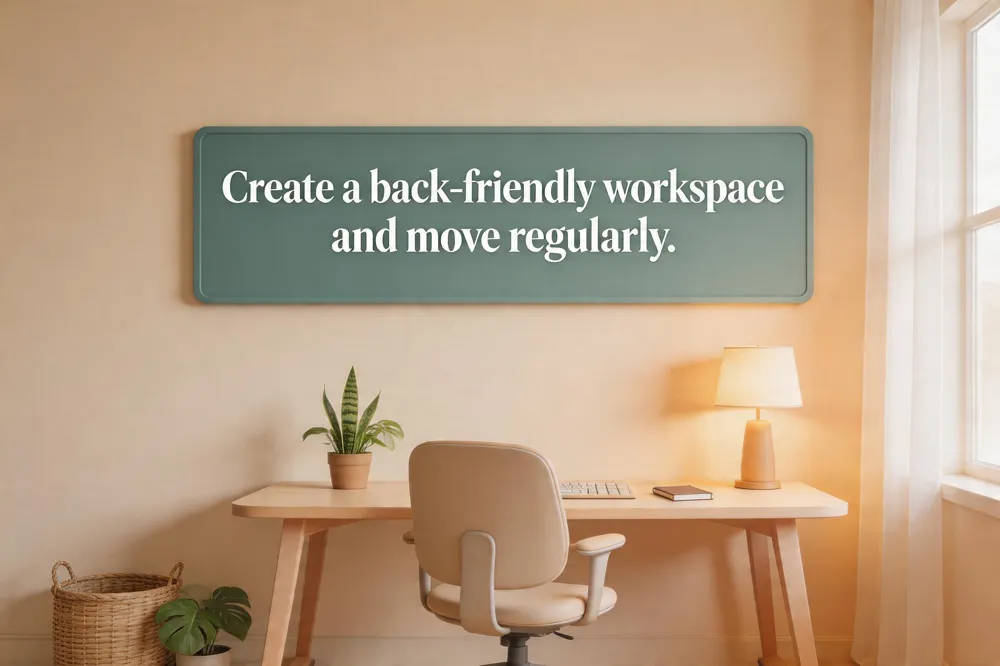 A back‑friendly workspace starts with an adjustable chair that supports the natural lumbar curve, a seat height that lets feet rest flat and knees form 90°, and a footrest for extra support. Keep the monitor at eye level and elbows close to the body so shoulders stay relaxed. Switching between a sit‑stand desk and a traditional chair encourages regular posture changes and reduces prolonged loading on the lower back.
Micro‑breaks every 30‑60 minutes are essential. These brief movements restore circulation, prevent muscle fatigue, and keep spinal discs from compressing.
Supportive footwear with proper arch support and cushioning distributes body weight evenly, while safe lifting mechanics—bending the knees, keeping the back straight, and using leg muscles—protect the spine during everyday tasks.
How to prevent back pain in the future: Combine ergonomic furniture with daily core‑strengthening (planks, bird‑dogs, yoga) and regular walking (90‑120 min/day). Maintain a healthy weight, stay hydrated, and schedule periodic chiropractic check‑ups for early alignment correction.
How to avoid back pain while sitting: Use a lumbar‑support chair or rolled towel, keep feet flat, adjust monitor height, and take a micro‑break every hour to stretch or stand.
How to avoid back pain while studying: Set up an ergonomic workstation, stand or walk every 30‑45 minutes, and keep a rolled‑towel for lumbar support. Check posture frequently.
How to avoid back pain while sleeping: Sleep on a medium‑firm mattress; back sleepers place a pillow under the knees, side sleepers place a pillow between the knees. Avoid stomach sleeping and perform gentle stretches before bed.
How to avoid lower back pain: Strengthen core and back muscles, practice proper posture, lift safely, stay active with low‑impact cardio, and keep weight within a healthy range. Regular chiropractic visits can catch imbalances early.
Lifestyle Choices: Weight, Nutrition, and Hydration
 A balanced diet that supplies calcium, vitamin D and anti‑inflammatory foods supports bone density and reduces spinal inflammation. Include dairy or fortified plant milks, leafy greens, fatty fish, nuts and berries (especially blueberries, strawberries, raspberries) and citrus for vitamin C‑driven collagen. Hydration keeps intervertebral discs plump; aim for at least eight 8‑ounce glasses of water daily and enjoy water‑rich fruits such as watermelon, kiwi and oranges. Maintaining a healthy weight lessens mechanical load on lumbar discs—regular walking, 90–120 minutes per day, and core‑strengthening moves like planks and bridges are key. Supportive footwear with proper arch support aligns the pelvis and reduces compensatory spinal strain.
Which fruit is best for the spine? Water‑rich watermelon hydrates discs, citrus provides vitamin C, berries supply antioxidant polyphenols, and kiwi adds bone‑supporting nutrients.
How to reduce back pain for female? Build core with bridges, cat‑stretches, Pilates or yoga; stretch daily (knee‑to‑chest, rotational, seated twist); keep neutral posture, take movement breaks, use proper lifting, manage weight, avoid smoking, sleep with a knee pillow, and consider personalized chiropractic or PT care.
Stress Management and Mind‑Body Practices
 Mindfulness and meditation calm the nervous system, reducing stress‑related muscle tension that can strain the lumbar and thoracic spine. 5‑minute breathing sessions a few times daily help restore neutral posture. Tai Chi and yoga blend movement, balance, and core activation; practice improves flexibility, strengthens deep back muscles, and lowers chronic low‑back pain. Chronic stress keeps the torso in a guarded, hyper‑tonic state, increasing disc load and fatigue.
How to relieve back pain fast at home: Start with stretches—knee‑to‑chest, cat‑cow, lower‑back rotations—holding each 5‑10 seconds, repeat 2‑3 times twice daily. Follow with thoracic foam‑roll, then ice for 20 minutes (first 48‑72 hours) and switch to heat. Keep a neutral spine, walk hourly, and use a pillow under the knees at night.
Professional Care and Immediate Relief Strategies
 When back pain strikes, fast-acting measures can bring quick comfort while you arrange longer‑term care. A brief session of gentle stretching—like knee‑to‑chest, lower‑back rotation, or cat‑cow—held for five to ten seconds, helps release tight muscles. Apply an ice pack for 15‑20 minutes during the first 24 hours to curb inflammation, then switch to a warm compress or heating pad to relax lingering tension. Over‑the‑counter analgesics such as ibuprofen or acetaminophen provide additional relief when taken as directed. A targeted chiropractic adjustment can instantly correct minor misalignments and reduce spasms, often delivering noticeable improvement within minutes. Wearable posture‑feedback devices remind you to sit and stand with a neutral spine, decreasing strain throughout the day. Adjunct therapies like massage and TENS further ease muscle tightness and improve circulation. If pain persists beyond a day or worsens, schedule a professional evaluation for a personalized treatment plan.
Consistent Daily Routine Summary
 Integrating core‑strengthening moves such as planks, bridges, and bird‑dog into a 15‑minute routine, combined with ergonomic habits—adjustable chair lumbar support, monitor at eye level, and micro‑breaks every 30‑60 minutes—creates a neutral spine throughout the day.
Pair this with nutrition that supplies calcium, vitamin D, and anti‑inflammatory foods, while staying hydrated to keep intervertebral discs supple.
Stress‑relief practices like mindfulness breathing, meditation, or tai‑chi lower muscle tension that can aggravate the back.
Track progress with a simple log or a wearable that reminds you to move, stretch, and maintain posture.
Schedule a chiropractic check‑up every three to six months to catch early misalignments and keep the spine healthy and support overall well‑being.
Start Your Pain‑Free Journey Today
Every day you can protect your spine by keeping neutral posture, taking short movement breaks, walking 90‑120 minutes, strengthening the core with planks or bridges, stretching hamstrings and hip flexors, staying hydrated, wearing supportive shoes, and maintaining a healthy weight. These simple habits work together to reduce disc pressure, improve circulation, and keep muscles balanced. To make these habits stick, consider a personalized chiropractic evaluation where a professional can assess your alignment, tailor exercises, and provide real‑time posture feedback. Investing in regular, non‑invasive care supports natural healing, prevents future injury, and promotes long‑term wellness for a pain‑free life. Begin track your progress, and let chiropractic guidance empower you to sustain spinal health for years to come.