Introduction
Core stability refers to the coordinated engagement of deep (intrinsic) muscles—such as the transversus abdominis, lumbar multifidus, diaphragm, and pelvic floor—and superficial (extrinsic) muscles that together form a supportive corset around the spine. By maintaining a neutral lumbar and thoracic posture during movement, this muscular “bracing” evenly distributes forces, reduces shear on intervertebral discs, and diminishes the reliance on passive structures like ligaments. The result is improved spinal alignment, decreased low‑back pain, and better postural control, which are essential for everyday activities and athletic performance. For chiropractors, integrating evidence‑based core‑stability programs enhances the durability of spinal adjustments, promotes neuromuscular coordination, and provides patients with a self‑managed tool to sustain alignment between visits. This article outlines the science behind core stability, illustrates key exercises, and demonstrates how a structured program can complement chiropractic care for lasting spinal health.
Essential Resources and PDFs
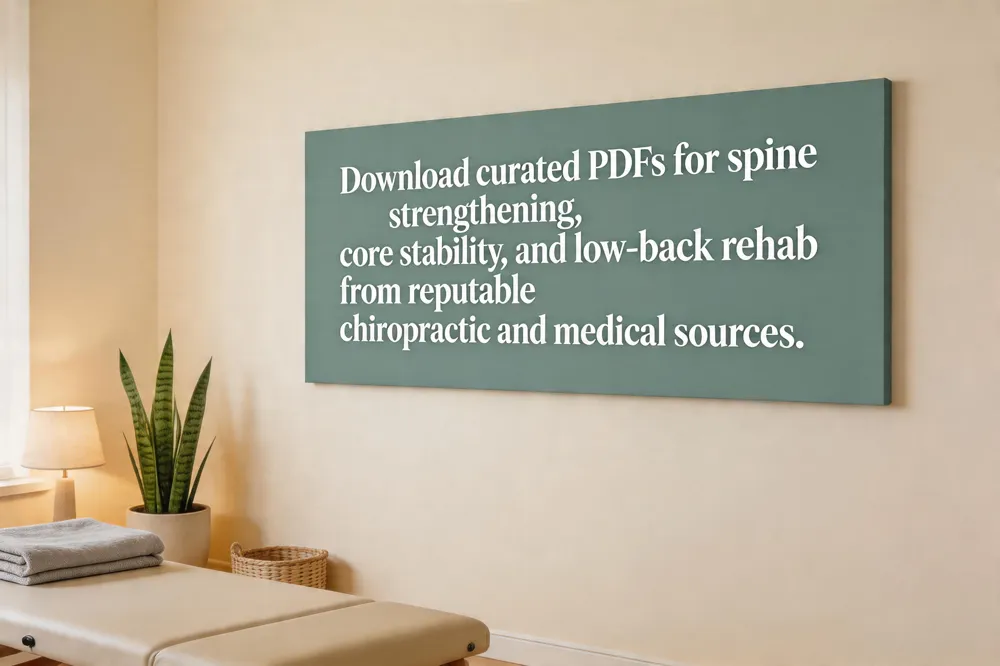 Spine strengthening exercises pdf
A downloadable PDF from Southeast Family Chiropractic provides a full, chiropractor‑approved spine‑strengthening program. It includes illustrated step‑by‑step instructions for core stabilizers such as the bird‑dog, bridges, pelvic extensions, and plank variations, plus gentle stretches (head rolls, knee‑to‑chest, piriformis). Repetitions, sets, progression tips, and safety cues are listed for a 4‑6‑week schedule performed 2‑3 times per week under professional supervision.
Spine strengthening exercises pdf
A downloadable PDF from Southeast Family Chiropractic provides a full, chiropractor‑approved spine‑strengthening program. It includes illustrated step‑by‑step instructions for core stabilizers such as the bird‑dog, bridges, pelvic extensions, and plank variations, plus gentle stretches (head rolls, knee‑to‑chest, piriformis). Repetitions, sets, progression tips, and safety cues are listed for a 4‑6‑week schedule performed 2‑3 times per week under professional supervision.
Core stability exercises PDF A free PDF outlines a complete core‑stability program with foundational moves like Table‑Top dead‑bug, 4‑point kneeling, side‑lying leg lifts, and progressive plank variations. It emphasizes neutral‑spine positioning, breath control, and pelvic‑floor engagement, and provides a chart of sets, reps, and timing for beginner, intermediate, and advanced levels. Quick‑reference images aid proper form, and the file can be printed or accessed on a mobile device.
AAOS low back exercises pdf The AAOS offers a downloadable handout detailing a low‑back exercise program for post‑injury or post‑surgery rehab. It includes warm‑up, stretching (head rolls, hamstring, knee‑to‑chest), and strengthening (abdominal contractions, wall squats, straight‑leg raises, Swiss‑ball lumbar stabilization). The guide recommends 2‑3 sessions per week for 4‑6 weeks, pain‑free movement, and professional supervision.
AAOS spine conditioning pdf The AAOS “Spine Conditioning” PDF outlines a structured 4‑6‑week program targeting cervical, thoracic, lumbar, and pelvic muscles (trapezius, erector spinae, quadratus lumborum, glutes, hamstrings, obliques). It integrates warm‑up, stretching, strengthening, and cool‑down, urging patients to work under a physician or physical therapist.
Core strengthening exercises PDF free download Free PDFs from reputable chiropractic sites (e.g., University of Michigan Health System, NC practices) offer step‑by‑step core‑strengthening programs with beginner moves (pelvic tilts, bridges, bird‑dog) and progressive exercises (side planks, Superman, banded T‑pulls). Each guide includes form cues, reps, and safety tips; download from the practice’s “Resources” page and consult a healthcare provider before starting.
Structured Core Training Methods
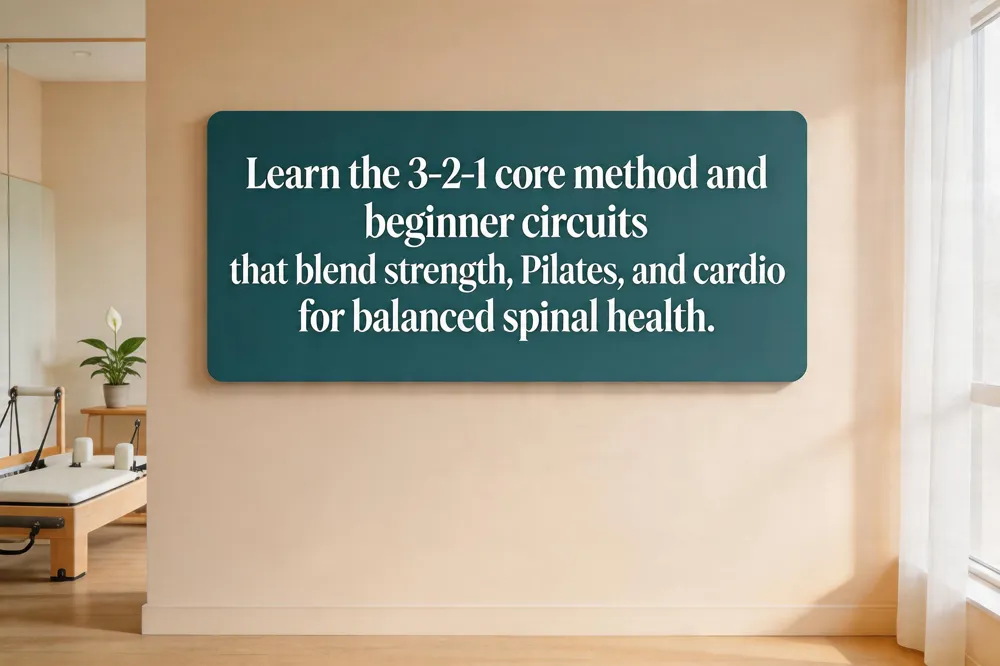 What is the 3‑2‑1 core method? The 3‑2‑1 core method is a weekly training split that balances three strength‑training sessions, two Pilates‑focused sessions, and one cardio workout. By rotating these modalities each week it promotes strength, core stability, flexibility, and health. The method is flexible, allowing adjustments in duration, intensity, and equipment to match fitness level. It supports injury‑prevention and posture improvement, key goals in chiropractic care, providing a sustainable, holistic routine for a healthy spine.
Core stability workouts for beginners start a circuit that targets deep abdominal and spinal muscles: 30‑second forearm plank, 12 bird‑dogs per side, 15 dead‑bugs, and 10 glute bridges. Perform back‑to‑back, rest 15‑30 seconds, repeat 2–3 times. Keep the core braced, spine neutral, use slow controlled motion. As strength improves increase holds to 45 seconds or add side planks and supine toe taps.
Basic core stability exercises include planks, side‑planks, bird‑dog, dead‑bug, bridge or marching glute bridge, supine heel taps, and BOSU bird‑dog variations. Perform one set of 12‑15 reps or hold planks 20‑30 seconds, focusing on quality over speed.
Targeted Spine‑Support Exercises
 Spine strength exercises – Simple floor moves such as the bird‑dog, side‑plank, dead‑bug and supine bridge activate deep stabilizers (transversus abdominis, multifidus, glutes) while keeping the vertebrae safe. Add knee‑to‑chest, cat‑cow and gentle pelvic bridges to improve flexibility and back‑extensor recruitment. Performing these for a few minutes after a brief warm‑up builds endurance in the erector spinae, quadratus lumborum and abdominal muscles, reducing stiffness from prolonged sitting.
Core strengthening exercises for lower back pain PDF – The AAOS program starts with abdominal draw‑in cues, then progresses through pelvic tilts, glute bridges and partial curl‑ups and prone leg raises. Each step includes hold times, 3‑4 sessions per week, and stretches for hips, hamstrings and piriformis. Levels (Easy‑Medium‑Difficult) ensure safe progression under professional supervision.
Core and lower back workout gym – Cable woodchops, Swiss‑ball dead‑bugs, goblet squats with a braced core, and stability‑ball planks (progressed with a weighted plate) provide resistance‑based core conditioning. Three weekly sessions improve spinal stability and complement chiropractic care.
Core strengthening exercises for lower back pain physical therapy – Supine pelvic tilts, side‑lying clamshells, modified side‑planks, dead‑bugs, forearm planks and Pallof presses are therapist‑approved. Begin with 5‑10 reps or 20‑30‑second holds, increase to 2‑3 sets, and practice twice daily with controlled breathing to enhance deep trunk activation and reduce pain.
Spine rehabilitation exercises – After a low‑impact warm‑up, incorporate mobility stretches (head rolls, cat‑cow) and strengthening moves (bird‑dog, dead‑bug, bridges, resisted side‑planks). Perform 2‑3 times weekly for 4‑6 weeks, with daily gentle stretches, under chiropractor or PT guidance.
Best core strengthening for back health – Combine static holds (fore‑arm/side‑plank 20‑60 seconds) with dynamic moves (glute bridge, dead‑bug, bird‑dog) and anti‑rotation work (Pallof press. Progress hold times or reps 3‑4 times weekly, maintaining a braced core during daily activities.
Neck and Upper‑Back Alignment
 Cervical spinal alignment exercises focus on gentle movements that promote a neutral head posture and relieve tension. Chin tucks, side‑to‑side neck stretches, scapular retractions, and shoulder rolls can be performed seated or standing, while “walking tall” with ears over shoulders maintains alignment throughout the day. Supine neutral head positioning—lying on a thin pillow or no pillow—reinforces the same posture in a low‑impact way; hold stretches for 15–30 seconds and chin‑tuck positions for a few seconds, stopping if pain radiates beyond the neck. Upper‑back strengthening exercises, as outlined in the AAOS PDF, include scapular squeezes, wall slides, and the Y‑T‑W‑L series targeting rhomboids and trapezius, combined with thoracic extension, side‑stretch drills, and banded rows (3 sets of 10‑15 reps). Core stability muscles form a supportive “cage” around the spine: deep stabilizers such as the transverse abdominis and multifidus, complemented by internal/external obliques, rectus abdominis, pelvic floor, erector spinae, and diaphragm, together provide a rigid yet flexible core that protects spinal alignment during everyday movement.
Age‑Specific Core Programs
 Senior‑friendly movements focus on low‑impact, equipment‑free exercises that protect the spine while building strength. Begin with seated marching or a dead‑bug (or seated dead‑bug), then progress to gentle bridges (lying on the back, knees bent, lift hips a few inches) and standing hip extensions. Low‑impact strengthening includes modified planks on the knees or forearms, Bird‑dog extensions performed slowly, and side‑leg lifts that engage the glutes and core without excessive loading. For beginners, a starter routine of seated marching, wall push‑ups, basic hip bridges, and knee‑plank holds (30‑45 seconds) performed 2‑3 times per week teaches proper alignment and diaphragmatic breathing. Core stability training for patients starts with deep‑breathing and abdominal bracing, moves to supine leg marching and dead‑bug drills, then adds prone Bird‑dog and bridging variations, advancing to dynamic moves such as weighted planks or Pallof press only when pain‑free technique is maintained. Progression guidelines recommend 8‑12 repetitions or 20‑30 second holds, 2‑3 sessions weekly, with gradual increases in range, duration, and resistance while monitoring for discomfort.
Special Considerations and Contraindications
 Scoliosis precautions
People with scoliosis should steer clear of core movements that place excessive flexion or extension on the spine, such as traditional sit‑ups and deep crunches that force the torso to round forward. Heavy pull‑ups and overhead presses that hyper‑extend the thoracic spine can flatten the natural curve and aggravate rotation. Asymmetrical core work—like unilateral side planks, Russian twists, or weighted side bends—over‑loads one side and may worsen curvature. Instead, focus on neutral‑spine, balanced strengthening (bird‑dog, dead‑bug, plank, side‑plank).
Scoliosis precautions
People with scoliosis should steer clear of core movements that place excessive flexion or extension on the spine, such as traditional sit‑ups and deep crunches that force the torso to round forward. Heavy pull‑ups and overhead presses that hyper‑extend the thoracic spine can flatten the natural curve and aggravate rotation. Asymmetrical core work—like unilateral side planks, Russian twists, or weighted side bends—over‑loads one side and may worsen curvature. Instead, focus on neutral‑spine, balanced strengthening (bird‑dog, dead‑bug, plank, side‑plank).
Symptoms of weak core A weak core often appears as persistent low‑back pain during walking, standing, or running; slouching with rounded shoulders and a forward‑head posture; and the need to push off thighs or armrests to stand from a chair. These cues indicate insufficient abdominal and hip stabilizers.
Core stability components Core stability rests on five pillars: strength, endurance, flexibility, motor control, and functional integration. Together they enable the trunk to support the spine in daily activities and exercise.
Big three core stability exercises The hallmark moves are the bird‑dog, side‑plank, and modified curl‑up—each targets deep spinal stabilizers, builds endurance, and reduces back pain.
Practical Home and Lifestyle Integration
 Daily alignment drills: Moves help restore curves. Start with a “lengthen the spine” stretch—stand tall, inhale to expand ribs, lift the crown while keeping the pelvis tucked, then exhale and repeat. Follow with a “neck press” (retract chin, press the back of the neck) and a “W shoulder‑blade squeeze”. Add cat‑cow, pelvic tilts, wall angels, and supine knee‑to‑chest pulls, ending with a 20‑second plank for core support.
Bed and sleep posture: Use a mattress and a pillow that aligns head, neck, and shoulders. Back sleepers may place a pillow under the knees; side sleepers should tuck a pillow between the knees. Avoid stomach‑sleeping, or use a flat pillow under the hips and a thin pillow under the forehead.
Online video resources: YouTube channels such as “Chiro Core” and “Physical Therapy Video” offer guided spinal‑alignment routines.
Self‑alignment without a chiropractor: Keep ears over shoulders, hips tucked, and use stations. Perform mobility work (foam rolling, supported stretches) and core‑strengthening moves like planks and bird‑dogs, using breathing. If pain persists, seek evaluation.
Conclusion
Key takeaways for core stability are that a strong, balanced core—comprised of deep stabilizers like the transverse abdominis and multifidus, plus supportive muscles such as the glutes, erector spinae, and obliques—maintains a neutral spine, reduces excessive joint loading, and protects against low‑back pain. Integrating these exercises into daily life is simple: begin each day with a brief warm‑up (5‑minute walk or marching in place), then perform a core routine (bird‑dog, plank, glute bridge, dead‑bug, and side‑plank) for 2–3 sets, 8‑15 reps, 2–3 times per week. Incorporate micro‑sessions during work breaks—standing up for a pelvic‑tilt, doing a wall‑supported side‑plank, or marching hip bridges while watching a video. Seek professional guidance when pain persists beyond a week, when exercises provoke sharp discomfort, or if you have a history of spinal surgery, chronic conditions, or neurological symptoms; a chiropractor, physical therapist, or physician can tailor the program, ensure proper form, and rule out serious pathology.