Understanding Craniopathy and Its Impact
Craniopathy refers to dysfunction of the skull bones, sutures, dura mater and related soft tissues that can disturb cerebrospinal‑fluid flow and neural signaling, often manifesting as trigeminal, occipital or glossopharyngeal neuralgia, tension‑type headaches, neck pain, dizziness or facial discomfort. Because invasive procedures carry risks of infection, nerve injury and medication side‑effects, clinicians favor non‑invasive strategies that preserve natural healing and reduce adverse events. Southeast Family Chiropractic in Gastonia, NC integrates a multimodal, drug‑free program: gentle cranial‑osteopathic adjustments, craniosacral therapy, low‑level laser, instrument‑assisted spinal adjustments, therapeutic exercise, posture counseling, and adjunctive modalities such as TENS or myofascial release. These therapies aim to restore cranial‑spinal alignment, improve CSF dynamics, relieve muscular tension and enhance functional capacity while maintaining a safe, patient‑focused approach. Patients receive a thorough assessment, personalized home‑exercise program, and education on ergonomics and stress management, ensuring long‑term benefits and adherence. Follow‑up visits monitor progress and adjust treatment as needed continuously.
Evidence‑Based Non‑Invasive Therapies for Neuralgia
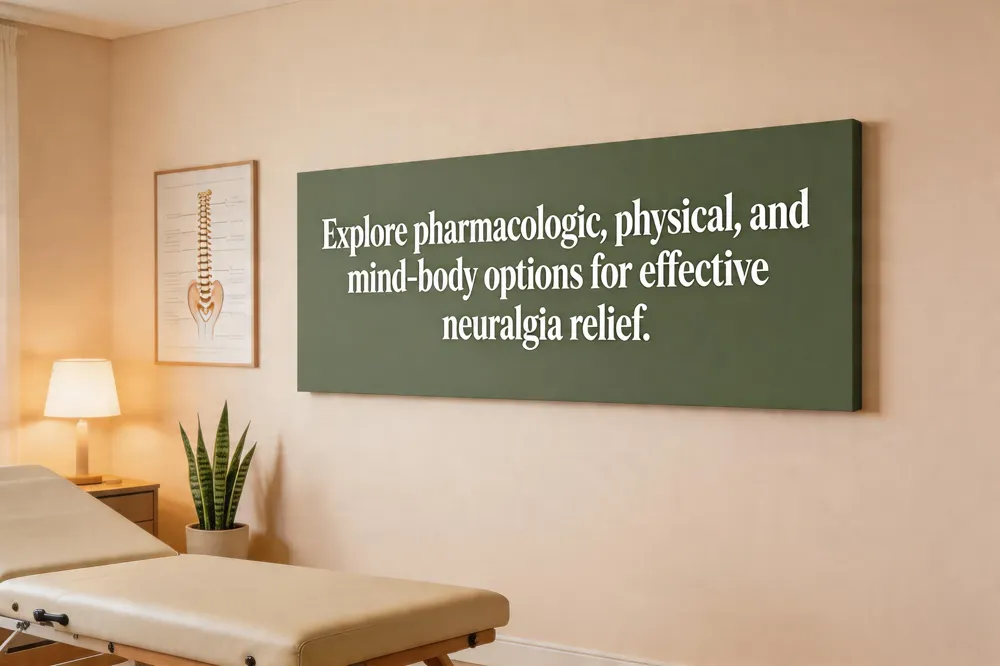 Pharmacologic options: gabapentin (up to 3600 mg/day) and pregabalin (titrated to 600 mg/day) lower pain intensity in trigeminal neuralgia and cervical radiculopathy; amitriptyline and duloxetine improve headache frequency and neck pain. Physical therapy and exercise programs that combine stretching, strengthening, aerobic conditioning, and posture training restore cervical function and reduce disability. Cognitive‑behavioral therapy and mindfulness stress reduction lower pain severity, enhance coping, and improve quality of life. Transcutaneous electrical nerve stimulation (TENS) provides relief by modulating nociceptive pathways, while repetitive transcranial magnetic stimulation (rTMS) applied to the primary motor cortex shows promise for trigeminal neuralgia. Acupuncture and herbal adjuncts such as St. John’s Wort, Devil’s Claw, and Feverfew add anti‑inflammatory and analgesic benefits.
Southeast Chiropractic Gastonia – Southeast Family Chiropractic, 616 Cox Rd, Gastonia, NC 28054, offers spinal adjustments, myofascial release, cold‑laser therapy, and family‑focused rehabilitation.
Chiropractor Gastonia – Licensed clinicians provide spinal adjustments, corrective exercise, electrical stimulation, laser therapy, and custom orthotics, addressing back, neck, and joint pain with a holistic, drug‑free approach.
Best chiropractor in Gastonia, NC – Recognized for evidence‑based care, Southeast Family Chiropractic combines gentle adjustments, laser therapy, and rehabilitation, delivering patient satisfaction and family wellness.
Regional Chiropractic Resources and Complementary Clinics
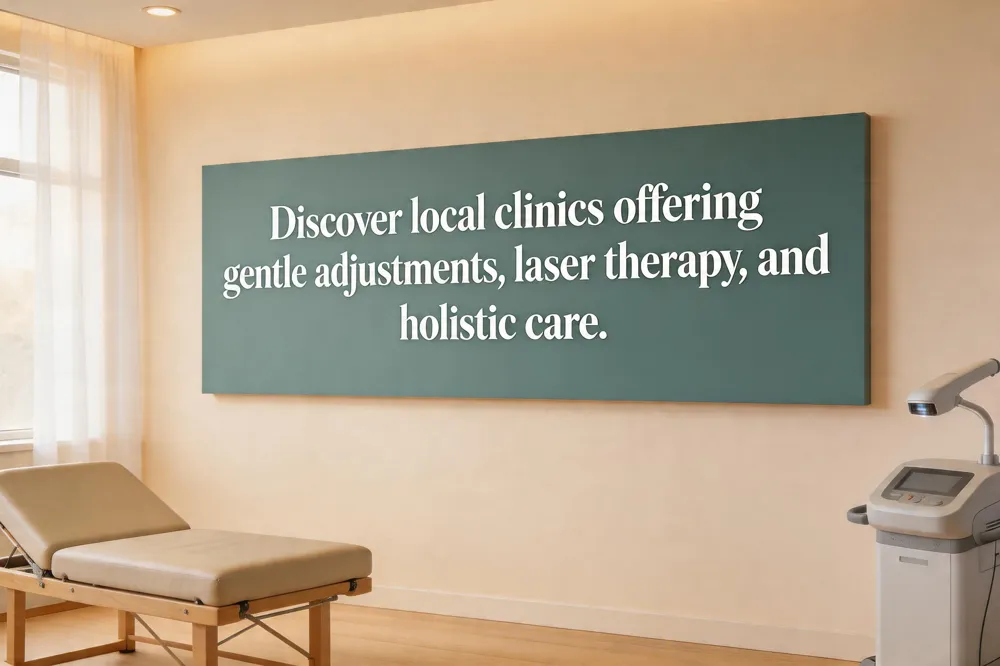 Carolina Chiropractic Plus extends its family‑focused, non‑invasive care across two convenient North Carolina sites. In Belmont, the clinic at 5803 Wilkinson Blvd. offers a full suite of services—gentle spinal adjustments, Class IV laser therapy, spinal decompression, instrument‑assisted adjusting, and custom foot orthotics—to alleviate pain and enhance functional health. Flexible hours (Monday 8 am‑5 pm, Tuesday 2‑5 pm, Wednesday 8‑12 pm, Thursday 8‑5 pm, Friday 8‑12 pm) and a simple online booking system let patients schedule appointments with ease.
In Gastonia, Carolina Chiropractic Plus operates from 528 Union Road, providing evidence‑based chiropractic care, dry needling, functional‑medicine counseling, and advanced therapies such as low‑level laser and instrument‑assisted adjustments. The practice, led by Dr. Jessica McGonagle, emphasizes patient education—offering ergonomic advice, posture workshops, and home‑exercise programs—to empower individuals in maintaining long‑term neck and head health. New‑patient appointments can be arranged by phone (704) 867‑1010 or through the clinic’s responsive website, ensuring a seamless entry into a personalized, drug‑free treatment plan.
Finding Gentle, Convenient Care Near You
 When you’re looking for a soft‑touch, patient‑centered approach to neck and head health, Southeast Family Chiropractic in Gastonia, North Carolina, offers exactly that. Gentle chiropractic near me – The clinic uses low‑velocity, low‑amplitude techniques such as cervical mobilization, manual traction, drop‑table adjustments and instrument‑assisted low‑force methods. These gentle approaches are ideal for anyone who prefers comfort over the audible “cracking” of traditional high‑velocity thrusts. You can book an appointment online or call the office to discuss your concerns, and the team will tailor each session to your individual needs, providing effective spinal alignment with minimal discomfort.
Chiropractor near me – Southeast Family Chiropractic combines gentle spinal adjustments with family and prenatal care, laser therapy, and rehabilitative exercises. Each provider focuses on non‑invasive, root‑cause treatment that promotes natural healing. Scheduling is easy via the website or by calling (704) 555‑1234, and the clinic is located at 1234 Main Street, Gastonia, NC 28053.
Craniosacral Therapy near me – Certified specialists at the same practice deliver light‑touch craniosacral sessions that release tension, improve cerebrospinal‑fluid flow, and support chronic pain, headache, stress, and even newborn feeding issues. Flexible appointment times and online booking make it simple to start this safe, holistic therapy close to home.
Craniosacral Therapy: Science, Safety, and Clinical Outcomes
 Craniosacral therapy (CST) is a gentle, hands‑on modality that uses light‑touch (≈5 g) to release fascial tension and promote the natural rhythm of cerebrospinal fluid (CSF) circulation throughout the skull‑spine‑sacrum system. Practitioners believe that improving CSF flow helps the nervous system self‑regulate and reduce pain. Randomized controlled trials support its clinical benefit: a sham‑controlled study of 54 patients with chronic nonspecific neck pain showed a 21 mm greater reduction on a 100‑mm VAS after eight weeks (Cohen’s d = 1.02) and sustained improvement at 20 weeks; a 2012 migraine study reported significant symptom reduction after CST. Safety is favorable—most adverse events are mild (temporary dizziness, headache, or shivering) and resolve quickly. Contraindications include recent concussion, brain swelling, aneurysm, Chiari malformation, and any condition altering CSF pressure. Typical sessions last 30–60 minutes, performed fully clothed in a low‑light, soft‑music environment, with gentle pressure applied to the head, neck, and back, followed by slow, slow rise to prevent falls.
Gentle Chiropractic Techniques: Mobilization, Drop‑Table, and Instrument‑Assisted Adjustments
 Low‑velocity cervical mobilization and manual traction are gentle hands‑on methods that move the neck in slow, controlled oscillations or a gentle pulling force while the patient lies supine, seated, or prone. These techniques reduce joint fixations, improve range of motion, and alleviate muscle tension without the audible “cracking” of high‑velocity thrusts. Drop‑table adjustments use a specially designed table that gently lowers a targeted vertebral segment when the chiropractor applies incremental pressure; the short, controlled drop releases restriction while producing minimal sound and force. The Activator method delivers precise, low‑force impulses through a spring‑loaded handheld device, offering a silent, reproducible alternative for patients sensitive to manual thrusts. When combined with therapeutic exercise programs—such as deep‑neck‑flexor strengthening, posture‑correction drills, and myofascial release work—these gentle chiropractic interventions enhance functional outcomes, reduce pain, and support long‑term spinal health. Lifestyle counseling on ergonomics, sleep hygiene, and stress‑management further reinforces the benefits, helping patients maintain the gains achieved through each‑invasive care.
Putting It All Together – A Path to Head and Neck Health
Non‑invasive modalities—such as gentle spinal and cranial adjustments, low‑force instrument‑assisted techniques, craniosacral therapy, therapeutic laser, exercise therapy, CBT, and mindfulness—address the mechanical, neural and and psychosocial components of craniopathy without surgery or drugs. When these tools are coordinated by a team that includes chiropractors, physical therapists, psychologists, and primary‑care physicians, treatment plans can be tailored to each patient’s pain patterns, lifestyle, and goals, maximizing safety and efficacy. Southeast Family Chiropractic in Gastonia offers this multidisciplinary, patient‑centered approach, combining gentle cervical mobilization, cranial osteopathy, laser therapy, and personalized rehab programs. Call today or book online to begin your journey toward lasting head‑and‑neck health.