Introducing a Brain‑Based, Affordable Approach
Focus Academy’s new curriculum centers on a whole‑to‑part, brain‑based clinical thinking system that places chiropractic at the core of patient care. By teaching clinicians a simple assessment hierarchy, the program shows when to use tools such as reflex integration, nutrition, and neurodevelopmental exercises and when to avoid them, streamlining decision‑making and reducing unnecessary costs. The certification series is designed for early‑career chiropractors seeking a solid foundation and for seasoned clinicians who feel something is missing in their practice. Both groups benefit from clear, parent‑focused communication training that mirrors the patient‑centric, affordable philosophy of Southeast Family Chiropractic in Gastonia, North Carolina. Graduates leave equipped to deliver evidence‑based, cost‑effective care that improves outcomes while honoring the practice’s holistic mission. Thus, clinicians can embed affordable, brain‑based care, reinforcing family‑focused wellness in every practice.
Affordable Patient Care: Costs and What to Expect at the First Visit
 Typical out‑of‑pocket fees for chiropractic adjustments range from $60 to $200 per session, with most patients paying $75‑$100 for a standard adjustment. The first visit, which usually includes a comprehensive exam and any needed imaging, is higher—$100‑$250—while follow‑up visits fall to $50‑$90. A comprehensive initial exam consists of a health‑history questionnaire, posture assessment, range‑of‑motion testing, muscle‑strength and nerve‑function checks, and, when indicated, X‑rays or other imaging. The chiropractor then explains the findings and outlines a personalized plan that may include adjustments, soft‑tissue work, therapeutic exercises, and lifestyle advice. Many clinics offer cash‑discounts, membership models (e.g., $47 per month for weekly upgrades), and package pricing (e.g., 6‑visit package for $209) to lower costs.
How much does a chiropractor cost without insurance? A visit without insurance typically costs $60‑$200 per session; the first comprehensive exam is $100‑$250, with follow‑ups $50‑$90. Practices often provide cash‑discounts, multi‑visit packages, or memberships to reduce out‑of‑pocket expenses.
What should I expect during my first chiropractic visit? You will complete a health‑history questionnaire, discuss symptoms, undergo a physical exam (posture, ROM, strength, nerve checks), possibly receive imaging, hear an explanation of your condition, and get a personalized treatment plan. A gentle adjustment may be performed during the same 45‑minute to hour‑long appointment.
Educational Pathways: Costs, Duration, and Fast‑Track Options
 What is the average cost of chiropractic school?
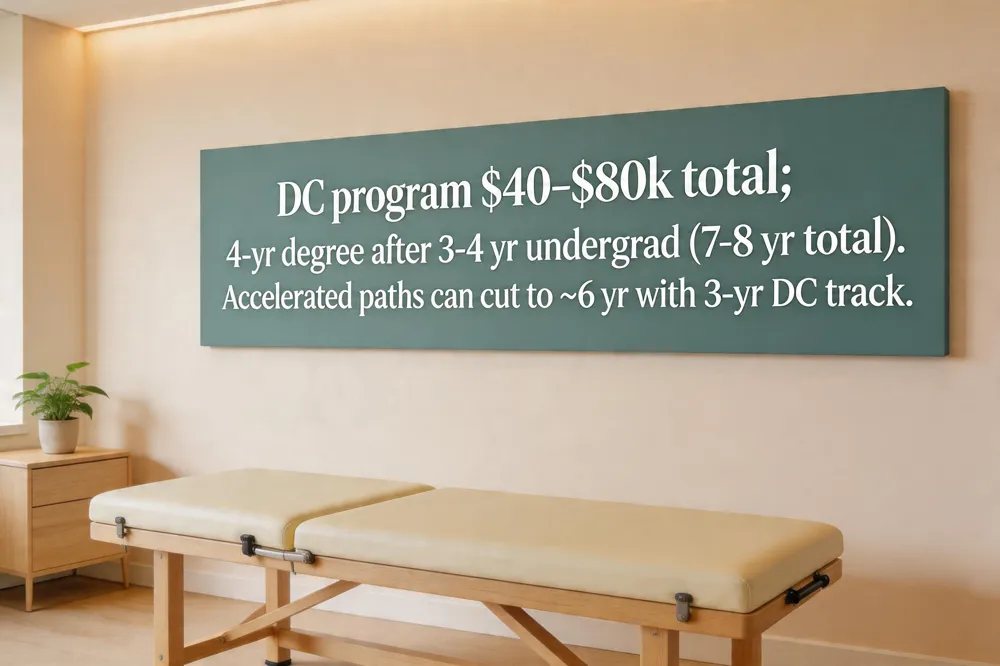
The total expense for a Doctor of Chiropractic (DC) program in the United States typically ranges from $40,000 to $80,000, including tuition, fees, books, housing, food, and transportation. Public schools average $5,000‑$10,000 per year, while private institutions cost $10,000‑$20,000 annually. Scholarships, grants, and federal loans can lower out‑of‑pocket costs, but most students budget $50,000‑$100,000 for the full program.
What is the average cost of chiropractic school?
The total expense for a Doctor of Chiropractic (DC) program in the United States typically ranges from $40,000 to $80,000, including tuition, fees, books, housing, food, and transportation. Public schools average $5,000‑$10,000 per year, while private institutions cost $10,000‑$20,000 annually. Scholarships, grants, and federal loans can lower out‑of‑pocket costs, but most students budget $50,000‑$100,000 for the full program.
What's the fastest you can become a chiropractor? The quickest route combines three years of undergraduate prerequisite coursework with an accelerated DC program that can be completed in about three years, yielding a total of six years of post‑high‑school education. This fast‑track still requires 90 credit hours of science courses and a solid GPA, after which graduates must pass the four‑part National Board exam for licensure.
How many years does a chiropractic degree take? A traditional DC curriculum lasts four years, preceded by three to four years of undergraduate study, resulting in roughly seven‑to‑eight years of total education. Some schools offer a three‑year DC track for students who already hold the required prerequisites, shortening the overall timeline.
How long does it take a chiropractor to go to school? Overall, becoming a chiropractor involves 3‑4 years of undergraduate prerequisites followed by a 4‑year DC program, totaling about 7‑8 years. Accelerated pathways can reduce the DC portion to just over three years, but the combined educational commitment remains around six to seven years before licensure.
Practice Foundations: Startup Costs and Business Models
 Launching a chiropractic office in the United States typically requires an initial outlay of $100,000–$150,000, covering lease or purchase, build‑out, adjustment tables, imaging or laser equipment, licensing, insurance and a first‑year marketing budget. Solo practitioners who prioritize low overhead can often start for $50,000–$100,000 by securing a pre‑finished space and buying gently‑used gear, while franchise models demand $245,000–$543,000 plus a $39,900 franchise fee and extensive branding and technology costs. Regardless of the model, budgeting for three months of rent, utilities, professional fees and a modest office‑manager salary is essential. Focus Academy’s Elite Access mentorship offers ongoing community support, business‑system training, and parent‑communication frameworks that help new clinicians streamline operations, reduce wasteful spending, and accelerate patient acquisition, making both solo and franchise pathways more financially viable.
Clinical Expansions: ALS Management and Lymphatic Drainage
 Regarding lymphatic drainage, chiropractors who complete specialized training can incorporate manual lymphatic‑drainage techniques, inversion therapy, or gentle massage to reduce swelling and support the body’s waste‑removal system. If a practitioner lacks the certification, they typically refer patients to a licensed therapist. Focus Academy’s Elite Access mentorship further equips clinicians with the communication and practice‑management skills needed to integrate these services seamlessly into a family‑focused, affordable care model.
Comparing Disciplines: Chiropractic vs Medical School Rigor
 Both chiropractic and medical programs require four years of undergraduate pre‑medical coursework followed by four years of professional school, so the overall time commitment is comparable. The basic sciences—anatomy, physiology, pathology, chemistry, and microbiology—are taught in both tracks, but the distribution of hours differs: chiropractic students spend more time on anatomy, neurology, orthopedics, biomechanics, and radiology, while medical students devote more hours to pathology, pharmacology, obstetrics/gynecology, psychiatry, and surgery. Clinical training also varies; chiropractors complete most of their hands‑on patient work during school, whereas physicians continue extensive clinical rotations and often a residency after graduation. Because each curriculum emphasizes different skill sets, the perceived difficulty is largely personal—students who thrive on manual‑therapy techniques may find chiropractic school more manageable, while those drawn to pharmacology and surgery may prefer medical school. Ultimately, both paths are academically rigorous and require passing demanding national board exams before licensure.
A New Era of Affordable, Brain‑Based Chiropractic Care
Focus Academy’s mentorship and Elite Access programs give clinicians ongoing guidance, case‑review forums, and a clear pathway to master the brain‑based, whole‑to‑part thinking system. Through Elite Access, graduates receive personalized coaching, the Brain Blossom® at‑home program, and a peer network that reinforces family communication. Southeast Family Chiropractic can adopt the curriculum to sharpen pediatric assessments, streamline interdisciplinary plans, and offer affordable, evidence‑based care that matches its non‑invasive philosophy. Clinicians are encouraged to explore these cost‑effective options—via the $47/month New Family Practice membership, certification series, or Elite Access—to expand skills and bring high‑quality, brain‑based care to more families.