Understanding Disc Pressure
Spinal decompression is an umbrella term for treatments intended to reduce pressure on spinal nerves and other structures. It does not describe one uniform procedure: nonsurgical traction and surgery are very different approaches, and chiropractic care is another distinct treatment option.
Spinal discs cushion the vertebrae and help the spine move flexibly. Injury, changes to a disc, or age-related wear can contribute to pressure on nearby nerves, sometimes causing pain, numbness, or tingling. Those symptoms can have other causes too, so they do not identify a disc problem on their own.
Nonsurgical traction uses controlled stretching and relaxation to alter forces on the spine. One proposed effect is lower pressure inside a disc, but that mechanism should not be confused with proven, lasting pain relief or disc repair. The evidence and response can vary, making an individual assessment important before choosing treatment.
How Nonsurgical Decompression Works
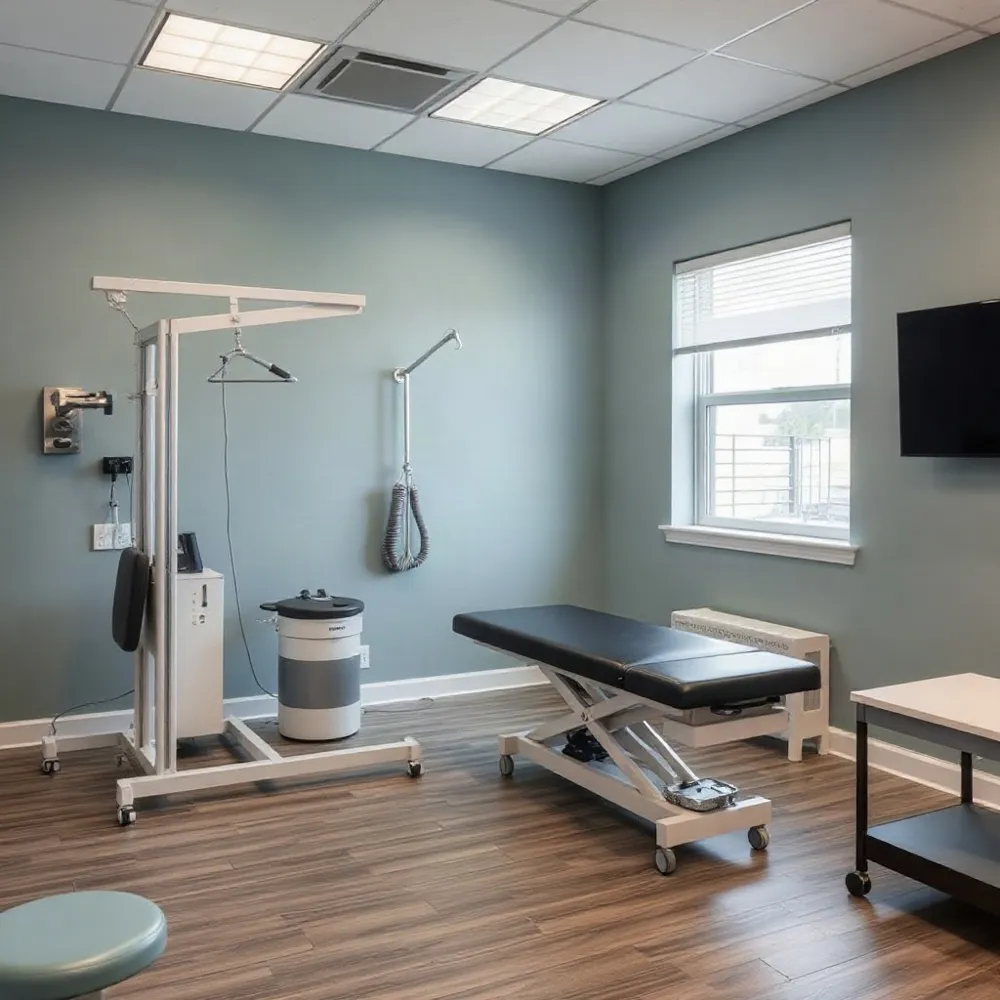 Nonsurgical spinal decompression is a form of motorized traction designed to reduce pressure on spinal discs and nearby nerves. A patient typically lies on a treatment table and wears harnesses that secure the body while the machine applies controlled stretching and relaxation. Equipment and protocols vary, so a provider can explain the specific setup being considered.
The proposed mechanism is that changing the forces on the spine may reduce pressure inside a disc and around nearby nerves. Some descriptions suggest that this pressure change could help bulging disc material move inward or encourage fluid movement within the disc. These are proposed effects, not guaranteed results. A small pressure study summarized in a scientific review was too limited to show that measured pressure changes reliably ease symptoms or heal a disc (review of nonsurgical spinal decompression).
This treatment is not the same as a chiropractic adjustment, physical therapy, acupuncture, or TENS, which Cleveland Clinic lists as separate nonsurgical care options. Surgical decompression is different again: it relieves pressure by removing disc material, bone, or other tissue. These approaches are not interchangeable, and the choice depends on the cause of symptoms and individual health factors (Cleveland Clinic’s overview of spinal decompression).
Evaluation may be considered for symptoms associated with bulging or herniated discs, sciatica, pinched nerves, or spinal stenosis. A diagnosis alone does not show that traction is appropriate. At southeastchiro.com, care includes chiropractic and rehabilitative treatments, and a clinician can assess the person’s needs before discussing possible approaches.
What Research Can Tell Us
 Research offers some encouraging findings, but it does not show that nonsurgical spinal decompression reliably repairs a disc or relieves pain for everyone. A 2007 review found sparse, generally low-quality evidence available through September 2006 and concluded that it was insufficient to support routine use. That paper was an older debate article, not a current comprehensive review, so it should be read as a snapshot of the evidence at that time, not a final verdict on treatment today. The review also stressed that study results may not apply across different devices and treatment methods.
A later randomized study examined nonsurgical decompression in 60 adults with MRI-confirmed lumbar disc herniation and symptoms lasting from four weeks to three months. In the final analysis, 43 participants remained. The active-treatment group had a greater average reduction in an MRI measure of herniation than the sham group, but lower-back pain did not improve significantly more with active treatment at any follow-up. The 2022 study therefore suggests a possible imaging effect under the study conditions, not proof that treatment consistently reduces pain.
The study was small, and more people dropped out of the sham group. It tested a particular motorized traction protocol, so its results cannot be assumed to apply to every device, patient, or chiropractic technique. Southeast Family Chiropractic describes its care as personalized and non-invasive, making individual assessment central rather than treating one research protocol as a universal plan.
Disc symptoms can change over time, including during conservative care, which makes it difficult to separate treatment effects from natural improvement. The available evidence does not establish dependable disc repair or lasting relief for all patients. A healthcare professional can review symptoms and treatment options. Seek urgent medical care for new or worsening leg weakness, numbness in the groin area, or loss of bladder or bowel control.
Potential Benefits and Tradeoffs
Nonsurgical decompression aims to reduce pressure on spinal discs or nearby nerves, with the hope of easing related pain and improving everyday function. Some people may feel better, but treatment does not guarantee relief or repair a disc. The Cleveland Clinic’s overview of spinal decompression describes several treatment options and notes that suitability and outcomes depend on the individual.
A practical tradeoff is time: decompression may involve repeated visits, and it may not help. If pain persists, clinicians often start with less invasive care and may consider surgery when other approaches have not worked. Motorized traction is not a substitute for surgery when a clinician determines that a surgical procedure is medically indicated.
Treatment choice should reflect the cause of symptoms, health history, and personal goals. At southeastchiro.com, the practice describes a patient-focused approach that includes chiropractic care and rehabilitative treatments, rather than presenting one option as right for everyone. Ask a clinician how decompression fits with other appropriate care and what signs would prompt a reassessment.
The available medical sources do not establish a standard price for nonsurgical decompression or whether a particular insurance plan covers it. Before starting, request an itemized treatment plan from the clinic, including the proposed number of visits and any additional services, then confirm coverage and out-of-pocket costs with your insurer.
Treatment Course and Expectations
How long does spinal decompression therapy take to work, and how long might its effects last? There is no established timeline that applies to everyone, and available sources do not show how long relief typically lasts. Treatment schedules vary by protocol and individual assessment.
WebMD describes sessions lasting 30 to 45 minutes and a possible course of 20 to 28 treatments over five to seven weeks. A 2022 randomized study used 10 sessions over eight weeks as part of its specific research protocol. Neither schedule is a prescription or a guarantee of when someone will notice improvement.
A treatment plan should account for the person’s symptoms, health history, and response. At Southeast Family Chiropractic in Gastonia, care is described as personalized and may include rehabilitative treatments alongside chiropractic care. A provider can explain the proposed approach and reassess whether it is helping, rather than assuming a fixed number of visits will suit everyone.
Is spinal decompression therapy a permanent fix? It should not be presented that way. Symptom relief does not stop age-related spinal changes or ensure that a problem will not return. If symptoms persist, worsen, or recur, follow-up with a qualified healthcare professional can help determine whether to continue, adjust, or consider another approach.
Safety and Individual Assessment
 Is spinal decompression therapy safe, and what are its potential risks or side effects? Safety depends on the person and the treatment. Temporary soreness or worsening symptoms are possible, but the available sources do not establish a universal risk rate.
A 2007 review described one person whose radiating nerve pain became severe during treatment and who later needed surgery. A single case cannot show how often this happens. In contrast, a 2022 clinical study reported no related adverse events among its participants, but a small study cannot prove that treatment is risk-free.
Before treatment, a clinician should consider your medical history, symptoms, and physical examination. Depending on the situation, imaging such as X-rays, CT, or MRI may help identify the cause and severity of pain. The Cleveland Clinic’s overview of spinal decompression also emphasizes that treatment choice depends on individual health and the underlying problem.
Pregnancy, fractures, tumors, advanced osteoporosis, and metal implants in the spine are examples of factors that may affect eligibility. They do not replace an individual assessment: a qualified professional can review the risks and discuss other options. At southeastchiro.com, care includes assessment of a patient’s circumstances as part of its personalized approach to spinal health; that evaluation should guide whether a treatment is appropriate.
Stop treatment and promptly tell the treating professional if pain worsens or new numbness or weakness develops. Seek urgent care for severe or rapidly worsening weakness, or loss of bowel or bladder control.
Gentle Movement at Home
Gentle movement may ease stiffness for some people, but exercises are not the same as mechanical decompression therapy, and they cannot be assumed to treat a disc or nerve problem. Physical therapy is guided care; a therapist can select movements based on your symptoms, function, and health history.
Depending on the person, a clinician may suggest movements such as abdominal bracing, knee-to-chest stretches, lower-trunk rotations, hamstring stretches, Cat-Cow, or Child’s Pose. These examples are not suitable for everyone, and there is no universal daily schedule. Ask a healthcare professional which movements to try and how often. Southeast Family Chiropractic’s rehabilitative care can be discussed as part of an individualized approach, rather than treated as a substitute for assessment.
Start gradually and stay within a comfortable range. Stop if a movement worsens pain or brings on numbness, tingling, or weakness. Do not assume that hanging, inversion, or at-home traction is safe for you; treatment choices depend on the cause of symptoms. The SCOI guide to gentle back exercises also advises using exercises safely and under appropriate guidance.
Arrange a professional evaluation if pain persists, worsens, or limits daily activities. Seek emergency care for loss of bowel or bladder control, which can signal a serious problem.
A Personalized Decision
Traction is intended to change forces around spinal discs, but that proposed effect is not proof of reliable pain relief or disc healing. Research on nonsurgical decompression remains limited, and findings from a particular treatment protocol may not apply to every device or patient.
Before choosing care, ask a qualified healthcare professional what may be causing your symptoms, what evidence supports the recommended treatment, and what risks, costs, and alternatives to consider. Cleveland Clinic’s overview of spinal decompression also emphasizes that treatment depends on individual health history and injury severity. At southeastchiro.com, care includes evaluation and discussion of non-invasive options such as chiropractic adjustments and rehabilitative treatments, rather than a promise that one approach suits everyone.