Why Lifestyle Matters for Nerve Health
Every day we make choices that either calm or overstimulate the nervous system. Poor sleep, chronic caffeine, sedentary habits, and high‑sugar diets keep the sympathetic branch in overdrive, raising cortisol and eroding myelin, while regular movement, deep breathing, and nutrient‑dense foods boost parasympathetic tone, support neurotransmitter synthesis, and protect nerve membranes. The six evidence‑based pillars of lifestyle medicine—nutrition, physical activity, sleep, stress management, substance use moderation, and social connection—have been repeatedly linked to lower blood pressure, reduced amygdala activity, and higher heart‑rate variability, all markers of a resilient nervous system. Adding nature exposure as a seventh pillar further lowers cortisol and enhances vagal tone. Chiropractic care complements these habits by correcting subluxations that can irritate nerves, restoring spinal alignment, and often increasing parasympathetic activity and HRV. When spinal health is optimized, the body can more effectively utilize the benefits of diet, movement, sleep and and mindfulness, creating a synergistic, holistic nervous‑system health plan.
The Science of Lifestyle Choices on Nervous‑System Health
Science of Lifestyle Choices
| Lifestyle Factor | Key Mechanism on Nervous System | Recommended Practice |
|---|---|---|
| Nutrition | Supplies amino acids, B‑vitamins, omega‑3s for myelin & neurotransmitter synthesis | Eat a varied diet rich in leafy greens, fatty fish, nuts, seeds, avocado, turmeric, dark chocolate, berries |
| Exercise | Triggers neurogenesis, raises BDNF, improves HRV | 30 min moderate aerobic activity 5 days/week + weekly yoga/stretching |
| Sleep | Activates glymphatic clearance, restores myelin | 7‑9 hrs of uninterrupted, cool, dark sleep; limit screens before bedtime |
| Stress Management | Shifts autonomic balance toward parasympathetic, reduces cortisol | Daily mindfulness or breathing practice, grounding, nature exposure |
 Lifestyle choices act as a daily prescription for the nervous system. Nutrition supplies the amino acids, B‑vitamins, calcium, potassium, omega‑3s, and antioxidants that build myelin, synthesize neurotransmitters, and protect neurons from oxidative stress. Diets rich in leafy greens, fatty fish, dark chocolate and fortified foods support neuro‑plastic pathways, whereas excess sugars, saturated fats, and alcohol provoke inflammation and impair signal transmission.
Exercise triggers neurogenesis in the hippocampus, raises brain‑derived neurotrophic factor (BDNF) and improves heart‑rate variability, a marker of autonomic balance. Moderate aerobic activity, yoga, and gentle stretching increase cerebral blood flow, lower cortisol, and strengthen peripheral nerve conduction.
Sleep allows the glymphatic system to clear metabolic waste, consolidates memories, and restores myelin integrity; 7‑9 hours of quality rest reduces stress hormones and supports mood regulation.
Stress Management—through mindfulness, diaphragmatic breathing, grounding, and nature exposure —shifts the autonomic system toward parasympathetic dominance, decreasing amygdala reactivity and cortisol output.
Answer to the Key Question: Lifestyle choices directly shape nervous‑system health. Nutrient‑dense foods provide essential building blocks, regular movement fuels neuroplasticity and autonomic balance, restorative sleep clears brain waste and stabilizes mood, and stress‑reduction techniques lower cortisol and neuroinflammation. Together, these habits create a resilient, flexible nervous system capable of rapid recovery from challenges.
Nutrient Powerhouses: 7 Foods That Heal Nerve Damage
Nutrient Powerhouses
| Food | Key Nutrients | Neuroprotective Action |
|---|---|---|
| Leafy greens (spinach, kale, Swiss chard) | B‑vitamins (B1, B2, B6, B12, folate), antioxidants | Supports myelin synthesis, reduces oxidative stress |
| Fatty fish (salmon, mackerel, sardines) | EPA/DHA (omega‑3) | Rebuilds myelin sheath, anti‑inflammatory |
| Nuts & seeds (almonds, walnuts, flaxseed, chia) | Vitamin E, healthy fats, omega‑3 | Protects nerve cells from lipid peroxidation |
| Avocado | Potassium, monounsaturated fats | Maintains proper nerve signaling and membrane stability |
| Turmeric (curcumin) | Curcumin | Strong anti‑inflammatory, antioxidant, modulates cytokine response |
| Dark chocolate (≥70% cacao) | Flavonoids, magnesium | Improves cerebral blood flow, reduces oxidative stress |
| Berries (blueberries, strawberries, raspberries) | Anthocyanins, vitamin C | Enhances antioxidant capacity, supports neurogenesis |
 What are 7 foods that may heal nerve damage? Leafy greens such as spinach, kale, and Swiss chard are packed with B‑vitamins and antioxidants that support nerve repair. Fatty fish like salmon, mackerel, and sardines provide omega‑3 fatty acids that help rebuild the myelin sheath. Nuts and seeds—including almonds, walnuts, flaxseeds, and chia seeds—are rich in vitamin E and healthy fats that protect nerve cells. Avocados supply potassium and monounsaturated fats essential for proper nerve signaling. Turmeric’s curcumin offers powerful anti‑inflammatory and antioxidant effects, while dark chocolate’s flavonoids improve blood flow and reduce oxidative stress. Finally, berries (blueberries, strawberries, raspberries) deliver abundant antioxidants that further aid nerve regeneration.
Key nutrients and their neuroprotective actions: B‑vitamins (B1, B2, B6, B12, folate) foster neurotransmitter synthesis and myelin health; omega‑3s (EPA/DHA) maintain membrane fluidity and curb inflammation; vitamin E and flavonoids act as antioxidants; curcumin from turmeric reduces cytokine storms.
Practical incorporation: add a spinach‑kale smoothie for breakfast, toss salmon or sardines into salads, sprinkle walnuts or chia on oatmeal, spread avocado on toast, season dishes with turmeric, enjoy a square of dark chocolate as a snack, and top yogurt with mixed berries.
Vitamin Toolkit: 7 Nutrients Essential for Nerve Repair
Vitamin Toolkit
| Vitamin | Primary Role in Nerve Repair | Food Sources |
|---|---|---|
| B1 (Thiamine) | Energy metabolism for neurons, myelin formation | Whole grains, pork, legumes |
| B2 (Riboflavin) | Antioxidant defense, nerve conduction | Dairy, eggs, leafy greens |
| B6 (Pyridoxine) | Neurotransmitter synthesis (serotonin, GABA) | Chickpeas, bananas, nuts |
| B12 (Cobalamin) | Myelin maintenance, DNA synthesis | Fish, meat, fortified cereals |
| Vitamin D | Modulates immune response, supports neuromuscular function | Fatty fish, fortified dairy, sunlight |
| Vitamin E | Lipid‑soluble antioxidant protecting membrane integrity | Sunflower seeds, almonds, spinach |
| Vitamin C | Water‑soluble antioxidant, collagen synthesis for nerve sheaths | Citrus fruits, bell peppers, berries |
 The seven vitamins most commonly recognized for supporting nerve repair are Vitamin B1 (thiamine), Vitamin B2 (riboflavin), Vitamin B6 (pyridoxine), Vitamin B12 (cobalamin), Vitamin D, Vitamin E, and Vitamin C. B‑complex vitamins are critical for myelin synthesis, nerve‑signal transmission, and neurotransmitter production; deficiencies can lead to demyelination and slowed conduction. Vitamin D enhances neuromuscular function and modulates immune responses that protect nerve tissue. Vitamins E and C serve as potent antioxidants, neutralizing free radicals that damage neuronal membranes and DNA. Food sources include leafy greens, nuts, and seeds (B‑vitamins, Vitamin E), fatty fish, egg yolks, and fortified dairy (B12 and Vitamin D), citrus fruits, berries, and bell peppers (Vitamin C), and whole grains and legumes (B1, B2, B6). Supplementation may be needed for individuals with limited dietary intake, malabsorption, or higher physiological demand, but it should be guided by a healthcare professional to avoid excess. Together, these nutrients create a supportive environment for myelin repair, reduce inflammation, and protect nerves from oxidative stress, fostering overall nervous‑system resilience.
Natural Healing Strategies for the Nervous System
Natural Healing Strategies
| Practice | Primary Benefit | How to Implement |
|---|---|---|
| Diaphragmatic breathing (4‑7‑8, physiological sigh) | Lowers cortisol, activates parasympathetic | 5 min, morning & evening, focus on belly rise |
| Gentle movement (walking, yoga, light stretching) | Increases blood flow, releases stored adrenaline | 30 min walk in park or 20 min yoga flow daily |
| Good sleep hygiene | Glymphatic clearance, myelin restoration | 7‑9 hrs, cool dark room, no screens 1 hr before bed |
| Grounding (barefoot walking, earthing mat) | Modulates vagus nerve, reduces inflammation | 10‑15 min barefoot on grass or use mat while working |
| Social connection | Oxytocin release, stress buffering | Schedule regular video calls or in‑person meet‑ups |
| Digital detox (screen‑free evenings, limited caffeine) | Prevents sympathetic overstimulation | No screens after 8 pm, caffeine cut after 2 pm |
 Healing the nervous system naturally starts with breath. Slow diaphragmatic breathing, the 4‑7‑8 pattern, or a physiological sigh send safety signals to the brain, lowering cortisol and activating parasympathetic tone. Gentle movement—walking in a park, yoga, or light stretching—helps release stored adrenaline and re‑balances sympathetic‑parasympathetic activity while improving blood flow to nerves. Good sleep hygiene (7‑9 hrs, dark cool bedroom, limited screens), adequate hydration, and grounding practices such as barefoot walking or earthing reinforce cellular repair and steadier autonomic rhythms. Social connection provides oxytocin‑mediated calming, and a digital‑detox (screen‑free evenings, reduced caffeine) prevents overstimulation of the sympathetic system. Together, these lifestyle pillars support neural resilience, reduce inflammation, and promote a calmer, more flexible nervous system. Regular chiropractic adjustments can further fine‑tune spinal alignment, enhancing neural communication and sustaining the benefits of these natural strategies.
Chiropractic Care as a Nervous‑System Reset Tool
Chiropractic Care as a Nervous‑System Reset Tool
| Effect | Measurable Outcome | Typical Frequency |
|---|---|---|
| Alignment of spinal sub‑luxations | Increased heart‑rate variability (HRV) | 2–3 sessions per week for 4–6 weeks |
| Reduction of sympathetic over‑drive | Lower cortisol levels, improved sleep quality | Maintenance visits (1‑2 per month) |
| Enhanced parasympathetic tone | Faster recovery from stress, calmer heart rate | Follow‑up as needed based on symptoms |
| Improved nerve conduction | Reduced peripheral pain, better motor function | Initial intensive phase, then periodic reassessment |
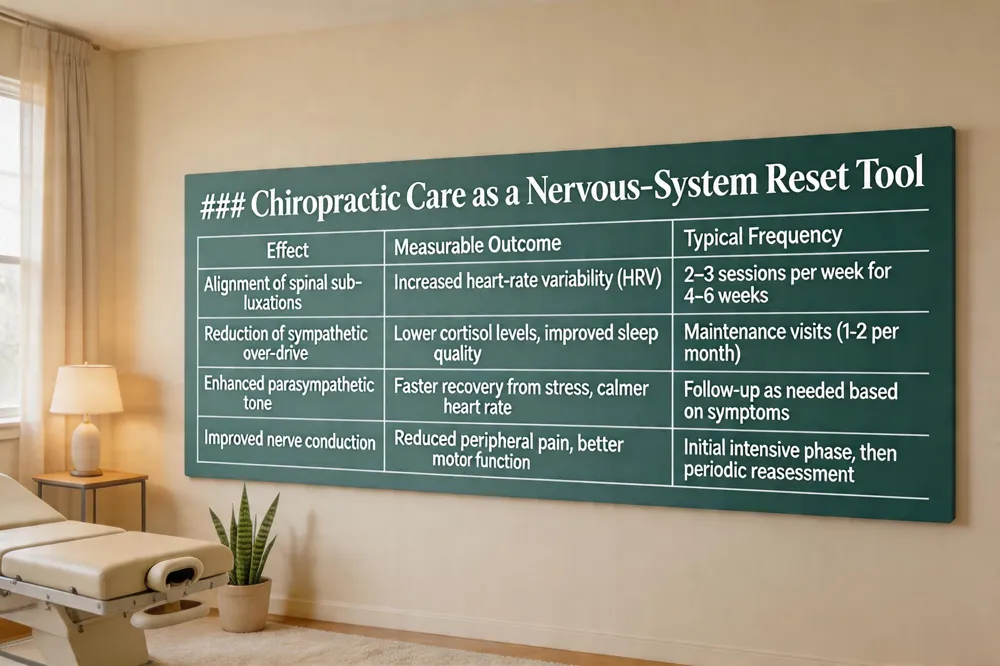 Spinal adjustments work by correcting sub‑luxations that place unwanted pressure on nerves, especially those that travel through the cervical and thoracic regions. When alignment is restored, the nervous system can communicate more efficiently, reducing sympathetic over‑drive and allowing the parasympathetic branch to dominate. This shift in autonomic balance is reflected in measurable changes in heart‑rate variability (HRV), a reliable marker of nervous‑system flexibility. Several U.S. studies have shown that a single chiropractic visit can raise HRV scores within minutes, and regular care (2–3 sessions per week) produces sustained improvements that correlate with lower cortisol, better sleep, and reduced anxiety.
For patients seeking a nervous‑system reset, expectations should be realistic: an adjustment is not a magic cure, but it initiates a cascade of physiological responses that promote relaxation and resilience. Most people notice a calmer heartbeat, deeper breathing, and a clearer mind within a day, and ongoing care helps maintain these benefits over weeks and months.
Can you reset your nervous system with a chiropractic adjustment? Conclusion: The Nervous System Connection By improving HRV, decreasing sympathetic overdrive, and encouraging parasympathetic activation, chiropractic offers a powerful, natural tool to reset your nervous system—one adjustment at a time.
Nature Medicine: The Unofficial Seventh Pillar
Nature Medicine – The Unofficial Seventh Pillar
| Activity | Recommended Duration | Nervous‑System Benefits |
|---|---|---|
| Forest bathing (shinrin‑yoku) | 120 min/week split into 20‑30 min sessions | ↓ amygdala activity, ↓ cortisol, ↑ parasympathetic tone |
| Green‑space exposure (parks, gardens) | 20‑30 min per visit, 3‑4×/week | Improves mood, reduces anxiety, enhances HRV |
| Indoor biophilic design (plants, natural light) | Continuous | Sustains low‑level parasympathetic activation |
| Nature soundscapes (water, birds) | 10‑15 min daily | Lowers heart rate, promotes relaxation |
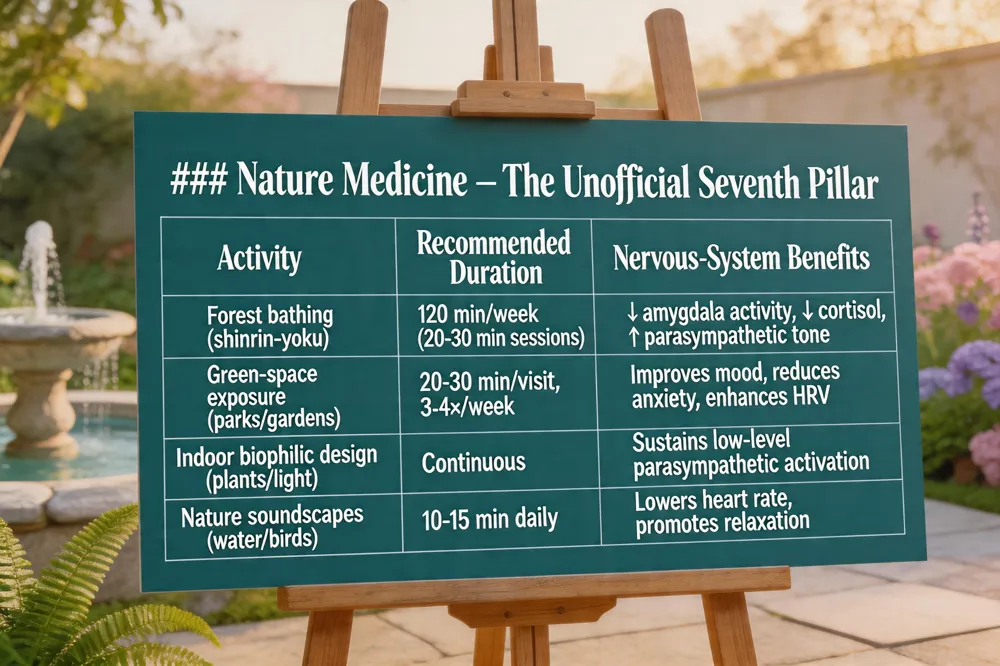 Spending time outdoors—especially in forested environments—acts as a potent regulator of nervous‑system balance. The practice of forest bathing (shinrin‑yoku) has been shown to dampen activity in the amygdala, the brain’s fear‑center, which translates into lower cortisol, reduced anxiety, and improved emotional regulation. Trees release volatile phytoncides; inhalation of these compounds boosts natural‑killer (NK) cell activity, indirectly strengthening immune‑mediated support for neural resilience. The psychological benefits are explained by Attention Restoration Theory (ART) and Stress Recovery Theory (SRT): ART describes how natural scenes replenish directed attention, while SRT documents how green spaces lower sympathetic arousal and increase parasympathetic tone, facilitating recovery from chronic stress. When outdoor exposure is not feasible, biophilic design—incorporating indoor plants, ample natural light, and nature imagery—can modestly raise parasympathetic activity and reduce sympathetic drive, helping maintain autonomic equilibrium. Research suggests that at least 120 minutes per week in green spaces, broken into 20‑30‑minute sessions, yields measurable improvements in mood, anxiety, and overall nervous‑system health, supporting the inclusion of nature as a seventh pillar of lifestyle medicine.
Biophilic Design & Everyday Parasympathetic Boosters
Biophilic Design & Parasympathetic Boosters
| Strategy | Mechanism of Action | Practical Tips |
|---|---|---|
| Indoor plants | Release phytoncides, improve air quality, lower sympathetic tone | Place a spider plant or pothos near work desk |
| Natural daylight (blue‑green light) | Boosts serotonin, regulates circadian rhythm, enhances vagal tone | Keep curtains open in morning, use daylight lamps in winter |
| Nature imagery (photos, videos) | Activates visual pathways that reduce amygdala activity | Hang landscape artwork or use a nature screensaver |
| Earthing (grounding) | Direct electrical connection to earth modulates vagus nerve | Walk barefoot on grass or use a grounding mat at home |
| Warm, dim evening lighting | Reduces blue‑light exposure, supports melatonin production | Use amber bulbs after sunset, avoid screens 1 hour before bed |
| Open, uncluttered sightlines | Decreases visual stress, promotes feelings of safety | Arrange furniture to allow clear view of windows |
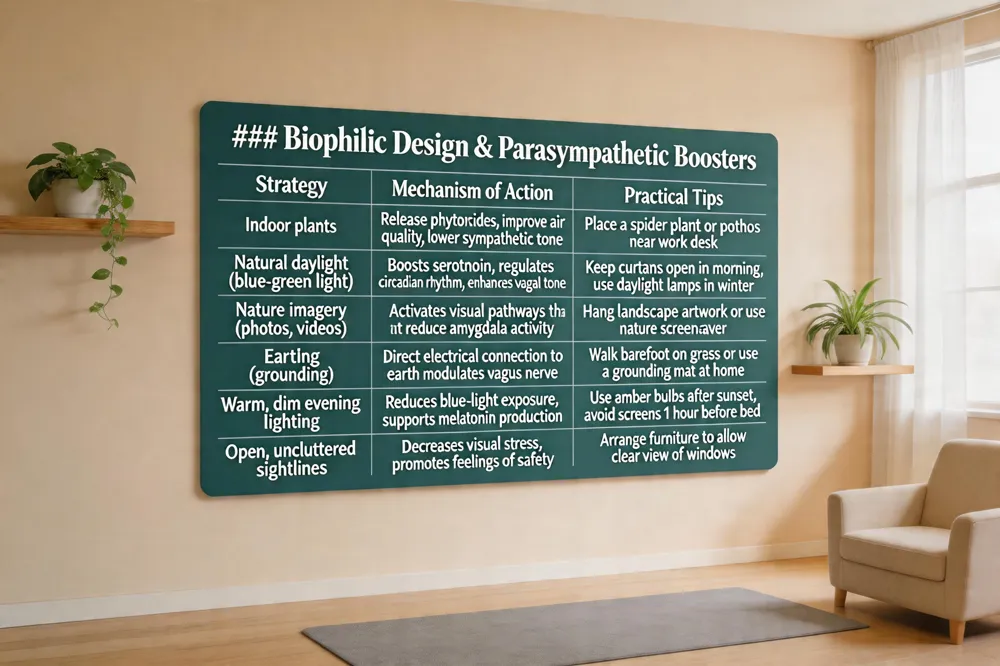 Bringing elements of the natural world into the home is a low‑cost way to nudge the nervous system toward parasympathetic dominance. Indoor plants release phytoncides that can modestly raise natural‑killer cell activity while also improving air quality; even a small potted fern or spider plant can increase the sense of safety and lower sympathetic tone. Natural daylight, especially blue‑green wavelengths found in sky and foliage, supports serotonin production and helps regulate circadian rhythms, which in turn stabilizes cortisol and boosts vagal tone. Simple nature imagery—pictures of trees, water, or mountains—activates the same brain pathways as actual green space, reducing amygdala activity and encouraging a calm emotional state.
Earthing, or walking barefoot on soil, grass, or sand, supplies a direct electrical connection to the earth that has been shown to modulate the vagus nerve, increasing heart‑rate‑variability and decreasing inflammation. For those unable to go outside, placing a grounding mat or conductive flooring under a rug can simulate this effect.
Home adjustments that further dampen sympathetic activation include using warm, dim lighting in the evening, minimizing artificial blue‑light exposure, and arranging furniture to create open, uncluttered sightlines that reduce visual stress. Together, these biophilic and grounding strategies create a restorative environment that supports nervous‑system resilience.
Integrating Nutrition, Movement, and Mind‑Body Practices
Integrated Lifestyle Pillars
| Pillar | Core Components | Synergistic Effect |
|---|---|---|
| Nutrition (Mediterranean/MIND diet) | Omega‑3s, antioxidants, B‑vitamins | Provides substrates for neurogenesis & reduces inflammation |
| Movement (150 min moderate aerobic + flexibility) | Aerobic exercise, yoga, tai chi | Increases BDNF, improves cerebral perfusion, strengthens peripheral nerves |
| Mind‑body (mindfulness, meditation, yoga) | Breath focus, body scan, gentle flow | Activates vagus nerve, lowers cortisol, enhances sleep quality |
| Chiropractic care (spinal alignment) | Regular adjustments | Optimizes neural signaling, supports autonomic balance |
| Combined impact | Nutrition supplies building blocks → movement triggers plasticity → mind‑body calms autonomic system → chiropractic fine‑tunes neural pathways | Creates a resilient, flexible nervous system capable of rapid recovery |
 A Mediterranean‑style or MIND diet supplies omega‑3 fatty acids, antioxidants, and B‑vitamins that protect neuronal membranes, reduce inflammation, and boost brain‑derived neurotrophic factor (BDNF) – a key driver of neurogenesis and mood regulation. Pairing this nutrient foundation with at least 150 minutes of moderate aerobic exercise further amplifies BDNF release, improves cerebral blood flow, and strengthens peripheral nerves, creating a resilient nervous system. Mind‑body practices such as mindfulness meditation, yoga, and tai chi activate the vagus nerve, lower cortisol, and shift autonomic balance toward parasympathetic dominance, supporting emotional regulation and sleep quality. When these lifestyle pillars are combined with gentle chiropractic adjustments that restore spinal alignment and reduce nerve irritation, the synergistic effect enhances autonomic flexibility, improves heart‑rate variability, and promotes overall nervous‑system health. Together, nutrition, movement, mind‑body techniques, and chiropractic care form a comprehensive, evidence‑based strategy for restoring calm, resilience, and optimal neural function.
Your Path to a Balanced Nervous System Starts Here
Research consistently shows that a nervous system that moves between sympathetic “fight‑or‑flight” and parasympathetic “rest‑and‑digest” states is essential for health. The six proven lifestyle pillars—balanced nutrition rich in omega‑3s and B‑vitamins, regular aerobic and gentle movement, 7‑9 hours of restorative sleep, effective stress‑management techniques such as breathwork and mindfulness, limited caffeine, alcohol, and tobacco, and nurturing social connections—each have measurable effects on heart‑rate variability, cortisol, and immune function. A seventh pillar, purposeful exposure to green‑space and forest bathing, further lowers blood pressure, reduces amygdala activity, and boosts natural‑killer cell activity, supporting both mental calm and immune resilience. At Southeast Family Chiropractic we integrate these evidence‑based habits with precise spinal adjustments that reduce nerve irritation, improve autonomic balance, and enhance vagal tone. We invite you to schedule a personalized chiropractic evaluation, where we will tailor a plan that aligns your spinal health with these lifestyle strategies. Our clinic is dedicated to ongoing education, offering workshops, digital resources, and follow‑up care so you can sustain nervous‑system vitality for years to come. By combining modern chiropractic science with proven lifestyle modifications, we empower you to regain resilience, improve mood, and enjoy a life free from chronic tension and fatigue today for lasting health.