Why Natural Routines Matter
A holistic health foundation is built on daily habits that nurture body, mind, and spirit—adequate sleep, balanced nutrition, regular movement, and mindful breathing create a resilient baseline for wellness. When we add spinal alignment into that mix, chiropractic adjustments, gentle stretching, and frequent posture breaks keep the vertebral column supple, allowing the nervous system to transmit signals efficiently and reducing muscle tension that fuels stress. This synergy of alignment and nervous‑system health amplifies the benefits of hydration, anti‑inflammatory foods, and gratitude practices, all of which lower cortisol and inflammation. Over time, these integrated routines lower the risk of chronic illnesses such as heart disease, type 2 diabetes, obesity, and musculoskeletal disorders by supporting metabolism, circulation, and immune function. In short, consistent natural routines act as a preventative shield, fostering long‑term disease prevention while enhancing everyday energy, mood, and overall well‑being.
Core Principles for a Healthy Lifestyle
 10 tips for good health
A solid health foundation starts with good posture and regular chiropractic adjustments to keep the spine aligned and the nervous system operating efficiently. Stay active with low‑impact exercise—walking, swimming, gentle yoga—and break up long periods of sitting to promote circulation and protect joints. Hydration is essential; drink at least eight ounces of water upon waking and sip throughout the day to support intervertebral disc health and cellular function. Choose balanced, nutrient‑dense meals rich in lean protein, healthy fats, complex carbohydrates, and plenty of vegetables to fuel muscle recovery and sustain energy. Prioritize 7‑9 hours of quality sleep each night, and practice stress‑reduction techniques such as deep breathing, meditation, or progressive muscle relaxation to lower cortisol and protect the spine from tension. Finally, keep up with preventive care visits, routine screenings and personalized wellness plans for long‑term health.
5 tips to improve health
- Regular spinal adjustments keep the nervous system functioning optimally, reducing chronic pain and supporting vitality.
- Move daily—walking, light stretching, or sports—to maintain flexibility, improve circulation, and prevent musculoskeletal strain.
- Fuel with whole, nutrient‑dense foods (fruits, vegetables, lean proteins, whole grains) while staying well‑hydrated to keep intervertebral discs supple.
- Aim for 7–9 hours of restorative sleep each night to allow tissue repair and hormone balance.
- Manage stress through deep‑breathing, mindfulness meditation, or gentle yoga, which activate the parasympathetic nervous system and keep spinal muscles relaxed.
Kick‑Start Your Health in 30 Days

How to improve your health in 30 days
Begin each morning with a gentle five‑minute spinal stretch that mobilizes the back, awakens the nervous system, and improves circulation. By day 3‑5 schedule a comprehensive chiropractic evaluation; the practitioner can correct misalignments and give a personalized activity plan. Add at least 30 minutes of brisk walking or low‑impact cardio daily, and limit caffeine to a single cup. Drink eight glasses (≈2 L) of water to support disc hydration, detoxification, and joint health. Prioritize 7‑9 hours of quality sleep in a cool, dark room, and turn off screens at least one hour before bedtime. Fill your plate with whole foods rich in antioxidants, lean protein, and healthy fats to sustain energy and promote tissue repair. Keep a simple wellness journal to track posture, pain levels, nutrition, and mood, which helps maintain motivation throughout the challenge.
How to improve your health quickly
Start with a professional chiropractic assessment to identify and correct spinal misalignments that may limit natural healing. Follow a ten‑minute daily stretch routine targeting neck, shoulders, spine, and hips to boost flexibility and reduce tension. Increase water intake to at least eight glasses a day, keeping intervertebral discs hydrated. Replace processed foods and added sugars with whole‑grain carbs, lean proteins, and colorful vegetables for essential nutrients. Ensure at least seven uninterrupted hours of sleep each night, creating a dark, cool environment and limiting screen exposure one hour before bedtime to enhance melatonin production and recovery.
Southeast Family Chiropractic Services Overview

Services offered by Southeast Family Chiropractic
Southeast Family Chiropractic delivers comprehensive spinal adjustments for patients of all ages, including family‑focused and prenatal care that supports optimal fetal positioning and maternal comfort. The clinic enhances healing with laser therapy and spinal decompression, which reduce inflammation, accelerate tissue repair, and improve nerve function. A robust rehabilitation program offers therapeutic exercises, massage therapy, myofascial release, and personalized nutrition counseling to promote long‑term wellness and injury prevention. Patients can also join wellness workshops and educational sessions that cover posture, ergonomics, healthy lifestyle habits, and stress‑management techniques. Sports‑related injuries are treated with targeted therapies such as cupping and acupuncture, helping athletes recover faster and enhance performance.
Health tips for adults
Adults should prioritize spinal health by scheduling quarterly chiropractic adjustments to maintain proper alignment and minimize nerve irritation. Pair these visits with a balanced diet rich in whole foods—vegetables, fruits, lean proteins, and healthy fats—to provide essential nutrients for tissue repair and immune function. Aim for at least 150 minutes of moderate‑intensity aerobic activity each week and incorporate strength‑training sessions twice weekly to protect the musculoskeletal system. Regular health screenings to monitor blood pressure and other vital signs are essential. Incorporate stress‑reduction practices like deep breathing, meditation, or gentle yoga to keep cortisol levels in check, thereby supporting the nervous system and overall wellbeing.
Tailored Daily Routines for Different Audiences
 Daily wellness routines for women
Women can start with gentle core‑activation moves such as pelvic tilts and diaphragmatic breathing to enhance spinal stability. If pregnant, book a prenatal chiropractic check‑up to keep pelvic alignment optimal and ease low‑back strain. Follow with a short Pilates or yoga flow that targets hip flexibility, spinal mobility, and breath awareness. Hydrate consistently, aiming for at least eight cups of water, and practice mindfulness breathing during stressful moments to keep cortisol low and support emotional balance.
Daily wellness routines for women
Women can start with gentle core‑activation moves such as pelvic tilts and diaphragmatic breathing to enhance spinal stability. If pregnant, book a prenatal chiropractic check‑up to keep pelvic alignment optimal and ease low‑back strain. Follow with a short Pilates or yoga flow that targets hip flexibility, spinal mobility, and breath awareness. Hydrate consistently, aiming for at least eight cups of water, and practice mindfulness breathing during stressful moments to keep cortisol low and support emotional balance.
Daily wellness routines for adults Begin the morning with a spinal‑mobility series: neck rolls, shoulder circles, and seated cat‑cow stretches to ready the spine. Set up an ergonomic workstation—supportive chair, monitor at eye level, neutral wrist positioning. Schedule chiropractic visits every three to four months to maintain alignment. Eat balanced meals that combine protein, healthy fats, and complex carbohydrates for sustained energy and muscle recovery. Take a 30‑minute walk or bike ride at lunch to boost circulation, then unwind in the evening with gentle stretching, a nutritious dinner, and a bedtime routine that limits screen exposure.
Daily routine for healthy body and mind Start with a full‑body stretch and, if needed, a brief chiropractic self‑adjustment or professional check‑up to promote proper spinal alignment. Follow with a protein‑rich breakfast—Greek yogurt with berries and nuts—and a 20‑minute walk or light cardio to increase circulation and clear the mind. Mid‑morning, pause for five minutes of mindfulness meditation to lower stress and improve focus. Throughout the workday, keep ergonomic posture, stay hydrated, and take short movement breaks every 60‑90 minutes. End the evening with light stretching, a wholesome dinner, and a consistent bedtime schedule to support restorative sleep and overall mental well‑being.
Simple, Everyday Health Tips
 Simple health tips
Maintain good posture throughout the day—sit tall with shoulders relaxed and ears aligned over the shoulders—to reduce spinal strain and improve breathing. Stay active with regular movement; aim for at least 30 minutes of walking, stretching, or low‑impact exercise each day to keep muscles flexible and supportive of the back. Drink plenty of water (≈8 8) and eat nutrient‑dense foods such as colorful vegetables, fruits, lean proteins, and whole grains to fuel the body and promote tissue health. Practice gratitude by noting three positive experiences each evening; this lowers cortisol and supports emotional resilience. Schedule routine chiropractic check‑ups to assess spinal health, correct minor imbalances early, and receive personalized adjustments.
Simple health tips
Maintain good posture throughout the day—sit tall with shoulders relaxed and ears aligned over the shoulders—to reduce spinal strain and improve breathing. Stay active with regular movement; aim for at least 30 minutes of walking, stretching, or low‑impact exercise each day to keep muscles flexible and supportive of the back. Drink plenty of water (≈8 8) and eat nutrient‑dense foods such as colorful vegetables, fruits, lean proteins, and whole grains to fuel the body and promote tissue health. Practice gratitude by noting three positive experiences each evening; this lowers cortisol and supports emotional resilience. Schedule routine chiropractic check‑ups to assess spinal health, correct minor imbalances early, and receive personalized adjustments.
Simple health tips for everyday living Take micro‑breaks every 30‑60 minutes—stand, stretch, or walk a few steps—to improve circulation and reduce muscular fatigue. Hydrate consistently to support intervertebral disc nutrition. Fill your plate with antioxidants‑rich vegetables, fruits, and whole grains for fiber and micronutrients. Incorporate deep diaphragmatic breathing for a few minutes daily to lower stress hormones. Quarterly chiropractic assessments help keep the spine in optimal alignment and prevent chronic pain.
5 things that are good for your health
- Regular chiropractic care for spinal alignment and nervous‑system function.
- Daily movement (walking, stretching, strength training) for muscle strength and joint flexibility.
- Balanced diet rich in whole foods for energy, repair, and immune support.
- Restorative sleep each night for healing, memory consolidation, and mental clarity.
- Mindfulness meditation to reduce stress, improve emotional well‑being, and modulate cortisol levels.
Comprehensive 20‑Step Body Care Checklist
 20 ways to take care of your body
- Keep the spine aligned with regular chiropractic adjustments to maintain nervous‑system efficiency.
- Walk at least 30 minutes daily to boost circulation and support spinal health.
- Stretch each morning to improve flexibility, reduce muscle tension, and prepare the nervous system for movement.
- Hydrate with 2–3 liters of water daily; proper fluid balance nourishes intervertebral discs.
- Eat a colorful variety of fruits, vegetables, lean proteins, whole grains, and healthy fats for antioxidants and tissue repair.
- Limit added sugars to <10 % of calories to lower inflammation and protect spinal structures.
- Sleep 7‑9 hours each night; restorative sleep promotes tissue healing and optimal cortisol levels.
- Manage stress with meditation, deep‑breathing, or gentle yoga to lower cortisol and muscle tension.
- Avoid smoking and limit alcohol to reduce systemic inflammation.
- Schedule routine health check‑ups, including annual physicals and chiropractic screenings.
- Strength‑train twice a week to support joints and spinal stability.
- Maintain good posture at work and home; ergonomic adjustments prevent vertebral strain.
- Wear supportive shoes that encourage proper gait and alignment.
- Take micro‑breaks from sitting every 60‑90 minutes to keep discs hydrated.
- Keep a gratitude journal to foster a positive mindset and lower perceived pain.
- Limit screen exposure one hour before bedtime to enhance melatonin production and sleep quality.
- Practice deep breathing throughout the day to keep the parasympathetic system active.
- Stay socially connected; oxytocin release improves mood and immune function.
- Obtain recommended screenings (blood pressure, cholesterol, bone density) for early detection.
- Use targeted therapies such as foam‑rolling, massage, or laser treatment for localized tension relief.
What are the 7 pillars of holistic wellness?
- Nutrition – Whole, nutrient‑dense foods fuel the body and support spinal disc health.
- Movement – Regular aerobic activity, strength training, and daily stretching maintain musculoskeletal balance.
- Sleep – Consistent 7‑9 hours of restorative rest enables tissue repair and hormonal regulation.
- Mental Health – Mindfulness, meditation, and stress‑reduction techniques lower cortisol and protect the nervous system.
- Environment – A clean, ergonomically supportive living and work space reduces toxic exposure and postural strain.
- Preventive Care – Routine screenings, vaccinations, and chiropractic check‑ups catch issues early and sustain spinal alignment.
- Social Connections – Strong relationships release oxytocin, boost immunity, and enhance emotional resilience.
Each pillar interlocks, creating a comprehensive framework that reinforces overall well‑being while complementing chiropractic care.
Evidence‑Based Insights: Hydration, Movement, and Mindfulness
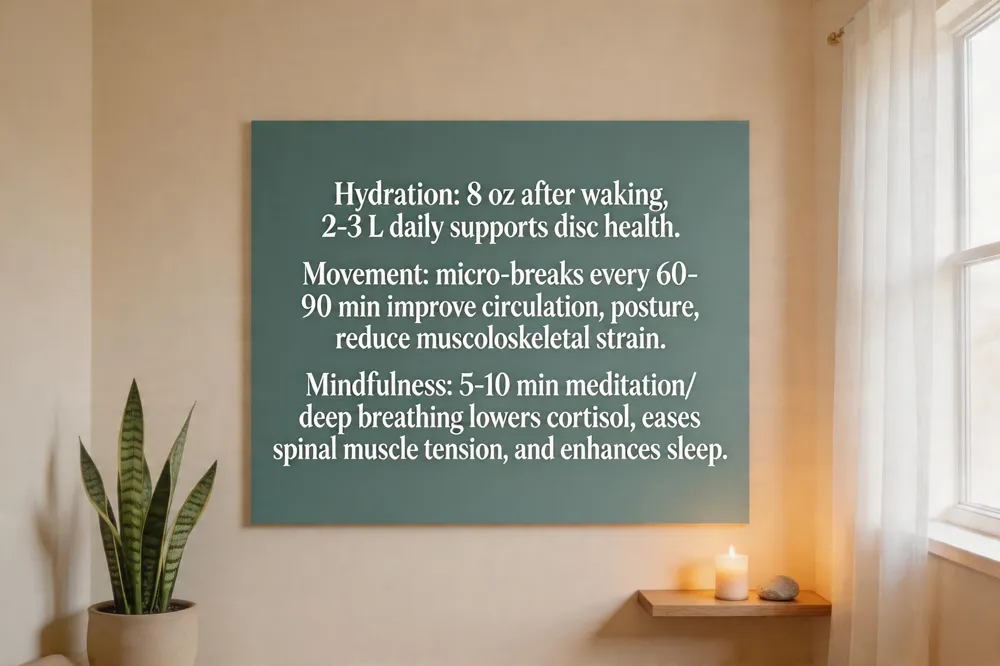 Staying properly hydrated is a cornerstone of spinal health. Research shows that drinking at least eight ounces of water after waking rehydrates the body after overnight fluid loss, supports intervertebral disc nutrition, and helps maintain disc elasticity for optimal shock absorption. Throughout the day, a daily fluid intake of roughly 2–3 liters (about 8–12 cups) sustains cellular metabolism, promotes circulation, and supplies nutrients to spinal tissues, reducing inflammation and muscle tension.
Regular movement breaks are equally vital. Short bouts of activity every 60–90 minutes—such as walking, light squats, or desk stretches—counteract the adverse effects of prolonged sitting, improve circulation, and relieve pressure on the vertebral column. Studies indicate that micro‑breaks enhance posture, boost cognitive performance, and lower the risk of musculoskeletal strain, thereby complementing chiropractic adjustments and supporting overall musculoskeletal alignment.
Mindfulness practices, including 5–10 minutes of daily meditation or deep‑breathing exercises lower cortisol levels and activate the parasympathetic nervous system. Reduced stress hormones translate into less muscle guarding around the spine, improved pain tolerance, and better sleep quality. When combined with proper hydration and frequent movement, mindfulness creates a synergistic effect that promotes spinal function, nervous‑system balance, and holistic well‑being.
Your Path to Sustainable Wellness
Building lasting wellness starts with a few simple habits that become automatic. Begin each morning with a glass of water, a brief stretch, and a mindful breath or meditation to awaken the nervous system and hydrate intervertebral discs. Throughout the day, stand, walk, or do micro‑breaks every 60‑90 minutes to keep circulation flowing and protect spinal alignment. Pair these routines with regular chiropractic appointments; adjustments improve joint mobility, reduce muscle tension, and create a supportive foundation for the habits you are forming. Keep a daily log of water intake, movement breaks, sleep hours, and any spinal discomfort. Reviewing the log each week reveals patterns, reinforces successes, and highlights areas needing adjustment. By integrating easy habits, collaborating with a chiropractor, and tracking progress, you create a feedback loop that turns short‑term effort into sustainable, long‑term health for a vibrant, resilient life and lasting spinal well‑being each day every sunrise with confidence.