Welcome to Integrated Neuropathy Care
Peripheral nerves transmit signals that control sensation, movement, and organ function. When these nerves are damaged—by diabetes, compression, infection, or toxins—patients experience tingling, burning pain, numbness, and loss of coordination. Restoring nerve health requires both mechanical and biochemical strategies. Acupuncture stimulates specific points to increase local blood flow, release endorphins, and modulate inflammatory pathways, while chiropractic adjustments realign the spine and joints, relieving pressure on nerve roots and improving neural transmission. Together they address the root mechanical compression and the neurochemical environment, producing greater pain relief, enhanced functional capacity, and reduced reliance on medications. At Southeast Family Chiropractic in Gastonia, North Carolina, each patient begins with a comprehensive assessment of medical history, posture, and lifestyle. A personalized plan then blends evidence‑based acupuncture, spinal manipulation, targeted soft‑tissue techniques, and nutrition counseling, all coordinated with the patient’s primary‑care team. This integrative, patient‑centered model aims to optimize nerve function and quality of life.
Understanding Nerve Regeneration and Complementary Herbs
 Natural Herbs for Nerve Regeneration
Herbs such as Lion’s Mane mushroom, turmeric (curcumin), ginger, bacopa, Gotu Kola, and Ginkgo Biloba have anti‑inflammatory and neuro‑protective properties that may stimulate nerve‑growth‑factor production. While human trials are limited, these botanicals can support a healing environment when combined with chiropractic care, which optimizes spinal mechanics and neural signaling, reducing compressive stress on damaged nerves.
Natural Remedies for Nerve Pain in Feet
Warm foot baths with Epsom salts or soothing essential oils, brief cool‑pack applications, and gentle foot massage improve local circulation and calm misfiring nerves. Seamless compression socks lessen swelling, and low‑impact exercises (calf raises, hamstring stretches, balance drills) strengthen supporting muscles. Omega‑3 supplements and an antioxidant‑rich diet further protect nerve tissue.
Home Remedies for Neuropathy in Legs and Feet
Simple measures—warm Epsom‑salt foot baths, regular calf/ankle stretching, and foot massage—enhance blood flow and reduce irritation. Properly fitted shoes or compression wear decrease mechanical pressure on nerves. An anti‑inflammatory diet rich in omega-3 fatty acids, vegetables, and low‑sugar foods, along with stable blood‑sugar control, smoking cessation, and limited alcohol, addresses common etiologies. These home strategies complement professional chiropractic care and acupuncture, offering a comprehensive, non‑pharmacologic approach to symptom relief and nerve health.
Acupuncture Evidence Base for Neuropathy
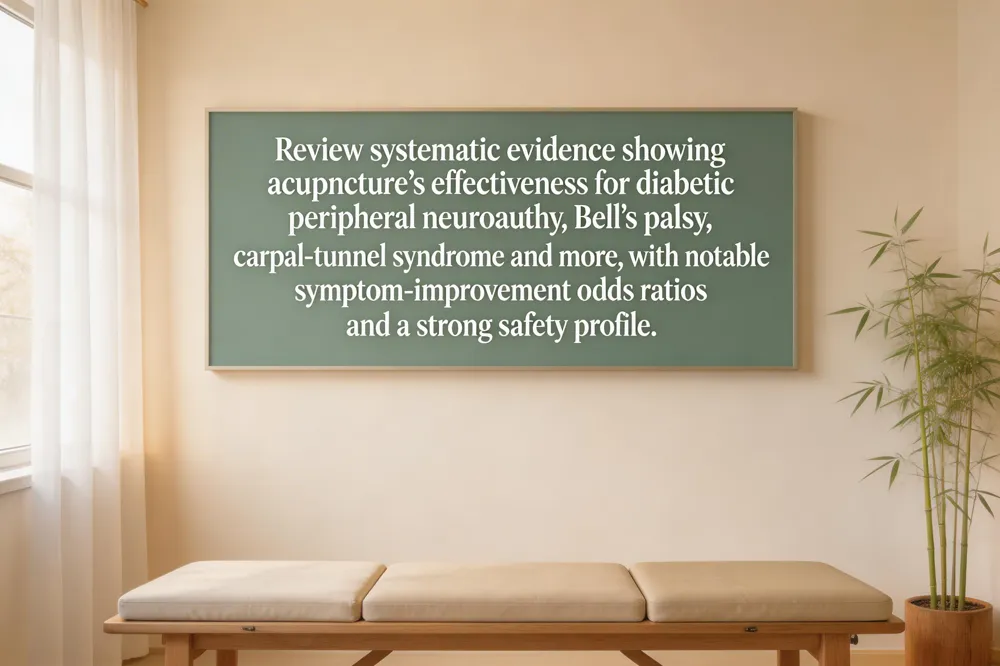 Acupuncture for neuropathy reviews: Systematic reviews of 15 randomized trials (including 13 RCTs) show acupuncture outperforms sham or usual care for diabetic peripheral neuropathy, Bell’s palsy, and carpal‑tunnel syndrome, with a meta‑analysis reporting an odds ratio of 4.23 for symptom improvement. Benefits for HIV‑related neuropathy are promising, while evidence for idiopathic neuropathy remains limited and study quality varies.
Clinical trial outcomes: Prospective cohorts and RCTs consistently report reductions of 30‑50% in neuropathic pain scores, improved nerve conduction velocities, and better quality‑of‑life ratings after 6‑12 weeks of weekly sessions. Patients often experience decreased tingling, burning pain, and enhanced functional comfort.
Safety profile: Acupuncture is generally safe when performed by licensed practitioners. Minor adverse events—bruising, transient soreness, or light bleeding—occur in up to 20% of cases; serious complications are rare.
Synergy with chiropractic: Combining acupuncture with chiropractic spinal adjustments addresses both neurochemical inflammation and mechanical compression. Integrated care lowers opioid reliance, reduces emergency‑room visits, and yields greater pain reduction than either modality alone.
Acupuncture for neuropathy in legs: Targeted needling improves local circulation and stimulates damaged nerve fibers, often relieving leg pain and numbness after a 6‑10‑week course.
Acupuncture for neuropathy in feet near me: Our Gastonia clinic offers foot‑specific acupuncture integrated with chiropractic care, typically delivering noticeable symptom relief within 6‑12 bi‑weekly sessions.
Modern Modalities for Foot Neuropathy
 Emerging treatments for foot neuropathy now include low‑level laser therapy, which delivers non‑invasive light energy to boost micro‑circulation, reduce inflammation, and promote nerve regeneration. Targeted electrical nerve stimulation such as transcutaneous electrical nerve stimulation (TENS) modulates pain pathways and can improve sensation. Advanced manual therapies—specialized foot massage, myofascial release, and chiropractic adjustments—restore alignment, relieve mechanical compression of nerves, and enhance blood flow, addressing both structural and neurochemical contributors to neuropathy.
Acupuncture points frequently employed for peripheral neuropathy of the feet are ST‑36 (Zusanli) and SP‑6 (Sanyinjiao) on the lower leg, GB‑34 (Yanglingquan) near the lateral knee, and FI‑4 (Hegu) on the hand, which influence the meridians reaching the foot. Foot‑specific points such as SP‑3 on the medial big‑toe, SP‑8 near the inner ankle, and the Ba Feng points between the toes are also used; electro‑acupuncture to KI‑3‑1 and ST‑41‑LR‑3 can further enhance outcomes.
A comprehensive foot‑neuropathy plan begins with a thorough assessment of underlying causes (e.g., diabetes, vitamin deficiencies), followed by spinal adjustments and soft‑tissue work to improve nerve signaling. low‑level laser therapy, therapeutic ultrasound, and electrical stimulation are added to reduce pain and support tissue healing, while evidence‑based medications or topical agents are used when needed. This multimodal, patient‑centered approach aims to lower pain, improve function, and protect long‑term nerve health.
Integrating Acupuncture and Chiropractic in Practice
 Can you do acupuncture and chiropractic on the same day?
Yes. When a qualified practitioner coordinates the two modalities, acupuncture can be delivered first to relax muscles and reduce inflammation, followed by a gentle spinal adjustment. This sequencing maximizes pain relief, improves joint mobility, and often shortens the overall treatment timeline. Patients should disclose any medical conditions, medications, or recent injuries so both providers can tailor the session safely. Integrated same‑day care is a low‑risk, effective option for many with chronic musculoskeletal or neuropathic pain.
Can you do acupuncture and chiropractic on the same day?
Yes. When a qualified practitioner coordinates the two modalities, acupuncture can be delivered first to relax muscles and reduce inflammation, followed by a gentle spinal adjustment. This sequencing maximizes pain relief, improves joint mobility, and often shortens the overall treatment timeline. Patients should disclose any medical conditions, medications, or recent injuries so both providers can tailor the session safely. Integrated same‑day care is a low‑risk, effective option for many with chronic musculoskeletal or neuropathic pain.
Chiropractor with acupuncture near me Our Gastonia, NC clinic combines fully licensed chiropractors and certified acupuncturists under one roof. The team offers seamless, evidence‑based care for back pain, migraines, neuropathy, and more. Treatments are personalized, and appointments can be booked online or by calling (704) 555‑1234. Patients of all ages benefit from the combined mechanical and neuro‑modulatory approach.
Foot chiropractor near me Specialized foot‑related chiropractic care is available at our family‑focused office. We assess ankle and foot alignment, address nerve compression, and use soft‑tissue techniques, laser therapy, and targeted exercises to reduce inflammation and restore function. Our non‑invasive, patient‑centered plans help you walk pain‑free. Schedule an appointment online or call today.
Chiropractic Role in Nerve Health
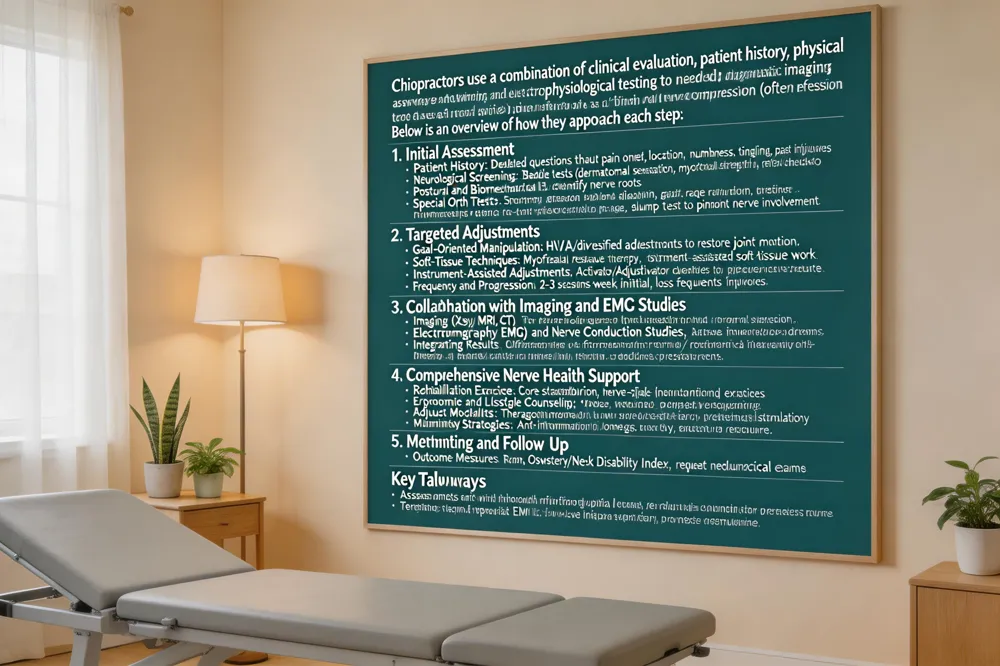 Chiropractors are trained to evaluate spinal health and can identify signs of nerve compression through a detailed physical exam that includes reflex testing, strength and sensation checks, and posture analysis. While they can pinpoint a likely spinal source of a pinched nerve, definitive diagnosis of deeper peripheral neuropathies often requires imaging (X‑ray, MRI) or electrophysiological studies (EMG, nerve conduction) that the chiropractor can order or refer for.
When a nerve is compressed, targeted spinal adjustments aim to restore proper vertebral alignment, relieve mechanical pressure, improve local blood flow, and enhance neural signaling. Adjustments to the lumbar spine, sacroiliac joints, or cervical segments, combined with soft‑tissue therapies such as Active Release Technique or Graston, can reduce irritation and support nerve healing. Integrated care that adds acupuncture further modulates pain pathways and increases circulation, offering a multimodal approach to neuropathy.
Pinched nerve considerations include confirming the diagnosis, monitoring for worsening symptoms, and avoiding aggressive manipulation in cases of severe disc herniation, spinal stenosis, or inflammatory conditions. A qualified chiropractor tailors each adjustment to the patient’s condition; when performed correctly, the risk of aggravating the nerve is low.
Can a chiropractor diagnose nerve damage? Yes. Through a comprehensive exam and, if needed, referral for imaging or EMG, a chiropractor can assess nerve involvement and develop a treatment plan, while coordinating with other providers for definitive diagnosis.
Can a chiropractor make a pinched nerve worse? Improper technique or treating a condition that exceeds the scope of chiropractic care can increase irritation, which is why thorough evaluation and appropriate imaging are essential. Experienced practitioners minimize this risk.
How long does it take for a chiropractor to fix a pinched nerve? Pain relief often begins within a few days to four‑six weeks, but full functional recovery may require several months, depending on severity, underlying cause, and patient adherence to home exercises and lifestyle changes.
Choosing the Right Provider for Foot and Leg Pain
 When foot or leg pain arises, deciding between a podiatrist and a chiropractor depends on the underlying cause. A podiatrist is a foot‑and‑ankle specialist who treats structural problems such as bunions, plantar fasciitis, fractures, diabetic peripheral neuropathy, and can prescribe custom orthotics, medication, or surgery. In contrast, chiropractors address spinal and overall musculoskeletal alignment; adjustments, soft‑tissue techniques, and exercises can relieve nerve irritation that manifests as foot discomfort, especially when the pain accompanies back or leg symptoms. n a Piatrist or is arrangement for foot isolated,”specific issues, while a chiropractor may be preferable for generalized pain linked to biomechanical imbalances.
If you are searching for a “neuropathy chiropractor near me,” our Gastonia clinic offers gentle spinal adjustments, therapeutic exercises, laser therapy, and lifestyle counseling designed to improve blood flow and nerve conduction, reducing numbness, tingling, and burning pain.
Medicare coverage for acupuncture is limited to chronic low‑back pain; neuropathy is not included. Original Medicare (Part B) does not reimburse acupuncture for neuropathy, though some Medicare Advantage (Part C) plans may offer it. Verify benefits with your insurer or consider out‑of‑pocket options if needed.
Comprehensive Lifestyle and Home Strategies
 What is the number one treatment for neuropathy?
There isn’t a single cure‑all. The most effective approach begins with treating the underlying cause—tight blood‑sugar control for diabetes, correcting B‑12 deficiency, or addressing toxin exposure. If pain persists, first‑line pharmacologic agents such as duloxetine, amitriptyline, pregabalin, or gabapentin are commonly prescribed. Complementary non‑pharmacologic options—including targeted chiropractic adjustments, acupuncture, and lifestyle changes—enhance circulation and reduce discomfort, offering a multimodal, patient‑focused plan.
What is the number one treatment for neuropathy?
There isn’t a single cure‑all. The most effective approach begins with treating the underlying cause—tight blood‑sugar control for diabetes, correcting B‑12 deficiency, or addressing toxin exposure. If pain persists, first‑line pharmacologic agents such as duloxetine, amitriptyline, pregabalin, or gabapentin are commonly prescribed. Complementary non‑pharmacologic options—including targeted chiropractic adjustments, acupuncture, and lifestyle changes—enhance circulation and reduce discomfort, offering a multimodal, patient‑focused plan.
Can you walk a lot with neuropathy? Many patients limit walking because numbness and altered sensation in the feet make long distances feel unsafe. Gradual, low‑impact exercise (e.g., walking, calf raises, balance drills) improves muscle strength and proprioception, allowing longer walks over time while reducing fall risk.
Treatment for neuropathy in legs and feet – home remedies Warm foot baths with Epsom salt, gentle calf/ankle stretches, and regular foot massage boost local blood flow. Supportive, well‑fitted shoes or compression socks lessen mechanical pressure on nerves. An anti‑inflammatory diet rich in omega‑3 fatty acids, fresh vegetables, and low‑sugar foods supports nerve health, while staying hydrated, quitting smoking, and limiting alcohol address common triggers.
Natural remedies for nerve pain in feet Cool packs or brief cold‑water immersion (≤15 min) can calm acute inflammation. Seamless compression socks reduce swelling. Supplements such as omega‑3 fish oil, alpha‑lipoic acid, and B‑vitamins provide neuroprotective benefits. Combined with regular low‑impact exercise and periodic chiropractic or acupuncture sessions, these home strategies help manage neuropathic symptoms and improve quality of life.
Your Path to Nerve Wellness Starts Here
Integrating acupuncture with chiropractic care offers a powerful, evidence‑based approach to peripheral neuropathy. Acupuncture stimulates nerve pathways, improves micro‑circulation, and reduces inflammation, while chiropractic adjustments restore spinal alignment, relieve mechanical nerve compression, and enhance overall neural communication. Together, these non‑pharmacologic therapies lower pain scores, improve functional outcomes, and decrease reliance on opioids or surgery, as shown in multiple cohort and randomized studies. At our clinic we blend these modalities with lifestyle counseling, nutrition guidance, and targeted exercises to address the root causes of nerve irritation. We invite you to schedule a personalized consultation where a licensed acupuncturist and chiropractor will assess your unique symptoms and develop a customized, non‑invasive treatment plan. Our commitment is to provide safe, patient‑centered care that maximizes relief, restores function, and supports lasting nerve health. Call today or book online to begin your journey toward renewed vitality.