Why Combine Pilates with Chiropractic Care?
Integrating Pilates with chiropractic care creates a truly holistic spinal health model. Adjustments restore joint alignment and improve nervous‑system communication, while Pilates builds deep core stability, diaphragmatic breathing, and balanced muscle tone. This synergy supports a patient‑centered approach: clinicians first assess individual biomechanics, then tailor a program that blends spinal manipulation with targeted mat or reformer exercises. Patients benefit from faster pain relief, enhanced functional mobility, and longer‑lasting maintenance of spinal corrections. The combined regimen also reduces compensatory patterns, improves posture, and promotes body awareness, empowering individuals to manage their own health. Ultimately, the integration maximizes therapeutic outcomes and aligns with the wellness‑focused philosophy of modern chiropractic practices and supports sustained well‑being for a healthier, more active lifestyle.
Understanding Pilates Risks and Safety
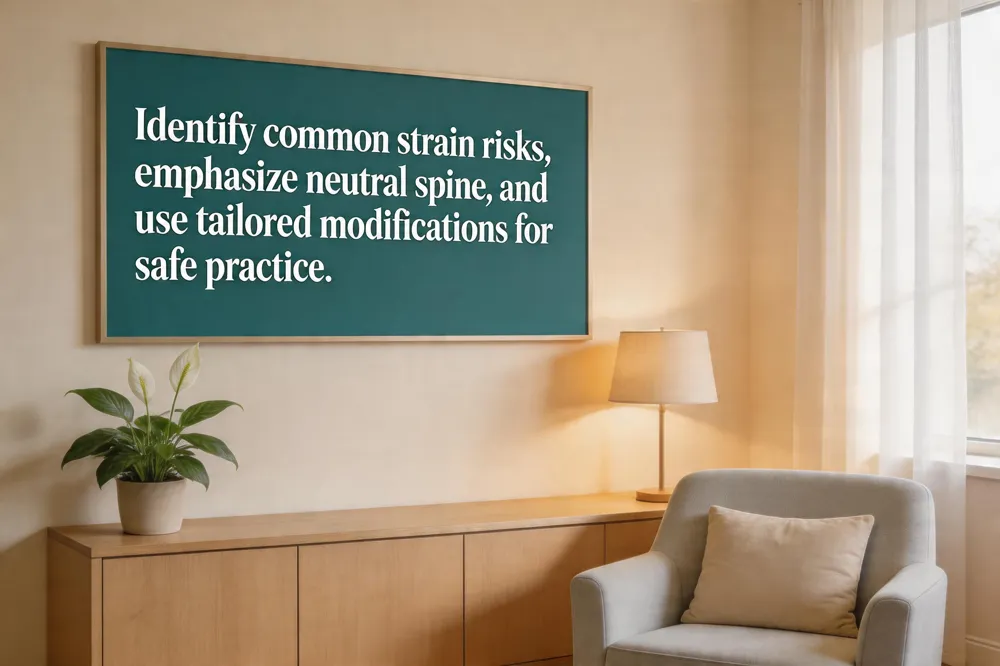 Pilates is a low‑impact method, but the most frequent injury is a muscle strain, especially in the lower back or neck. Strains arise when core activation is weak, alignment is poor, or movements are over‑stretched. Preventing them requires learning proper form from a certified instructor and progressing gradually.
For individuals with an L4‑L5 disc bulge, Pilates can be safe if the program emphasizes gentle core stabilization and avoids deep flexion, rotation, or rapid jerks. Modified bridges, heel taps, and pelvic tilts strengthen the abdominal and back muscles without loading the disc. Always obtain clearance from a chiropractor or physical therapist and use tailored modifications.
Pilates is not bad for lower‑back pain when performed correctly. Mistakes such as excessive “imprinting” or over‑tucking the pelvis can compress lumbar discs and increase discomfort. A qualified teacher who reinforces a neutral spine and progressive loading makes Pilates a therapeutic complement to rehab.
Beginners can relieve back pain by starting with simple mat exercises—pelvic tilt, dead bug, bridge, toe taps—that teach deep core engagement and improve spinal alignment. Consistent, mindful practice, under professional guidance, ensures safety and effectiveness.
Core Weakness: Signs, Assessment, and Basics
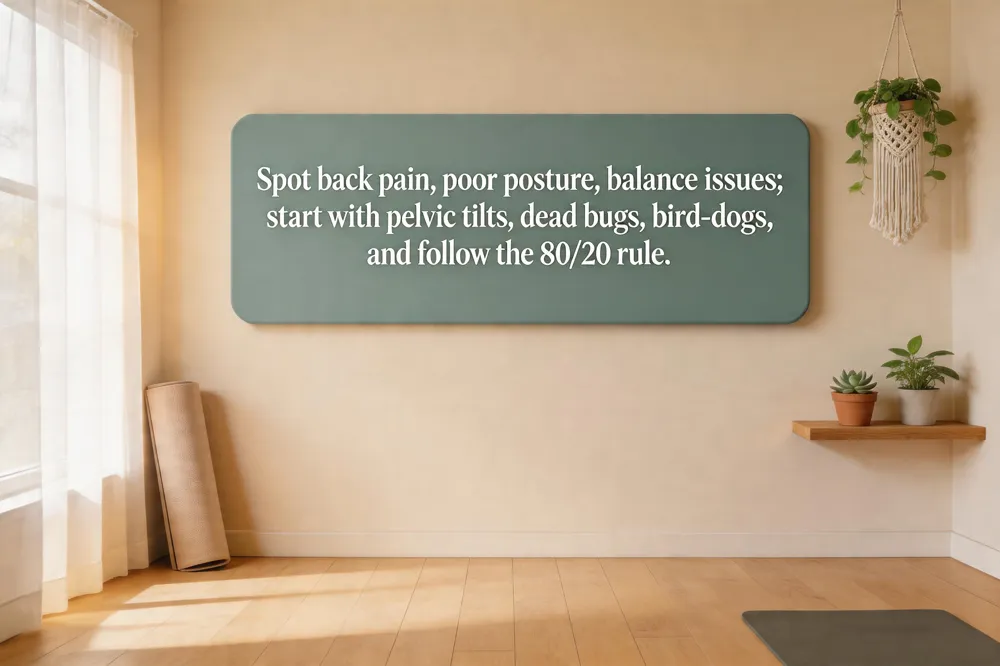 What are three physical signs of a weak core? A weak core often shows up as persistent lower‑back pain, poor posture, and frequent balance problems such as stumbling or difficulty standing on one foot. These three cues—back discomfort, postural collapse, and loss of balance—are red flags that deeper stabilizing muscles are under‑active.
What are beginner‑friendly core‑strengthening exercises? Start with pelvic tilts, dead‑bugs, bird‑dogs, glute bridges, and modified plank holds. Add gentle Cat‑Cow warm‑ups, knee drops, and a short Cobra stretch to loosen the spine. Perform each move for 30‑45 seconds, rest 15 seconds, and repeat the circuit three to four times per week on non‑consecutive days.
What is the 80/20 rule in Pilates? Dedicate 80 % of practice to mastering fundamentals—alignment, breathing, precise movement—and use the remaining 20 % for increased intensity, resistance, or advanced variations. This balance ensures quality form and protects the spine.
Can a chiropractor help improve core strength? Yes. A chiropractor can assess core imbalances, deliver adjustments to optimize spinal mechanics, and prescribe tailored Pilates or therapeutic exercises that safely strengthen the deep core muscles.
Pilates Therapy and Spinal Health Integration
It also stretches hip flexors, hamstrings, and thoracic muscles, enhancing flexibility and postural awareness for daily activities.
When a chiropractor performs an adjustment, joint mobility and neural signaling are restored, providing an optimal foundation for movement.](https://totalhealthchiropractic.com.au/how-yoga-and-pilates-may-complement-chiropractic-care/)
Following the adjustment, targeted Pilates sessions reinforce the new alignment by training stabilizers, improving motor control, and sustaining intra‑abdominal pressure. Studies show that combined programs lower pain scores, increase disability‑index scores, and produce greater functional gains than either modality alone.](https://pmc.ncbi.nlm.nih.gov/articles/PMC10218154/)
Most chiropractors actively recommend Pilates because its low‑impact, alignment‑focused movements complement spinal manipulations. The exercises enhance proprioception, balance, and breathing, helping patients maintain benefits of adjustments between visits.
Individuals with Ehlers‑Danlos syndrome can practice Pilates safely when exercises are modified to avoid excessive joint excursion. Controlled activation of stabilizers significantly improves joint stability while respecting hypermobile tissue.
Advanced Pilates Tools and Techniques
 Reformer Pilates uses a moving carriage and adjustable springs to guide the spine through low‑impact, controlled movements. This resistance‑based platform activates deep stabilizers such as the transverse abdominis and multifidus while promoting spinal articulation, better alignment, and increased flexibility of discs and fascia. The supportive environment allows patients to build a strong “powerhouse” that protects the spine during daily activities and after chiropractic adjustments, reducing chronic back pain and improving functional wellness.
A Pilates spine corrector is a compact apparatus that encourages balanced extension of the thoracic and lumbar spine. By forcing the back into a controlled arch, it releases tension in the chest, neck, and upper spine, while supporting exercises like swans and swimming. Regular use enhances the mobility and stability gained from chiropractic adjustments, making it a worthwhile addition to a comprehensive spinal‑health routine.
Pilates alleviates lower‑back pain and sciatica by strengthening deep core muscles, improving neutral‑spine posture, and increasing hip‑flexor and hamstring flexibility. These adaptations distribute load more evenly, reduce pressure on the sciatic nerve, and promote body awareness that prevents aggravating movements.
After spinal fusion, a strong core can still be built safely. Gentle, isometric exercises—pelvic tilts, supine bridges, abdominal bracing—avoid excessive twisting and protect the fused segment. Guided progression by a chiropractor or therapist ensures the surrounding musculature is conditioned without stressing the hardware, ultimately supporting spinal stability and reducing future pain.
Targeted Core Strategies for Pain Relief and Recovery
 Low‑back discomfort often stems from weak deep stabilizers and poor motor control. Targeted core work, when combined with spinal adjustments, restores neutral alignment and reduces mechanical strain.
Core‑strengthening exercises best for lower‑back pain – Dead‑bug, bird‑dog, and glute‑bridge activate the transverse abdominis, lumbar multifidus and gluteal chain while keeping the spine neutral. Forearm planks (or modified side‑plank/knee‑plank) build endurance in the rectus, obliques and erector spinae. The Pallof press adds anti‑rotational stability. Perform 8‑12 repetitions or hold 20‑60 seconds, 2‑3 sets, focusing on a braced core.
Is reformer Pilates good for lower‑back pain? – Yes. The moving carriage and adjustable springs keep the spine supported in neutral while gently loading the core, glutes and hip stabilizers. Resistance and range of motion are customized, making it safe for most patients when supervised by a qualified instructor.
Is Pilates beneficial after spinal fusion? – Yes. Low‑impact, controlled movements restore mobility in unfused segments, strengthen surrounding musculature and protect the fused level. Modified dead‑bugs, femur arcs and gentle bridges are tailored to healing stages.
Is Pilates effective for general back pain? – Yes. By strengthening deep abdominal, back, pelvic floor and diaphragm muscles, Pilates improves spinal stability, posture and balanced muscle relationships. Systematic reviews of RCTs show significant pain reduction and functional gains after regular practice.
Your Path to a Stronger Spine Starts Here
Ready to transform your back health? Take the next step by joining Southeast Family Chiropractic’s integrated program, which blends expert spinal adjustments with supervised Pilates sessions. Our chiropractors restore proper vertebral alignment, reduce nerve irritation, and create an optimal environment for core‑strengthening work. Certified Pilates instructors then guide you through mat and reformer exercises—such as the Hundred, Bird‑Dog, and pelvic tilt—to activate the transverse abdominis, multifidus, and pelvic floor, building a natural brace for the spine. The combined approach has been shown to lower pain scores, improve functional disability, and keep adjustments lasting longer. Schedule a consultation today to receive a personalized assessment, discuss your goals, and start a safe, evidence‑based plan for a stronger, pain‑free spine and lasting wellness.