Why Core Strength Matters for Posture
The Pilates ‘powerhouse’ is the coordinated group of deep core muscles—including the transverse abdominis, multifidus, and pelvic floor—that act as a natural brace for the spine. When these stabilizers fire together, intra‑abdominal pressure rises, keeping the lumbar and thoracic regions in neutral alignment during everyday tasks such as sitting, lifting, or walking. For chiropractic patients, a strong powerhouse reinforces the adjustments made in the office, improves proprioception, reduces compensatory tension, and supports long‑term postural health without medication or surgery.
Understanding Core Foundations: How Pilates Builds Strength and Improves Posture
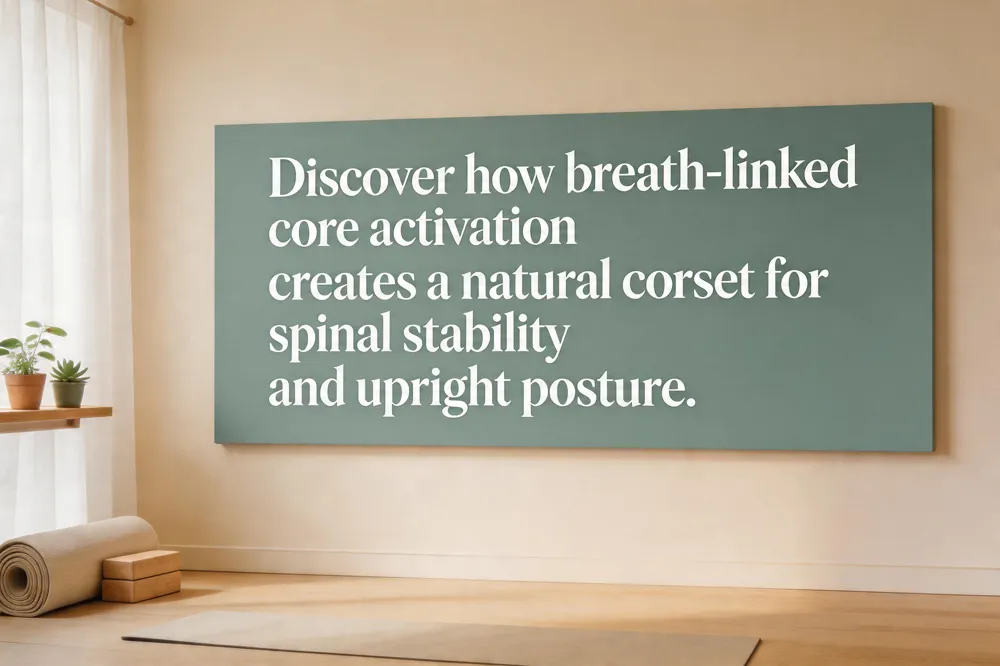 Pilates trains the deep core—transverse abdominis, multifidus, pelvic floor, diaphragm, and hip rotators— by linking breath to movement. Inhaling expands the rib cage while exhaling draws the belly button toward the spine, creating intra‑abdominal pressure that acts like an internal corset, stabilizing the lumbar spine and promoting a neutral pelvis. This breath‑connected bracing teaches the body to keep the rib cage upright, reducing forward‑head and rounded‑shoulder habits.
Key posture‑enhancing moves include the Plank (full or modified) for whole‑body isometric stability; Pelvic Tilts to locate a neutral pelvis; Glute Bridges that activate the posterior chain and counter anterior pelvic tilt; the Dead Bug for coordinated limb motion while maintaining core engagement; and Swimming or Swan extensions that strengthen the erector spinae and open the thoracic spine.
Research consistently shows that regular Pilates practice improves proprioceptive awareness of spinal positioning, increases spinal alignment, and reduces low‑back pain, confirming its role as a powerful, low‑impact tool for postural correction.
Key Pilates Moves for Better Posture
 7 Pilates moves for better posture – The most effective posture‑correction sequence includes: (1) Spine Stretch Forward – lengthens the spine and hamstrings; (2) Swan Dive – strengthens spinal extensors; (3) Chest Lift – opens the rib cage and engages upper abdominals; (4) Single Leg Stretch – builds core stability while promoting hip flexibility; (5) Saw – encourages thoracic rotation and articulation; (6) Swimming – activates the posterior chain (erector spinae, glutes, hamstrings) to counter slouching; (7) Mermaid – stretches the side body and refines pelvic positioning.
Beginner Pilates moves for better posture – Start gentle: Chest Opener (lying on back, arms overhead, lift shoulder blades), Spine Stretch Forward, Arm Circles on the mat, Single‑Arm Extension (Cactus Arms) from tabletop, and Hand‑Tap drills that reinforce upright alignment.
Pilates moves for better posture for seniors – Safe senior‑friendly options: Bridge (pelvic lift with glute activation), Bird‑Dog for balance and deep spinal stability, modified Forearm Plank , Side‑Lying Clams for hip strength, and a simple Swan‑style Back Extension to open the chest and support thoracic posture.
Pilates moves for better posture at home – A home routine can include a strap‑assisted Chest Opener, Bridge with vertebral roll‑down, all‑fours Plank with leg extensions, and a Seated Side Stretch or Saw to lengthen the torso and release side tension. Practicing this short sequence 3‑4 times a week promotes a taller, more balanced silhouette.
Pilates Equipment: Reformer, Balls, Weights, and Their Benefits
 The Reformer’s spring‑loaded carriage guides movement while keeping the spine in a neutral position, allowing deep stabilizers—transverse abdominis, multifidus, and pelvic floor—to fire with minimal joint stress. This controlled resistance reduces disc pressure, improves lumbar alignment, and accelerates post‑injury recovery. Reformer Pilates therefore offers a low‑impact solution for chronic lower‑back pain and posture correction.
A Pilates ball introduces instability, forcing the core “powerhouse” to engage more intensely. Rolling the ball between the knees during a Roll‑Up, squeezing it in a Bridge, or performing Crescent‑Moon leg rolls challenges the transverse abdominis and spinal extensors, enhancing balance and spinal alignment.
Light dumbbells (1‑5 lb) can be added to classic moves—Side‑Bend, Single‑Leg Stretch, Roll‑Up, or Swimming—to amplify core activation without over‑loading the lumbar spine. Slow, controlled motion keeps the deep core recruited while the added weight builds endurance.
Safety considerations: patients should start with minimal spring tension, use props for support, and maintain a neutral pelvis throughout each exercise. A qualified instructor can modify intensity, monitor intra‑abdominal pressure, and ensure breathing coordination, making Pilates safe for seniors, prenatal clients, and those recovering from back injuries.
Pilates for Pain Management: Lower Back, Sciatica, Disc Bulge, and More
 Pilates for lower back pain and sciatica – Controlled mat work activates the deep stabilizers (transverse abdominis, multifidus, pelvic floor) that brace the lumbar spine and reduce nerve irritation. Gentle movements such as pelvic tilts, supine spine twists, and knee‑to‑chest stretches improve hip‑glute flexibility and decompress the sciatic nerve without over‑loading the back.
Is Pilates good for back pain – Yes. Clinical trials show 5‑to‑8‑week Pilates programs lower pain intensity and disability by 20‑30 % when performed under professional guidance. The method emphasizes neutral spine, breath‑coordinated core engagement, and incremental progression, which are essential for safe relief.
Is Pilates good for L4‑L5 disc bulge? – Pilates can be beneficial when low‑impact, controlled exercises are chosen. Core activation and spinal stability reduce disc pressure, while deep flexion and high‑intensity moves are avoided. Tailored programs with a chiropractor ensure safety.
Is Pilates good for sciatica – By strengthening the core and stretching hips, glutes, and hamstrings, Pilates promotes a neutral spine and lessens nerve compression. Low‑impact, individualized drills are key.
Pilates for back pain beginners – Start with Pelvic Tilt, Dead Bug, Bridge, Toe Taps, and tabletop positions. Emphasize breath, avoid excessive flexion, and progress slowly under supervision.
Pilates for back pain near me – Southeast Family Chiropractic in Gastonia, NC offers certified Pilates programs that complement adjustments. Book through the online portal or call the office.
Integrating Pilates with Chiropractic Care: Safety, Injury Prevention, and Progression
 Pilates is prized for its low‑impact, core‑focused approach, but the most common injury is a muscle strain—especially in the back—when core engagement is insufficient or a movement is overstretched. Proper instruction, gradual progression, and alignment focus (NYT, Healthline) help prevent these strains.
80/20 Rule – Spend roughly 80 % of each session mastering quality form, breath, and alignment, and the remaining 20 % on controlled intensity or resistance. This ensures deep stabilizers are safely activated while still providing a strength challenge (ACE guidance).
Beginner Progression – Start with the Hundred, Single‑Leg Stretch, Double‑Leg Stretch, Modified Plank, and Pelvic Tilt. These mat moves teach deep core activation, diaphragmatic breathing, and neutral spine (Southeast Family Chiropractic, Healthline).
Senior‑Friendly Moves – Modified Bent‑Arm Plank (knees down), Swimming, seated Saw, and a gentle Bridge strengthen core, improve balance, and protect joints (Women’s Fitness, Healthline).
Home‑Based Core Workout – A concise routine: Hundred (30 s), Straight‑Leg Circles (15 s each side), Teaser Roll‑Up (10 reps), Side‑Lying Leg Lift (12 each side), Modified Plank (30 s). Perform 2‑3 rounds for a chiropractor‑friendly session (Pilates Anytime, Healthline.
Finding Pilates Locally and Resources for Southeast Family Chiropractic Patients
 Southeast Family Chiropractic patients have a variety of options to add Pilates to their wellness plan.
Local studio options in Gastonia, NC – Search for “Pilates studios near Gastonia, NC” on Google Maps or Apple Maps. Club Pilates offers beginner‑friendly reformer classes within a 10‑minute drive, while boutique studios such as Wellness Pilates and Gastonia Pilates Center provide small‑group, personalized instruction that aligns with chiropractic goals.
Online PDFs and printable guides – Free, reputable PDFs include Bruce Thomson’s “Pilates Basic Mat Workout,” Joseph Pilates’ classic 34‑exercise lesson plan, and BODYBAR’s “Ultimate Wall Pilates Chart.” The Southeast Chiropractic website also hosts a “Beginner Pilates PDF” with illustrated steps, breathing cues, and alignment tips for home use.
Chiropractic‑Pilates collaboration – The clinic partners with local instructors to create targeted back‑pain programs. Patients can schedule combined chiropractic‑Pilates sessions directly through the Southeast Chiropractic website or by calling the office.
Search strategies for patients – Use specific phrases such as “Pilates for back pain near me” or “Gastonia Pilates studios chiropractic partnership.” Adding “PDF” to a search will surface printable workout guides.
Quick answers:
- Pilates near me: Look up “Pilates studios near Gastonia, NC.”
- Pilates for back pain near me: Book the clinic’s partnered program via the website.
- Pilates moves PDF: Download Thomson’s or Pilates’ PDFs, or the clinic’s beginner guide.
- Pilates exercises for beginners PDF: Available on southeastchiro.com Resources page.
- Pilates core exercises names: Hundred, Single‑Leg Stretch, Roll‑Up, Double‑Leg Stretch, Criss‑Cross, Spine Twist, Saw, Teaser, Swimming, Leg‑Pull Front, Side‑Plank series
Special Considerations: Gender‑Specific Needs, Ehlers‑Danlos, and Spondylolisthesis
 Pilates’ focus on the deep core—transverse abdominis, multifidus, and pelvic floor—creates intra‑abdominal pressure that braces the lumbar spine, a principle that benefits both men and women but can be tailored to gender‑specific postural patterns. Men often experience tech‑neck and forward‑shoulder habits from desk work; exercises such as diaphragmatic breathing, cat‑cow spinal mobilization, seated thoracic rotations, crescent lunges with overhead reaches, and the “World’s Greatest Stretch” address those issues. Women tend to have tighter pectorals and rounded shoulders; chin tucks, doorway chest openers, wall angels, seated thoracic extensions, and glute‑bridge variations strengthen the posterior chain and promote an upright torso.
Can people with Ehlers‑Danlos do Pilates? Yes—under a knowledgeable instructor, low‑impact, controlled movements improve core stability and joint alignment. Modifications such as reduced range of motion, props, and slower progression protect hypermobile joints, and coordination with a chiropractor or physiotherapist ensures safety.
Is yoga or Pilates better for spondylolisthesis? Many practitioners favor Pilates because its emphasis on core strength and spinal stability offers better support for an unstable segment than the flexibility‑focused approach of most yoga styles.
Take the First Step Toward a Stronger Core and Healther Posture
Pilates builds a true ‘powerhouse’ by activating deep stabilizers – the transverse abdominis, multifidus, pelvic floor and diaphragm – which create intra‑abdominal pressure and support a neutral spine. This core strength improves posture, reduces low‑back and neck tension, and enhances balance for daily tasks. When combined with chiropractic adjustments, the muscular support reinforced by Pilates helps maintain alignment between visits and speeds recovery. Ready to feel taller and pain‑free? Book your integrated Pilates‑Chiropractic session at Southeast Family Chiropractic today now.