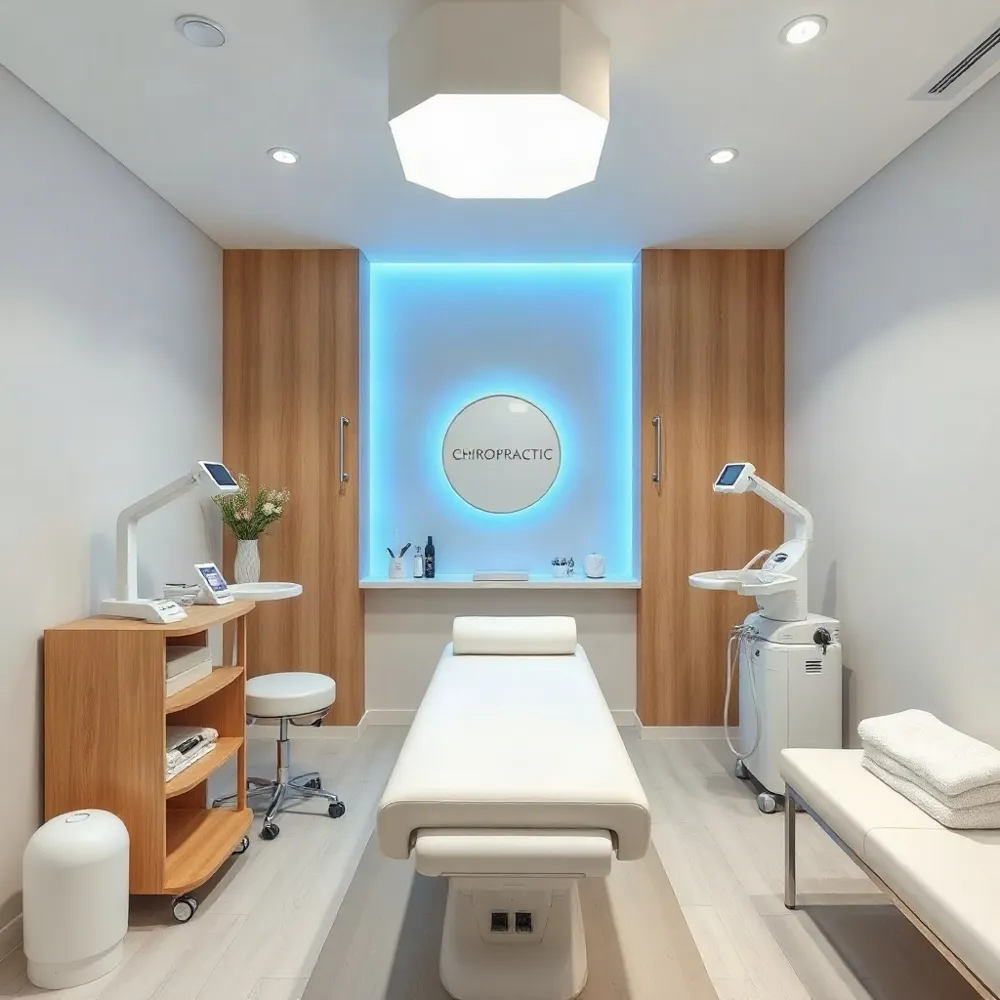
Welcome to a Whole‑Body Perspective on Spinal Wellness
Sacro‑Occipital Technique (SOT) was created in the early 20th century by Dr. M. B. DeJarnette to balance the sacrum and occiput, the two foundational pillars of spinal biomechanics. By using gentle pelvic blocks, low‑force cranial work and balanced ligamentous tension, SOT restores natural alignment, improves cerebrospinal fluid flow and reduces nerve irritation. A holistic approach matters because the nervous system, posture, breathing and lifestyle are inter‑connected; addressing only a single vertebra often leaves the root cause untouched. Modern chiropractic clinics—especially those in Gastonia, NC—integrate SOT with evidence‑based modalities such as laser therapy, therapeutic exercise and ergonomic counseling, offering a patient‑centered, drug‑free pathway to lasting spinal health.
Foundations of Sacro‑Occipital Technique
| Category | Primary Issue | Typical Findings | Core SOT Intervention |
|---|---|---|---|
| I | Primary sacroiliac joint dysfunction | Leg‑length discrepancy, localized sacral tenderness | Pelvic‑block wedges + cranial tension assessment |
| II | Sacroiliac instability | Variable leg‑length, increased motion on palpation | Dynamic pelvic‑block + balanced ligamentous tension |
| III | Lumbar disc involvement | Positive straight‑leg raise, low‑back pain radiating to leg | Pelvic‑block with disc‑reduction focus + soft‑tissue release |
The table outlines the three SOT diagnostic categories and the corresponding low‑force techniques used to address them.
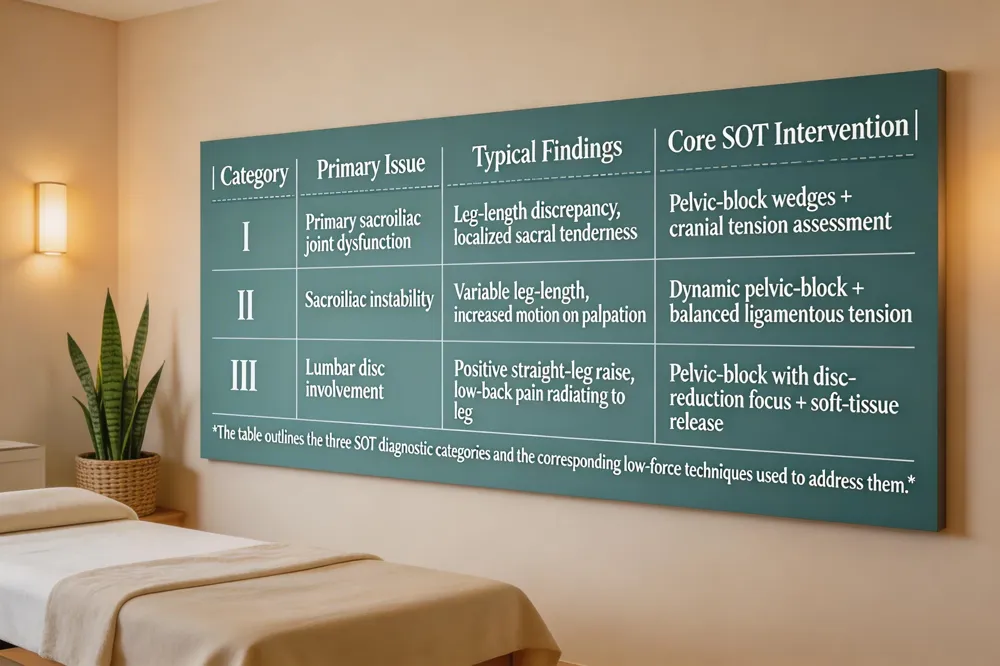 Sacro‑Occipital Technique (SOT) traces its origins to the early 20th‑century work of Dr. M.B. DeJarnette, an engineer‑turned‑chiropractor who first described the critical link between the sacrum—the base of the spine and the occiput, the base of the skull. DeJarnette’s insight was that the sacro‑occipital axis governs cerebrospinal‑fluid flow and overall nervous‑system tone, so correcting imbalances here can improve posture, reduce pain, and support organ function. SOT classifies pelvic and spinal dysfunction into three diagnostic categories: Category I (primary sacroiliac joint dysfunction), Category II (sacroiliac instability), and Category III (lumbar disc involvement). Treatment begins with a detailed assessment of leg‑length, muscle tension, and cranial tension indicators, then proceeds to the hallmark pelvic‑block protocol. Padded wedges are placed under the pelvis, allowing the patient’s own weight and breathing to gently realign the sacro‑iliac joints. Simultaneously, cranial work—light fingertip manipulations of the occipital bones—addresses restrictions in cranial‑sacral oscillation and promotes smoother cerebrospinal‑fluid movement. Together, these low‑force adjustments create a balanced, non‑invasive pathway for the body’s natural healing.
SOT in Action: Relieving Specific Pain Conditions
| Pain Condition | SOT Technique(s) | Expected Outcome | Typical Session Count |
|---|---|---|---|
| L4‑L5 low‑back pain | Pelvic‑block + lumbar adjustment | Reduced disc pressure, improved mobility | 3‑6 visits |
| Headaches / occipital misalignment | Occipital lift (cranial adjustment) | Immediate neck tension relief, decreased headache frequency | 1‑3 visits |
| Sciatica / radicular pain | Pelvic‑block + cranial work | Enhanced CSF flow, reduced nerve irritation | 4‑8 visits |
| General musculoskeletal discomfort | Combined soft‑tissue therapy + core‑strengthening exercises | Balanced nervous‑system tone, long‑term pain reduction | Ongoing maintenance |
Each row summarizes a condition, the specific SOT approach, and the typical clinical outcome.
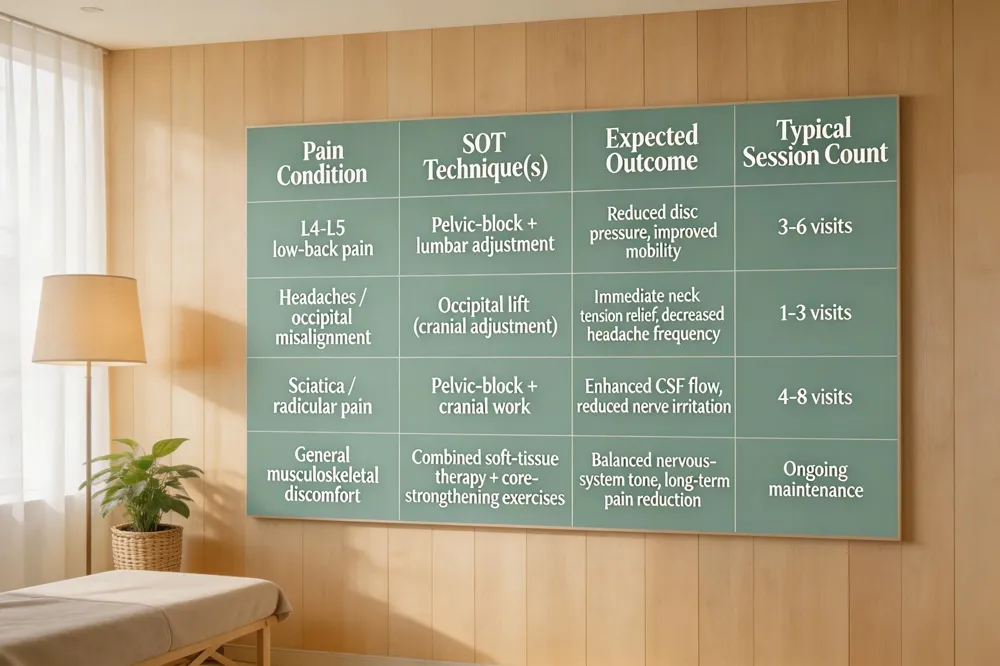 Sacro‑Occipital Technique (SOT) is especially effective for lower‑back pain at the L4‑L5 level. By using gentle spinal adjustments and targeted pelvic blocking, the technique restores proper vertebral alignment, reduces disc pressure, and encourages natural rehydration of the disc. Patients often notice diminished leg pain and improved mobility within a few visits, with long‑term relief achievable through consistent care and core‑strengthening exercises.
The occipital lift, a subtle upper‑cervical adjustment, safely addresses occipital misalignment that produces headaches, dizziness, and neck stiffness. When performed by a trained chiropractor, it is generally well‑tolerated and provides immediate relief of neck tension; serious adverse events are rare when proper screening is completed.
Sciatica and radicular pain improve with SOT’s combination of pelvic blocking and gentle cranial work. The blocks allow the pelvis to self‑correct using the patient’s body weight, while cranial manipulation enhances cerebrospinal fluid flow, reducing nerve irritation along the sciatic pathway.
A chiropractor cannot prescribe prednisone, but can offer a drug‑free, personalized plan that includes adjustments, soft‑tissue therapy, and lifestyle education to manage pain and improve quality of life.
Medical vs. Chiropractic Care: When to Seek Which Provider
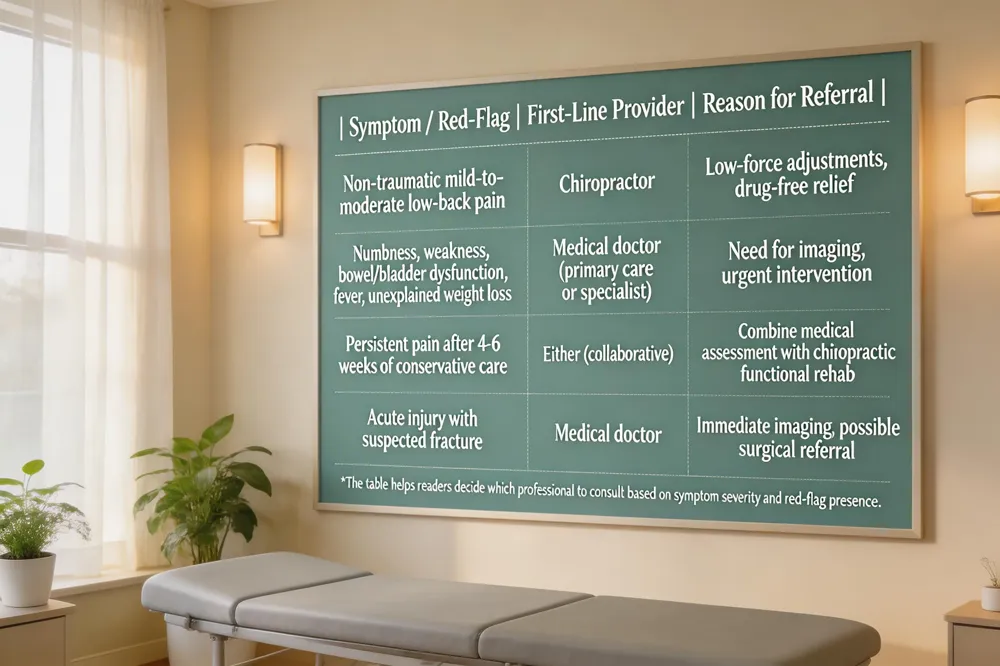
| Symptom / Red‑Flag | First‑Line Provider | Reason for Referral |
|---|---|---|
| Non‑traumatic mild‑to‑moderate low‑back pain | Chiropractor | Low‑force adjustments, drug‑free relief |
| Numbness, weakness, bowel/bladder dysfunction, fever, unexplained weight loss | Medical doctor (primary care or specialist) | Need for imaging, urgent intervention |
| Persistent pain after 4‑6 weeks of conservative care | Either (collaborative) | Combine medical assessment with chiropractic functional rehab |
| Acute injury with suspected fracture | Medical doctor | Immediate imaging, possible surgical referral |
The table helps readers decide which professional to consult based on symptom severity and red‑flag presence.
 Should I go to a doctor or chiropractor for back pain?
For most recent, non‑traumatic back pain, a chiropractor can often provide fast relief through gentle spinal adjustments, stretching, and supportive therapies that reduce inflammation and improve movement. If you experience red‑flag symptoms—numbness, weakness, loss of bladder or bowel control, fever, unexplained weight loss, or pain after a serious injury—see a medical doctor immediately for imaging and urgent treatment. A primary‑care physician is also a good first stop to rule out underlying conditions and, if needed, prescribe medication or refer you to a specialist.
Systematic review chiropractic care
Systematic reviews of chiropractic spinal manipulation show modest improvements in pain and function for acute and chronic low‑back and neck pain, often comparable to sham or conventional care. However, effect sizes are small and evidence for clinically meaningful benefit beyond placebo is limited. Mild to moderate side effects are common (up to 60 % of patients) while rare serious events such as vertebral‑artery dissection are reported, especially after high‑velocity cervical thrusts.
Chiropractor or doctor for lower back pain
For mild‑to‑moderate low‑back discomfort without red‑flag signs, chiropractic care offers a drug‑free, non‑invasive option. Severe pain, traumatic injury, or neurologic deficits warrant a medical evaluation first. A combined approach—medical assessment for safety and chiropractic treatment for functional improvement—often yields the best outcomes.
The science behind chiropractic care
Spinal manipulation restores joint mobility, reduces nerve pressure, and stimulates anti‑inflammatory mediators and endorphins, contributing to pain relief. Cavitation (“pop”) is a harmless gas‑bubble collapse in the synovial fluid. Numerous randomized trials support the safety and efficacy of chiropractic care for low‑back pain, neck pain, and certain headaches, positioning it as an evidence‑based, non‑pharmacologic treatment modality.
Gastonia’s Holistic Chiropractic Landscape
| Clinic | Core Services | Unique Offering |
|---|---|---|
| Southeast Family Chiropractic | Gentle adjustments, laser therapy, instrument‑assisted techniques, custom rehab | Pregnancy‑specific care & online scheduling |
| The Joint Chiropractic | Walk‑in adjustments, $29 New‑Patient Special, flexible evenings/weekends | Insurance‑free, affordable drop‑in model |
| Carolina Chiropractic Plus | Traditional adjustments, dry needling, laser, functional rehab | 30 years experience, emphasis on patient education |
This concise table highlights the main providers in Gastonia and what sets each apart.
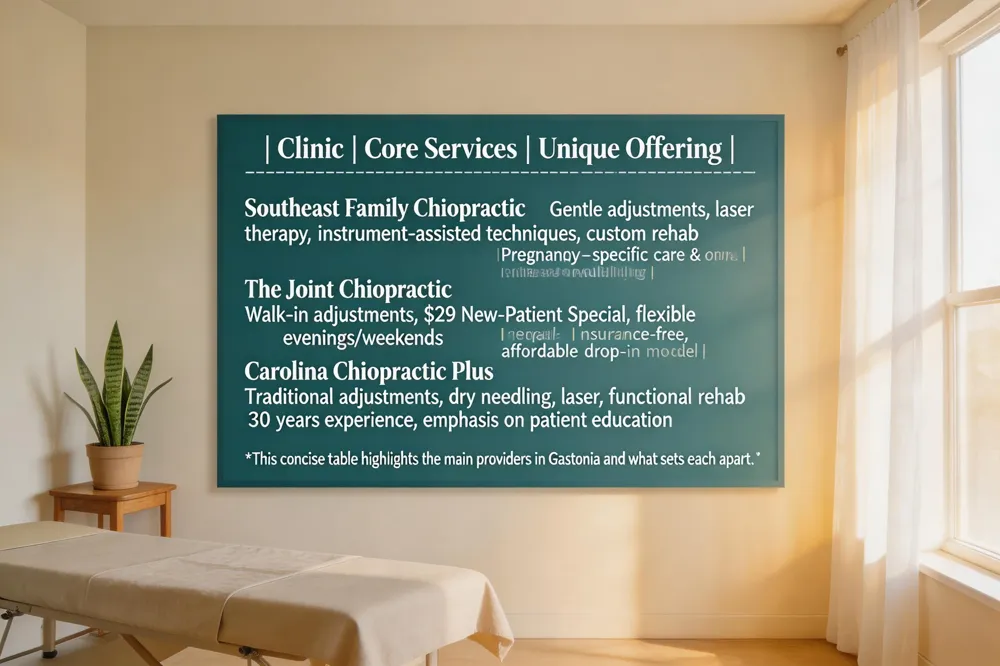 Southeast Family Chiropractic in Gastonia, NC, delivers personalized, holistic care for individuals, families, and pregnant patients. Board‑certified doctors combine gentle spinal adjustments with laser therapy, instrument‑assisted techniques, and custom rehabilitation programs, creating tailored plans that respect each patient’s lifestyle and health goals. The practice’s online scheduling and welcoming office make high‑quality, non‑invasive care easy to access.
The Joint Chiropractic offers a walk‑in clinic at 401 Cox Rd #158, providing affordable, insurance‑free spinal adjustments and wellness services. New patients can start with a $29 New‑Patient Special that includes a consultation, exam, and adjustment. Flexible evening and Saturday hours accommodate busy families, and the clinic emphasizes natural pain relief and improved mobility.
Carolina Chiropractic Plus, located at 528 Union Road, blends traditional adjustments with modern therapies such as laser treatment, dry needling, and functional rehabilitation. With nearly 30 years of service, the team focuses on lasting pain relief, patient education, and a supportive environment that encourages active participation in recovery.
Holistic treatments for chronic back pain integrate movement, mind‑body practices, nutrition, and complementary modalities. Structured physical‑therapy, core‑strengthening, yoga or tai‑chi, anti‑inflammatory diets, acupuncture, therapeutic massage, and laser therapy work together to address the whole person rather than just the symptom.
Patient resources at these clinics include easy‑to‑read articles on posture, low‑back pain, pregnancy discomfort, and what to expect during adjustments, empowering individuals to stay informed and actively engage in their healing journey.
Beyond Adjustments: Lifestyle, Movement and Blood Flow
| Modality | Description | Primary Benefit |
|---|---|---|
| Soft‑tissue therapy (massage, myofascial release) | Hands‑on techniques to reduce muscle tightness | Improved local circulation & reduced tension |
| Therapeutic exercise & home‑care (core strengthening, yoga, tai‑chi) | Structured movement programs | Enhanced posture, spinal stability |
| Mind‑body practices (meditation, breathing) | Stress‑reduction techniques | Lowered sympathetic tone, better muscle relaxation |
| Anti‑inflammatory nutrition | Diet rich in omega‑3s, antioxidants | Supports tissue healing & reduces systemic inflammation |
| Blood‑flow optimization (massage, ergonomic ergonomics, | Low‑impact cardio) | Activities that boost vascular perfusion |
The table summarizes the complementary lifestyle strategies that augment SOT treatment.
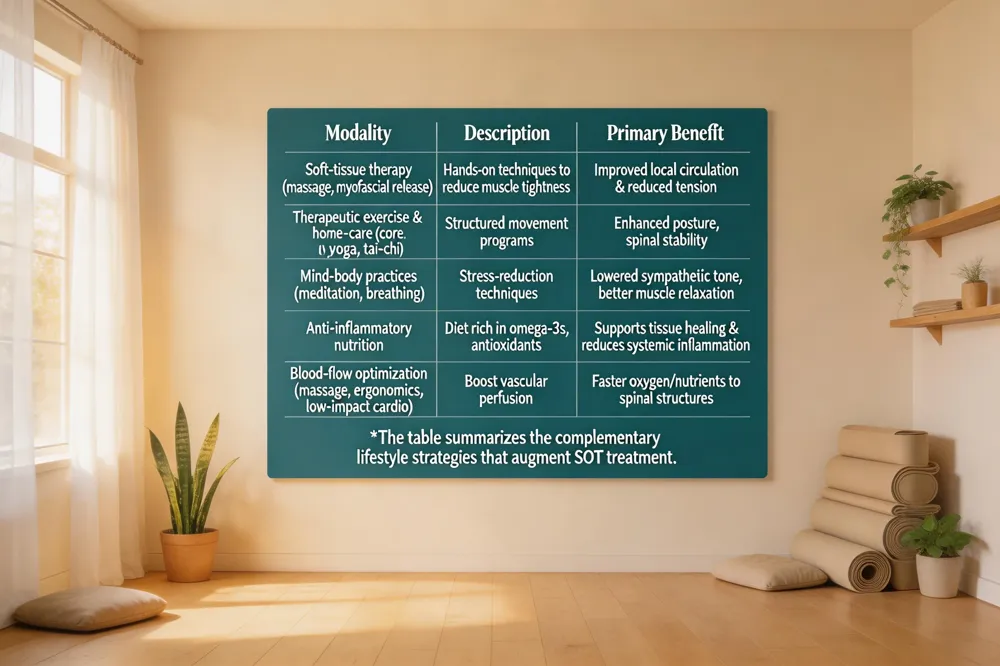 Sacro‑Occipital Technique (SOT) is only one piece of a comprehensive back‑pain plan. Chiropractors typically employ three core methods: (1) spinal manipulation—using gentle, low‑force adjustments such as pelvic blocking, cranial work, or balanced ligamentous tension—to restore the sacro‑occipital axis; (2) soft‑tissue therapy—including massage, myofascial release, or laser—to reduce muscle tightness and improve local circulation; and (3) therapeutic exercise and home‑care programs that strengthen core muscles, enhance posture, and maintain the gains achieved in the clinic.
Mind‑body practices such as yoga, meditation, and breathing exercises complement SOT by reducing stress‑induced muscle tension and promoting a balanced nervous system. Nutrition also plays a role; an anti‑inflammatory diet rich in omega‑3 fatty acids, colorful vegetables, and antioxidants supports tissue healing and reduces systemic inflammation.
Improving blood flow is another key goal. Proper alignment opens neurovascular pathways, while massage and gentle movement boost vascular perfusion, delivering oxygen and nutrients to the healing spine. Self‑care routines—daily stretching, ergonomic awareness, and regular low‑impact cardio—further enhance circulation and sustain the benefits of SOT treatment.
Your Journey to Balanced Spine Health Starts Here
Sacro‑Occipital Technique (SOT) delivers gentle, low‑force adjustments that balance the sacrum and occiput, easing lower‑back pain, neck stiffness, headaches, sciatica and improving posture, nerve flow and overall nervous‑system efficiency. Clinical reports from South Korean studies and case series show reduced pain scores and faster functional recovery. To begin SOT in Gastonia, schedule a consultation at Southeast Family Chiropractic, where Dr. Jerry Gardner and his team perform a thorough postural analysis, apply customized pelvic blocks and incorporate cranial work. Their patient‑focused intake includes health history, movement screening and a discussion of lifestyle factors. Embracing this holistic approach—combining nutrition, stress‑management, gentle exercise and regular SOT sessions—supports lasting relief and optimal well‑being today.