Welcome to SOT Fundamentals
Sacro‑Occipital Technique (SOT) is a gentle, low‑force chiropractic system created by Dr. M. B. DeJarnette in the early 20th century. It centers on the biomechanical link between the sacrum at the base of the spine and the occipital condyle at the base of the skull. By assessing pelvic symmetry, occipital condyle position, and leg‑length discrepancy, the practitioner categorizes dysfunction into three categories—primary sacroiliac restriction, sacroiliac instability, and lumbar disc involvement. Adjustments use triangular pelvic blocks, light cranial work, and patient‑driven weight‑bearing to encourage self‑correction and improve cerebrospinal fluid flow.
At Southeast Family Chiropractic in Gastonia, NC, SOT is part of a holistic program that also includes posture analysis, ergonomic counseling, and exercise plans, aiming to restore nervous‑system balance, reduce pain, and support functional health.
The Core Benefits of SOT and Why Spine Alignment Matters
| Benefit | Description | Supporting Evidence |
|---|---|---|
| Nerve‑flow restoration | Realigns sacrum & occiput ➜ normal neural signaling | Clinical reports from South Korea show reduced lower‑back pain |
| Sciatica relief | 90 % drop in sciatica symptoms after targeted pelvic‑block & cranial adjustments | Case studies cited in SOT literature |
| Pediatric correction | Treats torticollis & plagiocephaly with < 1 N forces | Safe for developing tissues, rapid symmetry gains |
| Systemic health | Improves digestion, respiration, organ function, immune response via balanced spinal conduit | Theoretical model of spine as neural highway |
| Muscle strain reduction | Balanced posture lowers muscle over‑use | Observed functional outcome improvements |
| Drug‑free pain relief | Low‑force adjustments avoid medication side‑effects | Patient reports of lasting relief |
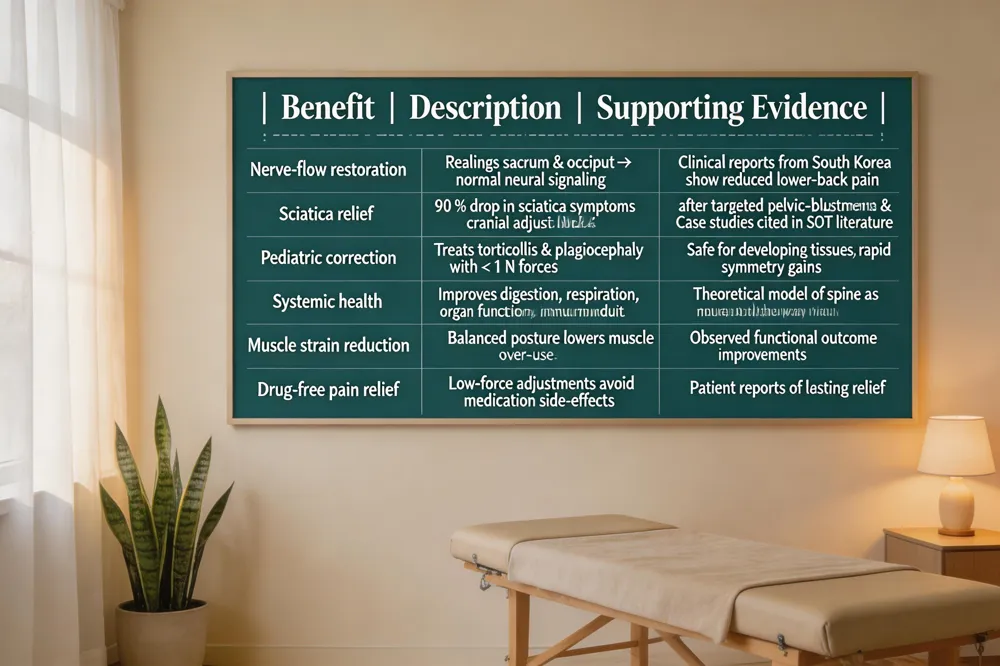 Sacro‑Occipital Technique (SOT) gently realigns the sacrum and occiput, restoring normal nerve flow and improving overall nervous‑system function. Clinical reports from South Korea and case studies show reduced lower‑back pain, a 90 % drop in sciatica symptoms, and better functional outcomes, while pediatric applications help correct torticollis and plagiocephaly with forces under 1 N. Proper spine alignment is essential because the spine is the conduit for neural signals that regulate digestion, respiration, organ health, and immune response; misalignments can cause abnormal nerve impulses that lead to pain, stiffness, and systemic dysfunction. Regular low‑force SOT adjustments promote balanced posture, reduce muscle strain, and support the body’s self‑healing mechanisms, offering a drug‑free alternative to pain relief. In chiropractic, the three T’s—thoughts, trauma, and toxins—are identified as primary contributors to subluxation. Stressful thoughts keep the nervous system in a sympathetic state, trauma (acute injuries or repetitive strain) creates mechanical disruptions, and toxins from diet or environment further impair neural communication. Addressing these factors alongside precise SOT adjustments creates a comprehensive, holistic pathway to lasting wellness.
Safety, Techniques, and Common Mistakes in Back Pain Care
| Aspect | Details | Precautions |
|---|---|---|
| Ring Dinger® method | Controlled Y‑axis pressure decompresses entire spine; non‑invasive | Screen out severe osteoporosis, recent fractures, infections, major neuro deficits |
| Three chiropractic methods | 1️⃣ Spinal manipulation – restores vertebral alignment 2️⃣ Soft‑tissue therapy – trigger‑point, myofascial release 3️⃣ Rehab exercises – core, posture, functional drills | Ensure proper assessment before combining techniques |
| Worst habit | Ignoring symptoms & maintaining harmful behaviors (prolonged sitting, slouching, heavy unilateral loads, poor footwear, smoking) | Early intervention & ergonomic corrections are essential |
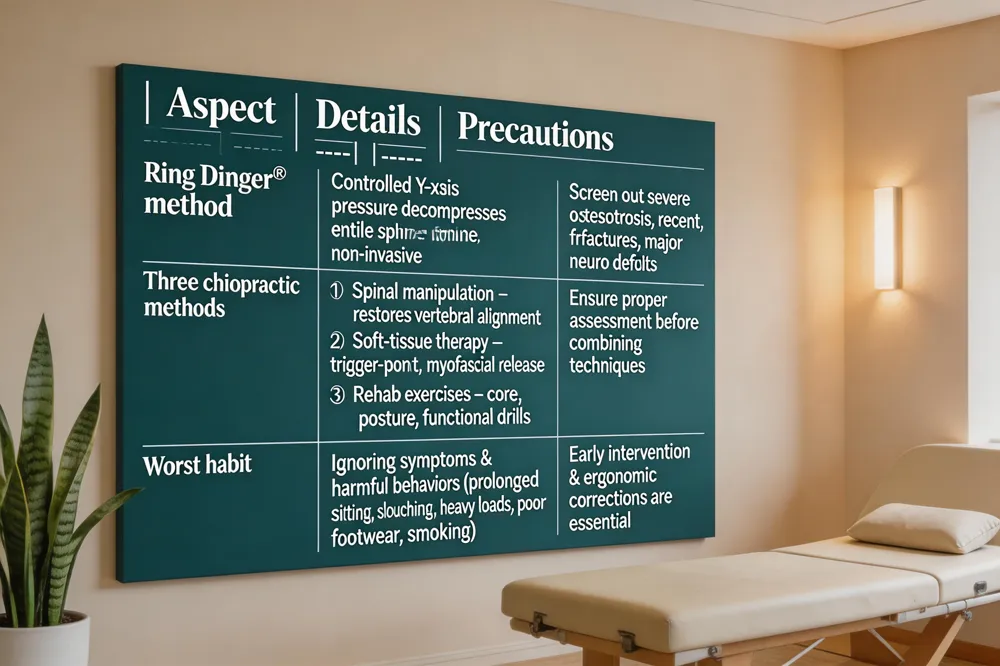 Is the Ring Dinger method safe? The Ring Dinger® adjustment is considered a safe, non‑invasive technique when performed by a trained, credentialed chiropractor. It uses a controlled, smooth pressure along the Y‑axis to decompress the entire spine, minimizing the risk of sudden, high‑velocity thrusts. Individuals with severe osteoporosis, recent fractures, uncontrolled spinal infections, or significant neurological deficits should be screened out before treatment. A qualified practitioner will evaluate medical history, conduct a thorough examination, and determine appropriateness. When precautions are followed, most patients experience relief without adverse effects.
What are three methods chiropractors use to treat back pain? 1. Spinal manipulation and adjustment – applying controlled forces to restore proper vertebral alignment and reduce nerve irritation. 2. Manual soft‑tissue therapies – trigger‑point work, myofascial release, and therapeutic massage to relieve muscle tension and improve flexibility. 3. Rehabilitative exercise programs – core‑strengthening, posture training, and functional movement drills to support the spine and prevent recurrence. These approaches are often combined into a personalized plan to reduce pain, improve motion, and promote natural healing.
What's the worst thing you can do for back pain? Ignoring symptoms and delaying treatment. Prolonged sitting, slouching, lifting with a bent‑over posture, sleeping on an unsupportive mattress, wearing poor shoes, neglecting core‑strengthening, carrying heavy bags on one shoulder, excess weight, and smoking all exacerbate strain and degeneration. The worst habit is doing nothing while maintaining behaviors that damage the back.
Beyond Pain: Height Gains, ALS, and the Science Behind SOT
| Phenomenon | Effect | Notes |
|---|---|---|
| Disc height restoration | Temporary ½‑1 inch increase as discs re‑hydrate | Not permanent growth; reflects natural spacing after decompression |
| ALS palliative role | May reduce muscular stiffness & improve nervous communication | Limited research; anecdotal reports only |
| Korean study outcomes | Lower‑back pain reduction, functional improvements, up to 90 % sciatica relief | Supports low‑force SOT efficacy |
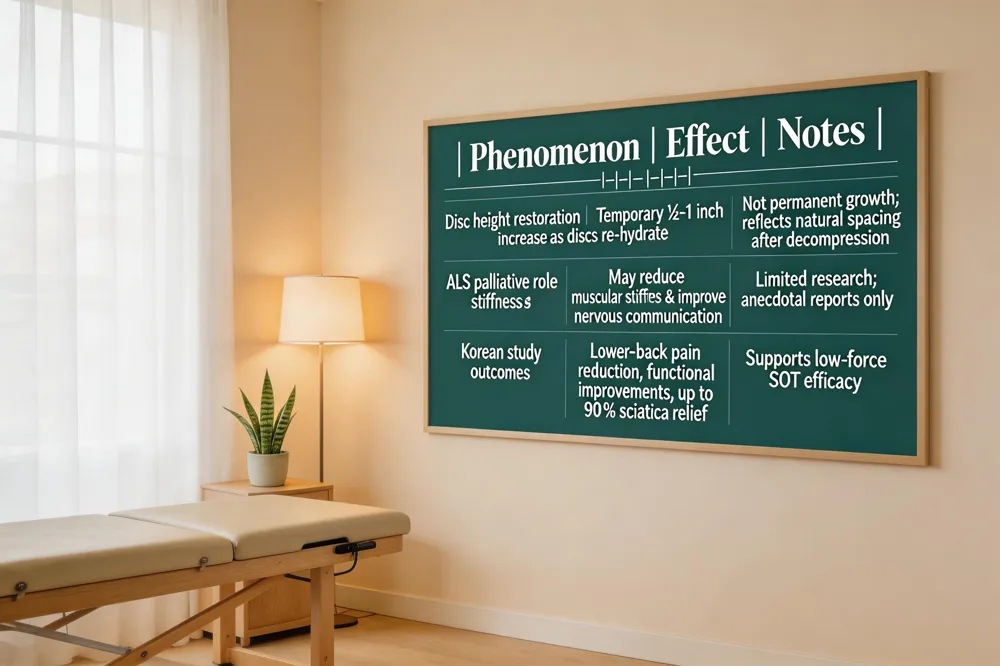 Spinal decompression, a core component of Sacro‑Occipital Technique (SOT), can temporarily restore disc height, often giving patients a modest boost of ½ to 1 inch as the hydrated discs expand. This gain is not permanent growth but a return to the spine’s natural spacing after compression. While Sacro‑Occipital Technique (SOT) is primarily used for musculoskeletal pain, some clinicians explore its palliative role for neuro‑degenerative conditions such as ALS. By easing muscular stiffness and improving nervous‑system communication, chiropractic care may alleviate ALS‑related discomfort, though dedicated research on ALS patients remains limited. Evidence for Sacro‑Occipital Technique (SOT)'s broader efficacy includes South Korean studies showing reduced lower‑back pain and functional improvements, as well as case reports of up to 90 % pain reduction in sciatica after targeted pelvic‑block and cranial adjustments. These findings support Sacro‑Occipital Technique (SOT) as a gentle, low‑force option for pain relief and modest functional gains.
SOT Diagnostic Categories and Pelvic Blocking Explained
| Category | Dysfunction | Treatment Approach |
|---|---|---|
| I | Primary sacroiliac joint dysfunction (pelvic torsion) | Triangular pelvic blocks + breathing‑driven self‑correction |
| II | Sacroiliac instability (hyper‑mobility) | Same block technique, emphasize ligamentous support |
| III | Lumbar disc involvement (nerve irritation) | Targeted cranial work + pelvic blocks to restore neutral sacral base |
| Pelvic blocking | Uses patient weight & breath to guide realignment | Low‑force, gravity‑based, minimal discomfort |
| Cranial work | Light occipital pressure to free dura & CSF flow | Enhances nervous‑system communication |
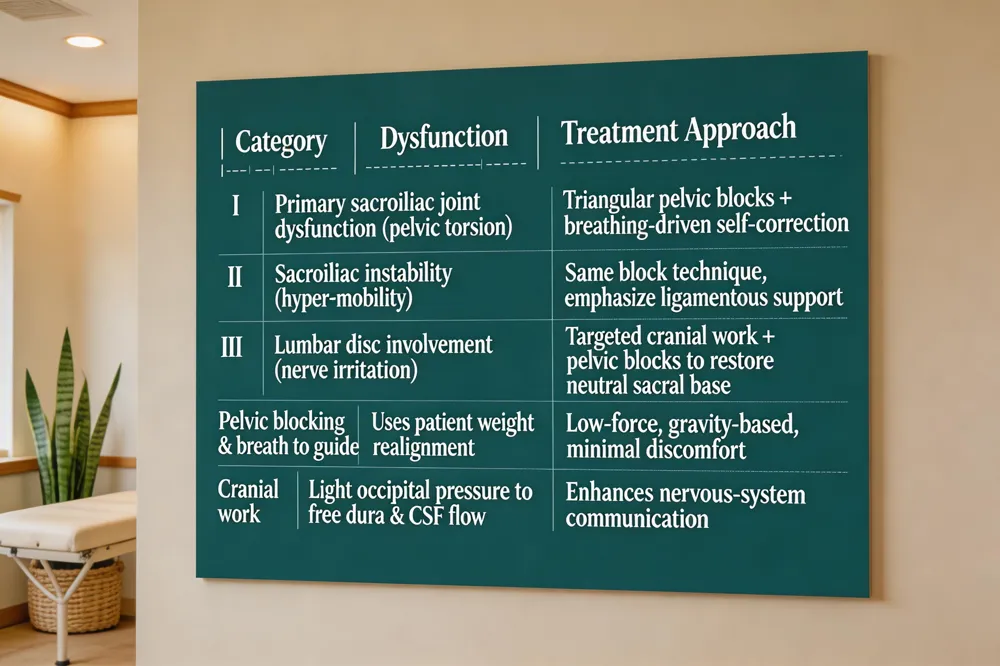 Sacro‑Occipital Technique (SOT) categorizes structural dysfunction into three diagnostic groups. Category I addresses primary sacroiliac joint dysfunction, often seen as a pelvic torsion that disrupts the sacrum‑occiput relationship. Category II involves sacroiliac instability, where ligamentous strain creates hyper‑mobility and abnormal load transfer. Category III focuses on lumbar disc involvement, indicating that disc pathology is contributing to nerve irritation and altered biomechanics.
To correct these imbalances, SOT employs triangular pelvic blocks placed under specific points of the pelvis. The blocks use the patient’s own body weight and breathing to encourage self‑correction, gently realigning the sacroiliac joints and restoring a neutral sacral base. This low‑force, gravity‑based approach minimizes discomfort while promoting lasting pelvic symmetry.
Cranial work is another core component. By applying light, precise pressure to the occipital region, the practitioner aims to release restrictions in the dura mater and improve cerebrospinal fluid flow. Enhanced CSF dynamics help normalize nervous‑system communication, supporting overall tissue health and pain relief.
Pediatric and Special Populations: Gentle SOT for All Ages
| Population | Application | Key Points |
|---|---|---|
| Infants & toddlers | Treat torticollis & plagiocephaly with occipital & sacral adjustments | Forces < 1 N, safe for developing skull & pelvis |
| Pregnant patients | Pelvic blocks & cranial work to relieve pelvic strain | Non‑thrust, respects ligamentous laxity & fetal safety |
| Elderly (osteoporosis) | Gravity‑based pelvic blocks & gentle adjustments | Avoids high‑velocity thrusts, improves CSF flow & alignment |
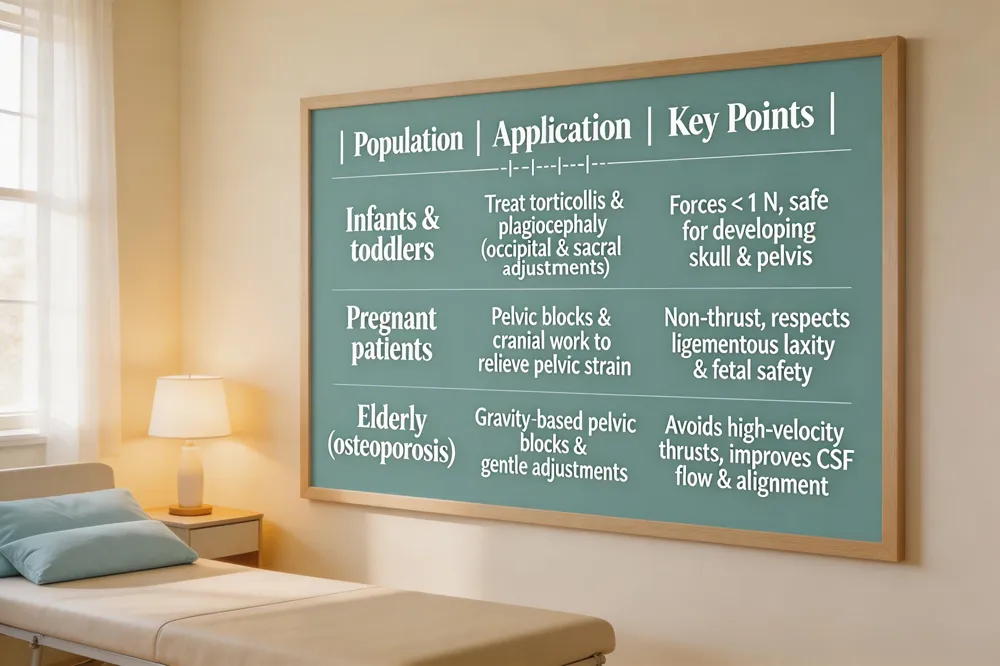 Sacro‑Occipital Technique (SOT) is uniquely suited for children because it relies on extremely low‑force (< 1 N) adjustments that are safe for developing tissues. In infants and toddlers, SOT is used to treat torticollis and plagiocephaly by gently realigning the occiput and sacrum, allowing the skull and pelvis to assume a more symmetric position while the child’s own weight and breathing facilitate correction. The same low‑force philosophy extends to pregnant patients, whose altered biomechanics and hormonal ligamentous laxity demand a non‑thrust approach; SOT’s pelvic blocks and cranial work relieve pelvic strain without jeopardizing fetal safety. Elderly individuals, particularly those with osteoporosis or reduced bone density, also benefit from the method’s hand‑on, gravity‑based adjustments that avoid high‑velocity forces while still improving spinal alignment, cerebrospinal fluid flow, and nervous‑system communication. Across these diverse groups, SOT’s gentle, body‑driven methodology provides a drug‑free, non‑invasive option that respects the unique anatomical and physiological considerations of each population.
Your Path to Balanced Health Starts Here
Ready to restore harmony between your sacrum and occiput? At Southeast Family Chiropractic in Gastonia, NC, our board‑certified chiropractors specialize in Sacro‑Occipital Technique, using gentle pelvic blocks, low‑force cranial work and individualized assessments. We begin with a thorough posture and leg‑length analysis, then tailor a series of SOT adjustments that address your specific Category I‑III patterns. Whether you suffer low‑back pain, sciatica, headaches, or prenatal discomfort, our personalized plan aims to improve nervous‑system function and promote lasting relief.