Understanding Sciatica and Its Impact on Health
What is Sciatica and Its Common Causes
Sciatica is a condition caused by compression or irritation of the sciatic nerve, the largest nerve running from the lower back down through the hips, buttocks, and legs. Common causes include herniated discs, spinal stenosis, spinal misalignment, degenerative disc disease, and muscle tightness, especially in the hips.
Symptoms and Challenges Faced by Individuals with Sciatica
Symptoms often include sharp or burning pain radiating down one leg, numbness, tingling, muscle weakness, and discomfort that worsens with sitting or coughing. These symptoms can significantly reduce mobility, lead to muscle heaviness, and impact daily activities, making timely intervention crucial.
Importance of Timely and Effective Treatment
Early diagnosis and treatment improve outcomes, reducing chronic pain and preventing long-term nerve damage. Non-invasive therapies like chiropractic adjustments, spinal decompression, and laser therapy offer effective, drug-free options to relieve nerve pressure, decrease inflammation, and restore mobility. Prompt care helps individuals avoid surgery and dependence on pain medications, enhancing overall quality of life.
The Role of Chiropractic Care in Managing Sciatica

What is chiropractic care and how can it benefit overall health?
Chiropractic care is a holistic, non-invasive health approach focusing on diagnosing and treating musculoskeletal issues, with special attention to spinal misalignments. It involves techniques such as manual joint manipulation and spinal adjustments that aim to improve mobility, reduce pain, and support the body's natural healing processes. Widely practiced in the United States, chiropractic care effectively addresses conditions like back pain, neck pain, headaches, and sciatica.
This care enhances nerve function, improves posture, and can boost overall wellness, including immune health and sleep quality. When performed by licensed professionals, chiropractic treatments are generally safe and research-backed, particularly benefiting those with acute and chronic pain. Regular visits provide a drug-free option for individuals across all ages to maintain health and prevent future musculoskeletal problems.
What types of chiropractic treatments are commonly offered to families and pregnant women?
For families and pregnant women, chiropractic care includes gentle spinal adjustments and specialized methods like the Webster Technique. This technique focuses on balancing the pelvis to promote optimal fetal positioning, which can ease pregnancy-related discomfort. Prenatal chiropractors also use massage therapy to relieve back pain, sciatica, and leg cramps during pregnancy.
These treatments help improve spinal and pelvic alignment and reduce nerve stress, supporting wellness throughout pregnancy. Rehabilitation exercises and postnatal care are often included to assist recovery and improve core stability after childbirth. Overall, chiropractic care during pregnancy is a safe, natural way to promote a healthier and more comfortable pregnancy.
How does a chiropractic practice ensure a patient-focused and accessible care experience?
Chiropractic practices prioritize clear, compassionate communication to foster trust and involve patients actively in treatment decisions. Employing person-centered care principles ensures respect and responsiveness to individual needs and preferences, enhancing patient engagement and satisfaction.
Practices use educational tools, advanced neurological scans, and objective data to build patient confidence and personalize treatments effectively. User-friendly online appointment systems and feedback channels improve accessibility and promote continuous care improvements. This combined approach creates a welcoming environment where patients feel informed, valued, and empowered on their healing journey.
Common chiropractic treatments for sciatica including spinal adjustments and decompression
Chiropractic care for sciatica often includes spinal adjustments to realign vertebrae and relieve nerve pressure. Spinal decompression therapy gently stretches the spinal column to reduce pressure on herniated or bulging discs, addressing a common root cause of sciatic pain.
Soft tissue therapies like massage and myofascial release target muscles such as the piriformis, which can irritate the sciatic nerve. These combined treatment strategies help reduce inflammation, improve circulation, and accelerate healing.
How chiropractic care addresses the root causes of sciatica
Chiropractic treatment aims at correcting spinal misalignments and restoring joint function, which eases compression on the sciatic nerve. By improving posture, mobility, and muscle balance, chiropractic care tackles the underlying causes of sciatica rather than just managing symptoms.
Through personalized evaluation—including medical history, physical exams, and imaging when necessary—chiropractors develop targeted plans that help prevent recurrence and improve overall spinal health, promoting long-term relief.
Laser Therapy: A Modern Adjunct to Chiropractic Treatment
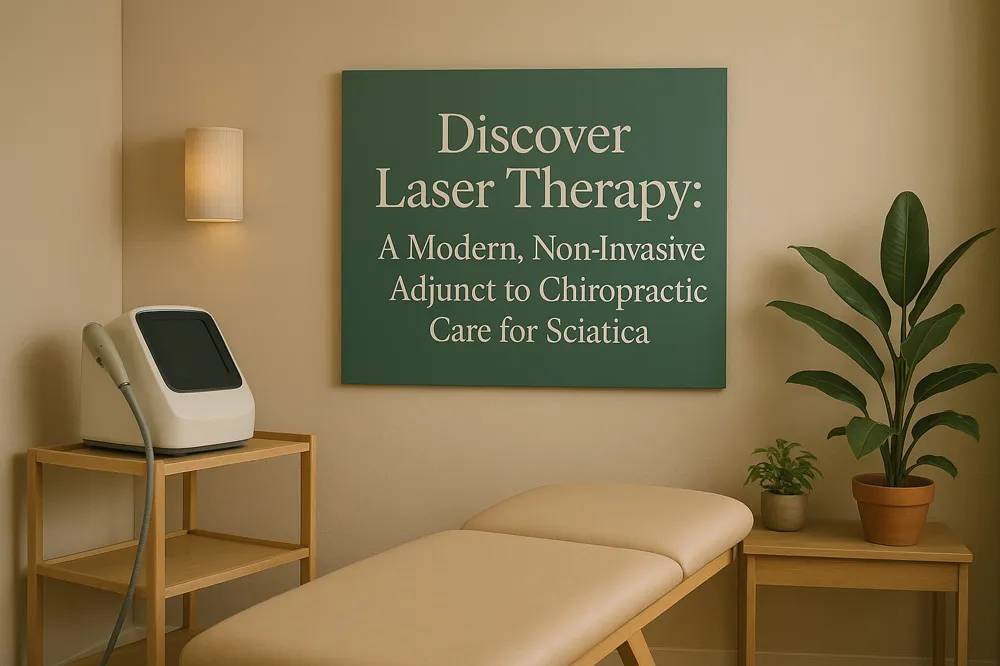
Overview of Laser Therapy and Its Mechanism
Laser therapy, often called Low-Level Laser Therapy (LLLT) or cold laser therapy, is a Non-invasive Pain Relief that utilizes focused light energy to stimulate cellular functions. The light penetrates deep into tissues, increasing cellular energy (ATP production) and activating repair mechanisms. This Photobiomodulation Benefits enhances blood flow, reduces inflammation, and promotes tissue regeneration, helping in the healing of muscles, joints, nerves, and soft tissues.
Benefits of Cold Laser Therapy for Sciatica and Musculoskeletal Issues
Cold laser therapy benefits for sciatica and related musculoskeletal conditions include reducing inflammation and swelling around the sciatic nerve, thereby alleviating pain and improving mobility. The therapy accelerates healing by stimulating cellular repair in injured tissues and nerves while also promoting natural endorphin release for pain relief. Because it improves circulation and decreases nerve sensitivity, cold laser therapy supports the recovery of disc-related injuries, arthritis, and muscle strains commonly treated alongside Combining chiropractic care with laser therapy.
Safety, Non-Invasive Nature, and Typical Side Effects
This treatment is Drug-free Healing Method, non-invasive laser treatment, with patients typically experiencing no pain during sessions. Occasionally, mild warmth or temporary redness may occur at the treatment site, but no downtime is required. As a gentle therapy option, cold laser is especially suitable for those seeking alternatives to medication or surgery, making it an attractive complement to Chiropractic Care for Sciatica.
How Laser Therapy Complements Chiropractic Adjustments
Laser therapy combined with chiropractic care enhances chiropractic treatment by accelerating healing and reducing post-adjustment soreness. While Spinal Adjustments for Sciatica realign the spine and relieve nerve pressure, laser therapy addresses the inflammatory and cellular damage component, supporting faster tissue repair. This Combined chiropractic and laser therapy approach targets both the root causes and symptoms of conditions like sciatica, resulting in quicker pain relief, restored function, and decreased need for pain medications.
Clinical Support for Laser Therapy in the United States
Cold laser therapy is a recognized therapeutic modality widely used in the United States. It is FDA-approved and integrated into many chiropractic clinics as part of multimodal treatment plans. Research and clinical practice validate its role in enhancing neurological function and musculoskeletal rehabilitation when paired with chiropractic care. Patients often report immediate pain reduction and improved mobility through this combined approach, which is backed by health professionals aiming for natural, effective healing outcomes.
The Synergistic Effect: Combining Chiropractic and Laser Therapies for Sciatica
How combining chiropractic adjustments for sciatica with laser therapy for inflammation and repair accelerates healing
Chiropractic care and laser therapy work hand in hand to promote quicker recovery from sciatica causes and symptoms. Chiropractic adjustments for spinal alignment focus on realigning the spine and reducing nerve pressure, which directly targets the root causes like Herniated Discs and Sciatica and spinal misalignment. When paired with Benefits of laser therapy this approach not only relieves nerve compression but also enhances tissue healing by stimulating cellular regeneration.
Reduction of inflammation, pain, and swelling
Laser therapy uses light energy to decrease inflammation around the sciatic nerve and surrounding tissues. This reduction in inflammation helps to alleviate pain and swelling effectively. Chiropractic adjustments complement this by improving joint mobility and reducing mechanical stress, leading to a holistic decrease in discomfort.
Improved circulation and cellular repair at the nerve and soft tissue level
Laser therapy boosts blood circulation and increases cellular energy production (ATP), which accelerates tissue repair at the nerve and soft tissue level. This process aids in faster regeneration of damaged cells, enhancing nerve function and soft tissue recovery which Chiropractic care for sciatica stabilizes through spinal decompression and alignment improvements.
Potential to reduce dependence on pain medications
The combined therapy approach provides Drug-free sciatica relief without relying on pharmaceuticals. Patients often experience quicker restoration of mobility and less need for prescription pain medication as inflammation and nerve irritation diminish through targeted treatments.
Evidence-based multimodal treatment advantages
An integrated non-invasive sciatica treatment plan featuring chiropractic adjustments alongside laser therapy is supported by clinical research and professional practice in the United States. This evidence-based strategy addresses both the underlying causes and symptoms of sciatica, resulting in accelerated healing, improved long-term outcomes, and a decreased risk of surgery or chronic pain reliance.
| Treatment Aspect | Chiropractic Contribution | Laser Therapy Contribution |
|---|---|---|
| Root Cause Correction | Realigns spine, relieves nerve pressure | Stimulates cellular repair, reduces inflammation |
| Pain and Inflammation Management | Improves joint function | Decreases swelling and nerve sensitivity |
| Recovery Speed | Enhances mobility and function | Accelerates tissue healing and circulation |
| Medication Reduction | Offers drug-free pain relief | Supports natural healing minimizing medication use |
| Overall Treatment Outcome | Provides personalized alignment care | Complements with non-invasive energy therapy |
Rehabilitation and Preventive Strategies within Chiropractic Care for Sciatica

What rehabilitation treatments are available as part of chiropractic care?
Chiropractic rehabilitation offers a range of Non-invasive Sciatica Treatment to help patients recover from sciatica by improving mobility and reducing pain. Treatments include Spinal Adjustments for Sciatica to realign the spine, therapeutic exercises to strengthen and stretch key muscles, soft tissue therapies such as massage and myofascial release to relieve muscle tension, and Spinal Decompression Therapy to ease pressure on affected discs.
How do lifestyle modifications and posture guidance help prevent flare-ups?
Chiropractors provide personalized advice on Postural Corrections for Sciatica and ergonomic habits tailored to everyday activities like sitting, standing, and lifting. These modifications aim to reduce strain on the sciatic nerve, helping prevent recurring sciatica episodes.
Why are personalized treatment plans important?
Each patient’s sciatica differs in cause and severity, so chiropractic care begins with a thorough Evaluation for Sciatica Treatment to create individualized plans. Treatments combine Chiropractic Adjustments for Sciatica, exercises, soft tissue work, and lifestyle changes based on unique patient needs.
What role do targeted exercises play?
Exercises focused on strengthening the core, hips, and glutes support spinal alignment and reduce nerve irritation. Stretching exercises, especially for the hamstrings, help release tension in muscles that might compress the sciatic nerve.
How do soft tissue techniques aid recovery?
Massage and myofascial release therapies address knots and tightness in muscles around the lower back, hips, and buttocks. By enhancing circulation and reducing inflammation, these techniques relieve pressure on the sciatic nerve and promote healing.
When to Seek Chiropractic and Laser Therapy for Sciatica Relief
Recognizing symptoms indicating need for care
Sciatica symptoms often include sharp pain radiating down one leg, numbness, tingling, muscle weakness, and intensified discomfort when sitting or coughing. Early recognition of these signs is crucial to preventing worsening conditions.
Importance of early diagnosis and intervention
Prompt diagnosis improves treatment outcomes by addressing nerve compression before chronic damage occurs. Early intervention can prevent long-term pain and mobility loss.
Role of chiropractic evaluation including imaging and personalized plans
A chiropractic evaluation for sciatica involves reviewing medical history, conducting physical exams, and utilizing imaging such as X-rays. This comprehensive evaluation helps tailor individualized treatment plans combining spinal adjustments for sciatica, decompression, laser therapy for sciatica, and exercises.
Benefits of drug-free treatments over surgery or medications
Chiropractic and laser therapies offer non-invasive, drug-free alternatives that reduce dependence on pain medications and avoid surgical risks. Laser therapy enhances cellular healing and inflammation reduction, complementing spinal realignment.
Patient testimonials and clinical evidence supporting these treatments
Numerous patients report rapid pain relief, improved mobility, and decreased inflammation using combined chiropractic and laser care. Clinical studies validate accelerated nerve regeneration and reduction in sciatic pain treatment, supporting these effective approaches widely used in the United States.
Embracing Integrative Solutions for Lasting Sciatica Relief
Combining chiropractic care with laser therapy offers a powerful, non-invasive approach to tackle sciatica effectively.
Chiropractic adjustments realign the spine, relieving nerve pressure, while laser therapy reduces inflammation and promotes tissue repair. This synergy accelerates healing, diminishes pain and swelling, and restores mobility faster than either treatment alone.
Personalized treatment plans from skilled practitioners ensure each patient addresses specific causes and symptoms. Such tailored care not only relieves current pain but supports ongoing health.
Moreover, maintaining proper posture, regular exercise, and ergonomic habits helps prevent recurrences, enhancing long-term quality of life for sciatica sufferers.
This integrative strategy empowers patients to reduce medication reliance and avoid surgery, embracing natural healing and sustainable relief.