Introduction to Spinal Decompression
A Common Challenge
Back pain is a widespread issue, affecting millions of adults. In the United States alone, it is a leading cause of disability and one of the most common reasons people visit a doctor. It can impact anyone, from young adults to older individuals, with pain in the lower back being particularly prevalent due to the significant weight and stress this area supports.
The Core Goal of Therapy
Spinal decompression therapy addresses this challenge through a fundamental goal: to relieve pressure on spinal discs and nerves. It achieves this by gently stretching the spine, which can create space between vertebrae and reduce compression. This process is designed to alleviate discomfort and promote the body's natural healing mechanisms.
Purpose of This Information
This article provides clear, patient-focused information on non-invasive spinal decompression. It covers how the therapy works, the conditions it may help, and what to expect from treatment. Our aim is to offer a balanced overview to help you understand this option within the broader context of back pain management.
The Core Principles: What Is Spinal Decompression and How Does It Work?
Understanding Non-Surgical Spinal Decompression
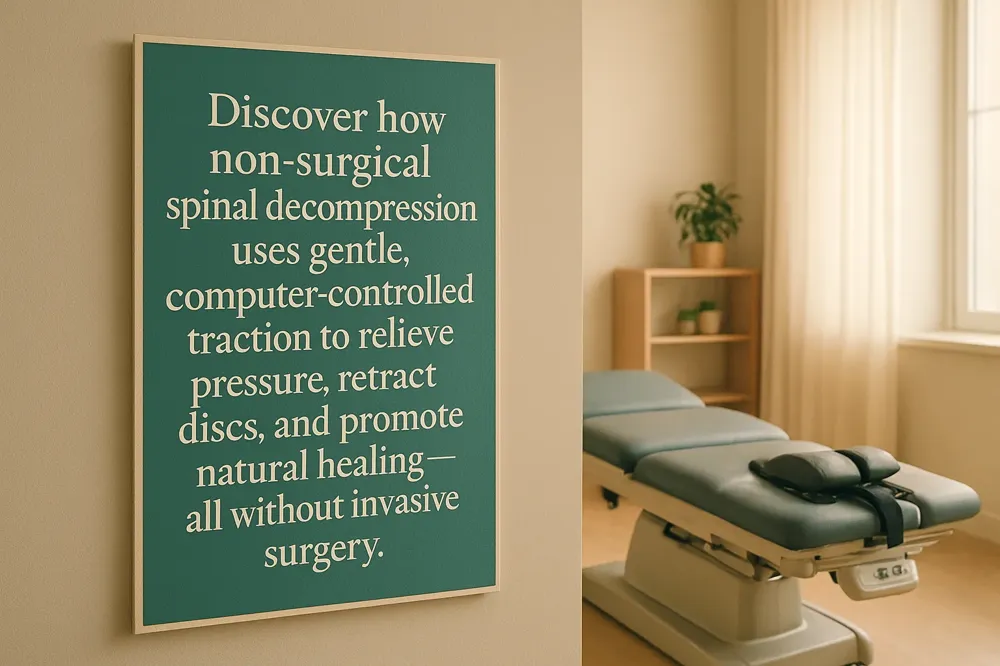
Non-surgical spinal decompression is a form of motorized traction therapy. It is a non-invasive back pain treatment designed to relieve back pain. The therapy aims to relieve pressure on spinal discs and nerves that often cause chronic discomfort.
This approach is commonly used as a conservative, first-line option before considering more invasive surgical procedures. It represents a key component in a stepped approach to spinal care, starting with less invasive methods.
The Mechanics of a Decompression Session
The procedure involves the patient lying fully clothed on a specialized, computer-controlled decompression table. A trained clinician fits harnesses around the patient's pelvis and sometimes the trunk to ensure stability. The computer then gently applies and releases precise, controlled traction therapy for spine forces.
A typical spinal decompression therapy session lasts between 30 and 45 minutes. Treatment plans often involve a series of 20 to 28 sessions, scheduled over a period of five to seven weeks. The process is generally described as painless and relaxing, with patients able to resume their daily activities immediately afterward with minimal downtime after treatment.
Creating Negative Pressure for Disc Retraction
The core physiological goal of this therapy is to create negative pressure within the discs. The gentle, cyclical stretching separates the vertebrae, which in turn reduces pressure within the intervertebral discs. This negative intradiscal pressure can encourage bulging or herniated discs to retract back toward their proper position.
By reducing the disc's protrusion, pressure on adjacent spinal nerves and nerve roots is relieved. This directly addresses the compression that causes symptoms like shooting pain, numbness, tingling, and weakness radiating into the arms or legs.
Promoting Nutrient Flow and Natural Healing
Beyond mechanical relief, the decompression therapy process is believed to support the disc's natural healing mechanisms. The alternating stretching and relaxation phases are thought to create a pumping action. This action draws oxygen, water, and nutrient-rich fluids from surrounding tissues back into the central disc space.
Improves blood flow for natural healing delivers vital nutrients to damaged or degenerated disc tissues. This improved environment can reduce inflammation and may facilitate the repair of annular tears in the disc wall. Over time, this can contribute to improved spinal health, flexibility, and strength.
Part of a Comprehensive Treatment Plan
Spinal decompression therapy is rarely used in isolation. It is typically one element within a broader, multi-faceted treatment strategy. Clinicians often combine it with other modalities to enhance overall outcomes and address different aspects of the patient's condition. Common complementary therapies include:
- Physical therapy for back pain: To rebuild core strength and improve posture.
- Chiropractic care for back pain: For spinal alignment and joint mobility.
- Nerve stimulation (TENS): To manage pain and relax muscles.
- Heat/Cold Therapy or Ultrasound: To reduce inflammation and promote tissue healing.
This integrated approach aims for maximum relief and helps patients regain and maintain function over the long term.
| Treatment Component | Primary Function | Typical Session Details |
|---|---|---|
| Motorized traction for the spine | Applies controlled stretch/relax forces to the spine. | Computer-controlled; 30-45 minute sessions. |
| Negative pressure within the discs | Aims to retract bulging discs into position. | Created by precise spinal elongation. |
| Nutrient Promotion | Enhances nutrient delivery to spinal discs. | Achieved via cyclical pumping action. |
| Adjunctive Therapies | Complements decompression for holistic care. | Includes PT, chiropractic, stimulation. |
Who Can Benefit? Conditions Treated and Patient Candidacy
What conditions can benefit from non-surgical spinal decompression?
Non-surgical spinal decompression therapy offers a targeted, non-invasive approach for several common spine-related conditions. It effectively treats herniated discs, bulging discs, and degenerative disc disease by gently stretching the spine to relieve pressure on nerves. The therapy is also a proven solution for pain relief from spinal stenosis, sciatica, and pinched nerves.
Other conditions that may benefit include posterior facet syndrome, which involves worn spinal joints, and injured or diseased spinal nerve roots. By creating space within the spine, the treatment aims to address the root cause of pain and dysfunction, not just the symptoms.
How do I know if I am a candidate for spinal decompression therapy?
Candidates typically experience persistent back or neck pain that has not resolved with initial conservative care. Common symptoms include pain radiating into the arms or legs, along with associated numbness, tingling, or muscle weakness.
Ideal patients are often those for whom other treatments—such as oral medications, physical therapy, or limited rest—have provided insufficient relief and who wish to explore non-surgical spinal decompression therapy options. A successful outcome depends on proper patient selection.
The Candidacy Evaluation Process
Determining suitability requires a comprehensive professional evaluation. This process includes a detailed review of your medical history and current symptoms. A physical examination helps assess your range of motion, strength, and neurological function.
Diagnostic imaging is a critical component. Your doctor will likely review MRI or CT scans and X-rays to confirm the diagnosis, visualize the spinal structures, and precisely locate areas of nerve compression or disc damage.
Important Contraindications and Risks
Spinal decompression is not suitable for everyone. Certain conditions can make the therapy unsafe. Key contraindications include pregnancy, spinal fractures, tumors, and abdominal aortic aneurysm.
Other factors that may preclude treatment are advanced osteoporosis, the presence of metal spinal implants or prior spinal fusion, and advanced spondylolisthesis. A thorough medical screening is essential to identify these conditions and minimize potential risks of spinal decompression.
| Condition Commonly Treated | Primary Symptoms Addressed | Typical Candidate Profile | Common Diagnostic Tools Used |
|---|---|---|---|
| Herniated/Bulging Disc | Radiating pain, numbness, sciatica | Persistent pain, failed other conservative care | MRI, Physical Exam |
| Spinal Stenosis | Leg pain, cramping when walking | Mild to moderate stenosis, seeking non-surgical relief | MRI, CT Scan |
| Degenerative Disc Disease | Chronic ache, stiffness | Individual with age-related disc changes | X-ray, MRI |
| Sciatica/Pinched Nerve | Sharp shooting pain, tingling down leg | Radiating symptoms into limbs | MRI, Nerve Conduction Study |
| Posterior Facet Syndrome | Localized back pain, stiffness | Pain from worn spinal joints | Physical Exam, Diagnostic Imaging |
The Treatment Experience: Session Details and What to Expect
How long does a spinal decompression therapy session last, and how many are typically needed?
A single session of non-surgical spinal decompression therapy typically lasts between 30 and 45 minutes. Patients remain fully clothed and lie comfortably on a computer-controlled, motorized traction table.
A standard spinal decompression therapy plan usually involves a series of 20 to 28 sessions scheduled over five to seven weeks. The exact number and frequency are personalized based on your specific diagnosis, pain level, and how you respond to initial treatments.
A Personalized, Computer-Controlled Process
The therapy involves gentle, incremental stretching of the spine. A harness is placed around your pelvis and trunk, and the computer-controlled table applies a precise, gentle traction force. The machine typically cycles through periods of stretch and relaxation.
This process is designed to be painless and relaxing for most patients. The goal is to create negative pressure within the discs, which may help retract bulging or herniated discs and promote healing.
Common Adjunctive Therapies
Spinal decompression is often part of a comprehensive treatment plan. Your practitioner may combine it with other therapies to enhance results. Common adjunctive treatments administered before or after a decompression session include:
- TENS nerve stimulation to relax muscles.
- Ultrasound therapy to promote soft tissue healing.
- Heat or Cold Therapy to manage inflammation and soothe muscles.
Preparing for and Recovering from a Session
Proper preparation and aftercare are important parts of the treatment process. Here is a brief overview of common pre- and post-session guidance.
| Preparation Phase | Action/Advice | Purpose/Benefit |
|---|---|---|
| Before Session | Drink plenty of water. | Keeps muscles and discs hydrated for a more effective stretch. |
| Before Session | Take recommended supplements. | Aids the body’s healing response to the therapy. |
| After Session | Apply cold or heat packs. | Relaxes muscles and prevents inflammation post-treatment. |
| After Session | Perform prescribed home exercises. | Maintains and enhances the benefits between appointments. |
| After Session | Continue to stay hydrated. | Aids muscle repair and overall tissue recovery. |
Patients can typically resume normal daily activities immediately after a session with minimal downtime.
Weighing the Options: Benefits, Risks, and Effectiveness

How effective is non-surgical spinal decompression?
Non-surgical spinal decompression therapy can provide relief for conditions like herniated discs and spinal stenosis. Some studies report notable improvement. For instance, one outcome study found it effective in 71% of cases, while a clinical trial observed a 68% improvement in pain for chronic low back pain with disc herniation. Many patients report reduced pain and better mobility after a series of treatments.
However, the overall body of scientific evidence has significant limitations. Many studies are small, lack proper control groups, or have potential conflicts of interest. More high-quality research is needed to conclusively determine its effectiveness compared to other conservative treatments like physical therapy or chiropractic care. It is not a one-size-fits-all solution and is not suitable for everyone.
What are the pros and cons of spinal decompression therapy?
Spinal decompression therapy is a non-invasive treatment that offers several potential advantages.
Benefits:
- Non-Invasive: Avoids the risks and lengthy recovery associated with surgery.
- Promotes Healing: Creates negative pressure to retract bulging discs and may improve nutrient flow to damaged tissues.
- Symptom Relief: Reduces nerve compression, alleviating pain, numbness, and tingling.
- Minimal Downtime: Sessions are typically painless, and patients can often resume normal activities immediately.
- Avoids Medication: Can provide pain relief without relying on pharmaceuticals.
Considerations:
- Evidence is Evolving: Scientific support is promising but not yet definitive compared to other treatments.
- Time Commitment: A typical course requires multiple sessions over several weeks.
- Cost: May not be covered by all insurance plans.
- Not for Everyone: It has specific contraindications, such as pregnancy, spinal implants, or severe osteoporosis.
Are there any side effects or risks associated with spinal decompression therapy?
The risks associated with non-surgical spinal decompression are generally minimal, especially when compared to surgical options. Most side effects are mild and temporary.
Common Temporary Effects:
- Muscle soreness or stiffness in the treated area.
- A feeling of achiness for a day or two post-treatment.
Rare Risks:
- Increased pain or muscle spasms during or after a session.
- Aggravation of an existing condition, such as a sudden progression of a disc protrusion (a very rare but documented adverse event during decompression therapy).
Risks are significantly minimized with proper patient screening. A thorough evaluation, including a review of medical history and diagnostic imaging, is crucial to identify contraindications and ensure patient safety. Treatment should always be administered by a qualified practitioner.
| Treatment Aspect | Key Benefit | Key Limitation/Risk | Important Context |
|---|---|---|---|
| Approach | Non-invasive, no surgery | Not a cure for all spinal conditions | Targets specific issues like herniated discs |
| Evidence | Some studies show effectiveness | Many studies have methodological flaws | More research needed vs. other treatments |
| Safety | Generally low-risk, minimal downtime | Temporary soreness common | Severe risks rare with proper screening |
| Patient Suitability | May help avoid invasive surgery | Contraindications exist (e.g., implants) | Requires professional evaluation first |
Practical Considerations: Cost, Insurance, and Lifestyle During Treatment

What is the cost of non-surgical spinal decompression therapy, and is it covered by insurance?
A typical treatment session for non-surgical spinal decompression therapy lasts 30 to 45 minutes and costs between $50 and $250. Most treatment plans recommend a full course of 20 to 28 sessions over five to seven weeks. Therefore, the total cost for a complete course typically ranges from $1,000 to over $5,000.
Insurance coverage for this therapy is inconsistent. Many private insurance companies, and government programs like Medicare, often classify it as 'experimental' or 'investigational' and do not provide coverage. It is crucial to contact your specific insurance provider directly to verify your policy's benefits. To help manage these out-of-pocket expenses, many clinics offer flexible payment plans or financing options.
When compared to the high financial and physical costs of invasive spinal surgery, which may have limited insurance approval itself, non-surgical decompression can represent a significant and valuable long-term investment in spinal health.
What should I avoid during a course of spinal decompression therapy?
During treatment, it is essential to protect your healing spine by avoiding activities that can re-compress discs or strain spinal structures. This requires conscious lifestyle adjustments. Here are specific activities and habits to avoid:
| Activity to Avoid | Why It's Problematic | What to Do Instead |
|---|---|---|
| Heavy lifting | Places significant pressure on spinal discs. | Let others lift or use proper form for light items. |
| Strenuous, high-impact exercise (e.g., running, jumping) | Creates jarring forces that can hinder disc healing. | Opt for low-impact activities like walking. |
| Prolonged sitting | Increases disc pressure and stiffness. | Take frequent breaks to stand and stretch. |
| Poor sleep positions (especially stomach sleeping) | Twists the neck and arches the back unnaturally. | Sleep on your side with a pillow between knees or on your back with a pillow under your knees. |
| Twisting or bending at the waist | Can aggravate nerve compression and disc issues. | Move your whole body when turning, and lift with your legs. |
| Dehydration | Impedes disc hydration and nutrient transport. | Drink plenty of water before and after your session. |
| Inflammatory foods & habits | Smoking and excessive alcohol slow healing and increase inflammation. | Maintain a balanced diet and avoid smoking. |
To support your recovery, focus on positive, supportive activities recommended by your therapist. This includes consistent, gentle walking, performing any prescribed home exercises, and ensuring proper hydration and nutrition. These habits help promote circulation, maintain spinal flexibility, and aid the body's natural healing process. Adherence to these guidelines, alongside regular therapy sessions, is crucial for achieving the best possible outcome.
Spinal Decompression for Special Populations: Pregnancy and Surgery Alternatives
Can spinal decompression therapy be done during pregnancy?
Spinal decompression therapy is not recommended during pregnancy. The harnesses, positioning, and mechanical forces used in these sessions are generally not suitable for the changing physiology of pregnancy. There are potential safety concerns for both the expectant mother and the developing baby.
Managing common pregnancy-related back pain
Back pain, particularly in the lower back and sciatica, is extremely common during pregnancy due to weight gain, postural changes, and ligament laxity. For relief, several safe and effective alternatives exist. Prenatal chiropractic care for back pain involves gentle, specific adjustments that can improve spinal alignment and pelvic balance. Specific therapeutic exercises tailored for pregnancy can strengthen supporting muscles and improve flexibility. Supportive care, such as using maternity belts or pillows for proper sleep posture, can also provide significant comfort.
Creating a safe treatment plan for pregnancy
It is essential to seek coordinated care. Always consult your obstetrician or midwife first to discuss your back pain and get medical clearance. Then, seek a chiropractor who is specifically trained and experienced in prenatal care. Together, they can create a personalized, safe treatment plan that addresses your unique needs without the risks associated with spinal decompression therapy.
What is the difference between surgical and non-surgical spinal decompression?
The core difference lies in the invasiveness and intent of the treatment. Surgical spinal decompression options procedures, such as a laminectomy or discectomy, are invasive operations. Surgeons physically remove bone, ligament, or disc material to create space for compressed nerves or the spinal cord. These procedures permanently alter spinal anatomy and are typically considered a last resort.
The nature of non-surgical decompression
Non-surgical spinal decompression therapy is a gentle, mechanized therapy. It uses computer-controlled traction therapy for spine to gently stretch the spine, aiming to create negative pressure within the discs. This negative pressure may help retract bulging discs into position and promote the influx of healing nutrients. It is a restorative treatment focused on addressing the root cause of pain without incisions or removal of tissue.
Contrasting recovery and application
Recovery times starkly contrast the two approaches. Recovery from spinal decompression surgery often involves a hospital stay and can take months, with physical therapy playing a crucial role. Non-surgical spinal decompression requires minimal to no downtime, with patients often resuming normal activities immediately after a session. Surgery is reserved for severe cases where there is significant neurological deficit or when extensive conservative care has failed. Non-surgical spinal decompression is part of that comprehensive conservative care plan, offering a safe alternative to back surgery for conditions like herniated discs or spinal stenosis, with the goal of helping patients avoid surgery altogether.
| Treatment Aspect | Non-Surgical Spinal Decompression | Surgical Spinal Decompression |
|---|---|---|
| Procedure Type | Gentle, mechanized traction therapy | Invasive operation |
| Anatomical Change | Restorative; no removal of tissue | Removal of bone, ligament, or disc |
| Typical Downtime | Minimal to none | Weeks to months for recovery |
| Primary Goal | Relieve pressure & promote healing naturally | Surgically create space for nerves |
| Common Indications | Herniated disc, stenosis (mild/moderate) | Severe spinal stenosis, cauda equina syndrome |
Complementary Care and the Holistic Approach
A Multi-Faceted Approach for Best Results
Spinal decompression therapy is frequently most effective when integrated into a broader, personalized care plan. On its own, it works to create space within the spine and relieve direct pressure. However, a holistic strategy that incorporates complementary therapies can enhance healing, address underlying weaknesses, and help prevent future issues. This collaborative approach focuses on long-term wellness rather than just short-term symptom relief.
Complementary Therapies That Work Together
A comprehensive treatment plan often includes several evidence-supported methods alongside decompression. These therapies address different aspects of spinal health and recovery.
- Chiropractic Adjustments: Manual spinal manipulation helps to realign bones and improve joint function, working in tandem with decompression to restore proper spinal mechanics. Chiropractic care for back pain can be a key part of a multi-modal treatment for lower back pain.
- Physical Therapy & Exercise Rehabilitation: A tailored program of targeted exercises and stretches is crucial for regaining strength, improving flexibility, and stabilizing the core muscles that support the spine. This is a core component of many non-surgical spinal decompression programs and can be an excellent physical therapy for decompression plan.
- Therapeutic Massage: Massage helps relax tight muscles, improve circulation, and reduce inflammation, which can contribute to pain and limit mobility.
- Acupuncture: This technique can help manage pain and promote healing by stimulating the body's natural pain-relief mechanisms and improving energy flow. Acupuncture for spinal pain can be an effective alternative back pain therapy.
- Laser Therapy: Low-level laser therapy is used to reduce inflammation and pain at the cellular level, potentially speeding up the healing process for damaged tissues.
The Holistic Philosophy: Building a Healthier Spine
The goal of a holistic approach is to treat the root causes of back pain, not just the symptoms. This involves looking beyond the immediate injury to factors like posture, muscle imbalances, and joint health. By improving core strength, enhancing joint mobility, and correcting postural habits, patients can build a more resilient spine. This foundation supports the gains made during decompression sessions and contributes to lasting pain relief and improved function in daily life, a primary goal of spinal decompression therapy.
Supportive Practices for Home Care
Successful recovery extends beyond the clinic. Patients are often advised to incorporate specific practices into their daily routines to support their treatment and maintain spinal health.
- Decompression Stretches & Exercises: Simple, guided movements can be performed at home to complement clinical care. Common examples include:
- Knee-to-Chest Stretch: Lying on your back, gently pull one or both knees toward your chest to stretch the lower back.
- Cat-Cow Stretch: On all fours, alternately arch and round your back to improve mobility in the upper and mid-back.
- Pelvic Tilts: Lying with knees bent, flatten your lower back against the floor to engage and strengthen abdominal muscles.
- Proper Sleep Postures: Adopting spine-friendly sleeping positions can reduce nighttime pressure. For side sleepers, bending the knees slightly with a pillow between them can help. For back sleepers, placing a pillow under the knees can maintain a neutral spine position. Improving sleep posture for back pain is a valuable supportive practice.
- Supportive Braces: In some cases, a healthcare provider may recommend a supportive back brace for short-term use during activities to provide stability and remind the body of proper alignment. For example, devices like the Lordoloc brace or Medi Brace are designed for temporary relief and alignment support.
Personalized, Patient-Focused Care
Modern chiropractic and rehabilitation practices emphasize a patient-centered model. Treatment is not a one-size-fits-all protocol. It begins with a thorough assessment—including medical history, imaging, and physical examination—to create a customized plan. This plan evolves based on the patient's progress, response to therapy, and personal goals, ensuring care is tailored to their unique needs and lifestyle.
| Complementary Therapy | Primary Action | Typical Treatment Goal |
|---|---|---|
| Chiropractic Adjustments | Realigns spinal joints | Restores proper movement and nerve function |
| Physical Therapy | Strengthens core muscles | Improves stability and prevents re-injury |
| Therapeutic Massage | Releases muscle tension | Reduces pain and improves range of motion |
| Acupuncture | Stimulates natural healing | Manages pain and reduces inflammation |
| Home Exercises | Maintains spinal flexibility | Supports long-term posture and strength |
Taking the Next Step Toward Relief
Spinal Decompression as a Non-Surgical Solution
For individuals living with chronic back or neck pain due to conditions like herniated discs, sciatica, or spinal stenosis, non-surgical spinal decompression therapy offers a targeted path toward relief. This therapy employs gentle, computer-controlled traction to stretch the spine, creating negative pressure within the discs. This process can help bulging disc material retract, easing pressure on nerves and promoting the body's natural healing response by improving nutrient and oxygen flow to the affected area.
The Critical Role of Professional Evaluation
A successful outcome hinges on a thorough professional assessment. Spinal decompression is not suitable for everyone, and determining candidacy requires expert evaluation. A qualified practitioner will review your medical history, symptoms, and diagnostic imaging to ensure this therapy aligns with your specific condition. This careful screening process is vital for creating a safe, effective, and personalized treatment plan.
When to Seek a Consultation
If you experience persistent back or neck pain, especially with symptoms like numbness, tingling, or weakness radiating into your arms or legs, it's time to explore your options. Pain that does not improve with rest, over-the-counter pain relievers, or basic home care warrants professional attention. Consulting with a specialist can help identify the root cause of your discomfort and determine the most appropriate treatment pathway.
Your Path to Personalized Care
At Southeast Family Chiropractic in Gastonia, NC, we are committed to providing holistic, non-invasive care. If you are tired of living with pain and are interested in learning whether spinal decompression therapy is right for you, we encourage you to take the next step. Schedule a comprehensive evaluation with our experienced team. We will discuss your symptoms, review any previous tests, and work with you to develop a tailored plan focused on your recovery and wellness.
Embracing a Life with Less Pain
Choosing a non-surgical, holistic approach to spinal care can be a transformative decision. By addressing the underlying cause of your pain and supporting your body's innate ability to heal, you open the door to regaining mobility, reducing reliance on medications, and improving your overall quality of life. Relief and a return to the activities you enjoy are within reach.
| Core Concept | Professional Action | Patient Benefit |
|---|---|---|
| Therapy Suitability | Conducts medical history & imaging review | Ensures safe, personalized treatment plan |
| Treatment Goal | Applies gentle traction to create disc space | Reduces nerve pressure, promotes natural healing |
| Plan Development | Combines decompression with complementary therapies | Addresses pain holistically for enhanced results |
| Candidacy Check | Screens for contraindications like fractures or pregnancy | Protects patient safety and optimizes therapy effectiveness |
| Long-term Outcome | Focuses on root cause and rehabilitative support | Aims for lasting pain relief and improved functional mobility |