Why Early Detection Matters
Ankyloglossia, commonly called tongue‑tie, is a congenital restriction where the lingual frenulum is unusually short, thick, or tight, tethering the tongue tip to the floor of the mouth. This limited mobility impairs feeding—infants struggle to latch, milk transfer is reduced, and mothers experience painful nipples—while also hindering the precise tongue‑tip movements needed for consonants such as “t,” “d,” “l,” and “r,” leading to delayed or unclear speech. Over time, the altered oral posture can affect jaw development, palate shape, and overall facial growth, increasing the risk of crowding, malocclusion, and TMJ tension. A multidisciplinary, holistic model—combining pediatric dentists or ENT surgeons, lactation consultants, speech‑language pathologists, myofunctional therapists, and gentle chiropractic or bodywork—addresses each functional component, ensures proper healing after a laser frenectomy, and promotes optimal oral‑motor development, preventing long‑term physical and psychosocial complications.
Why Pediatricians Caution About Routine Tongue‑Tie Surgery
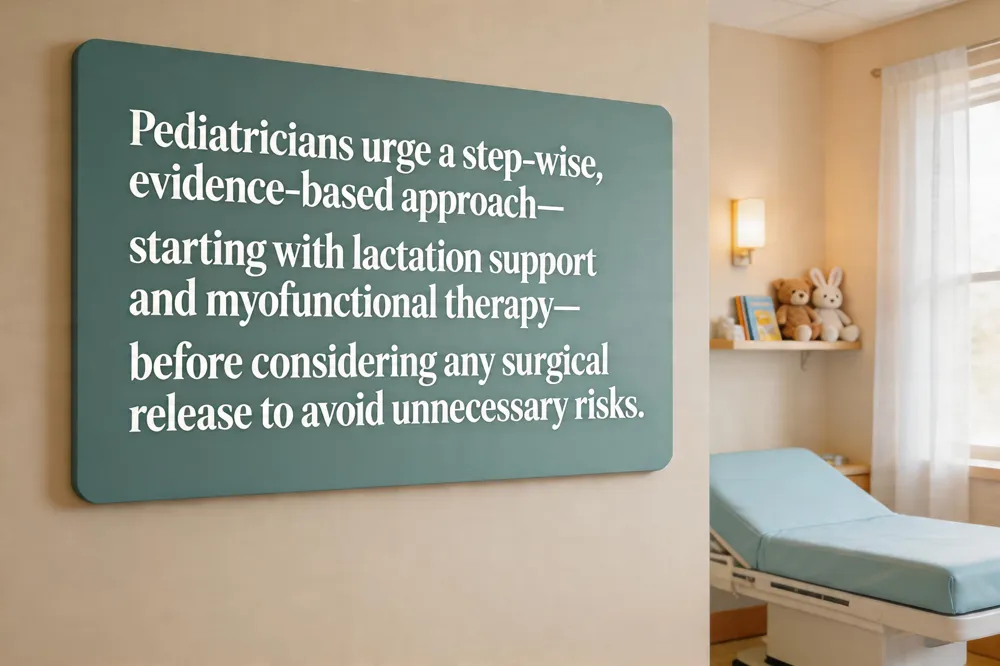 Pediatricians often oppose routine tongue‑tie surgery because the procedure carries real risks such as excessive bleeding, infection, scar tissue formation, and significant post‑operative pain that can lead to feeding aversion in infants. They note that many babies referred for frenotomy never actually need surgery—studies show roughly 60 % of those cases resolve with lactation support, feeding evaluation, and other non‑invasive interventions. Over‑diagnosis of ankyloglossia has caused a ten‑fold increase in surgeries, prompting clinicians to demand stronger evidence before operating. Pediatricians prioritize a multidisciplinary, evidence‑based pathway: initial screening, lactation consulting, myofunctional therapy, and speech‑language assessment are employed before considering any surgical release. When functional problems persist despite these conservative measures, a minimally invasive laser frenectomy or frenotomy may be indicated, but only after thorough documentation of feeding or speech deficits. This cautious stance protects infants from unnecessary harm while encouraging holistic care that addresses the root causes of oral‑motor dysfunction rather than relying on surgery as a first‑line solution.
Impact of Tongue‑Tie on Child Development
 Tongue‑tie (ankyloglossia) can hinder a child’s overall development.
Feeding challenges and nutrition – A tight lingual frenulum limits the infant’s ability to create a proper seal and generate the suck needed for efficient breastfeeding or bottle feeding. This often leads to prolonged feeding sessions, poor weight gain, and maternal nipple pain. Early frenectomy—especially with a CO₂ laser—restores tongue elevation and lateral movement, allowing rapid improvement in milk transfer and weight gain within days.
Speech articulation and school performance – Restricted tongue tip movement interferes with consonants that require precise placement (e.g., “t, d, n, l, r, s”)[https://www.coloradotonguetie.com/post/how-tongue-tie-affects-speech-development-across-different-ages]. Infants may babble late, and toddlers show unclear speech or mumbling. School‑aged children can develop sound substitutions, slower oral reading, and shyness, which may lower confidence and academic participation. Speech‑language therapy combined with myofunctional exercises after release yields the best articulation outcomes.
Dental, jaw, and facial‑bone considerations – Ankyloglossia can promote a high palate, crowding of lower front teeth, and altered mandibular growth. Over time, compensatory jaw or neck tension may produce TMJ discomfort or postural issues. Early release supports normal swallowing patterns, proper oral posture, and healthier facial bone development, reducing the need for later orthodontic work.
FAQs
- Does a tongue tie affect development? Yes. It can cause feeding difficulties, delayed speech, and dental/jaw misalignment, all of which can impede physical growth, school performance, and self‑esteem. Early evaluation and a minimally invasive frenectomy typically resolve these issues.
- What are red flags for speech delay in infants? Absence of babbling by 9 months, no first words by 15 months, and failure to combine words by 24 months are key warning signs. Persistent drooling, poor sucking or swallowing, and lack of response to name or loud noises also signal a possible tongue‑tie‑related delay and merit prompt professional assessment.
Identifying When a Baby Needs a Release
 Physical signs in the infant and mother
Infants with a restrictive lingual frenulum often show a shallow or painful latch, frequent clicking while nursing, prolonged feeding sessions that end in fussiness or weight‑gain problems. The tongue may appear heart‑shaped, cannot be lifted to the roof of the mouth, or fails to protrude past the lower lip. Mothers may experience cracked, sore nipples, bleeding, or clogged ducts because the baby cannot generate an effective suction. A lip‑tie presents as a thin, tight band of tissue attaching the upper lip to the gums, making it difficult for the baby to raise the lip during feeding.
Assessment tools used by Lactation consultants and speech‑language pathologists
Clinicians use visual grading systems such as the Kotlow classification and the Marchesan protocol, combined with functional tests of tongue elevation, lateralization, and protrusion. Lactation consultants watch a live feeding to assess latch quality, milk transfer, and maternal nipple pain, while speech‑language pathologists evaluate early consonant production (e.g., “t, “d,” “l,” “r”) and oral‑motor patterns. These objective measures help differentiate a harmless anatomic variation from a functional restriction that warrants intervention.
When to consider a frenotomy
If the assessment shows that the tie limits feeding efficiency, causes maternal nipple trauma, or hampers early speech sounds, a gentle frenotomy or laser frenectomy is usually recommended. Early release (within the first few months) often restores effective breastfeeding, prevents compensatory jaw or neck tension, and reduces the risk of later speech or dental issues.
How can I tell if my baby needs a tongue‑tie release?
Look for feeding problems such as a shallow or painful latch, frequent clicking, gagging, or long feeding sessions that result in poor weight gain. You may also notice a heart‑shaped tongue tip, an inability to lift the tongue to the roof of the mouth, or the tongue not extending past the lower lip. If the mother experiences sore, cracked nipples or the baby cries during nursing, these are additional clues. Have a pediatrician or a lactation consultant assess the lingual frenulum and the baby’s latch; they can determine whether the restriction is causing functional issues. When the evaluation shows that the tie is limiting feeding, speech development, or oral hygiene, a gentle frenotomy (tongue‑tie release) may be recommended.
What are the signs of a tongue or lip tie?
Signs of a tongue‑tie include difficulty latching or bottle‑feeding, a clicking sound while feeding, and poor weight gain despite frequent feeds. You may also notice a heart‑shaped or “tied‑down” tongue that cannot protrude past the lower lip or move side‑to‑side freely. A lip‑tie often shows as a thin, tight band of tissue connecting the upper lip to the gums, making it hard for the baby to raise the top lip during feeding. Both conditions can lead to speech problems, such as slurred or nasal sounds, and dental issues like gaps between the front teeth. Additional clues include frequent colic, gassiness from swallowed air, and sensitivity when brushing the upper gums.
Chiropractic Role in Tongue‑Tie Care
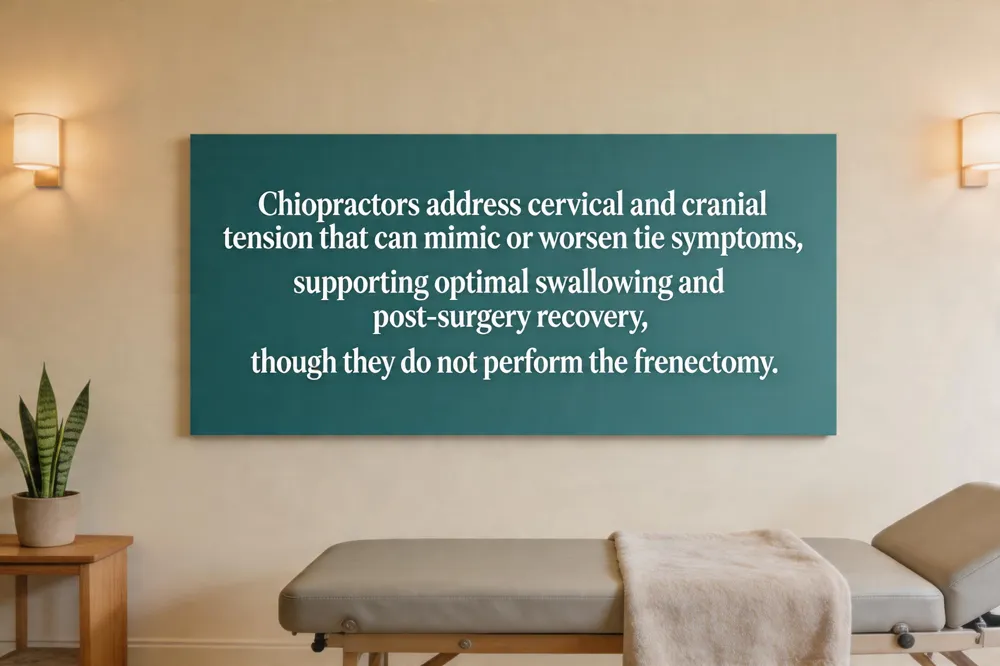
Gentle, low‑force chiropractic work improves neural signaling, promotes balanced swallowing patterns, and reduces the muscular strain that can exacerbate feeding or speech difficulties.
Pre‑procedure considerations include a thorough myofunctional assessment, identification of any cervical or cranial misalignments, and gentle adjustments to prepare the infant’s musculoskeletal system for a frenectomy. Post‑procedure care focuses on maintaining the new range of motion, preventing re‑attachment of the frenulum, and easing any residual jaw or neck tension that might cause discomfort during early speech practice. Regular follow‑up visits help keep the oral‑facial muscles relaxed and support the infant’s transition to normal feeding and speech milestones.
Can a chiropractor fix a tongue‑tie? No. The surgical release (frenectomy) is outside chiropractic scope, but chiropractors can treat related musculoskeletal issues that mimic or worsen tie symptoms, improving swallowing, breathing, and oral function before and after surgery.
Why might a baby be fussy after an adjustment? The gentle pressure releases accumulated tension, temporarily making the nervous system more sensitive. This mild irritability usually resolves within a few hours as the infant settles.
How to find a pediatric chiropractor near Gastonia, NC? Search for “pediatric chiropractor Gastonia, NC,” verify gentle low‑force techniques, check licensing and reviews, and consider local clinics such as Bannon Clinic of Chiropractic (411 E Franklin Blvd, (704) 864‑7774) or Thomas Chiropractic Center (1002 South New Hope Road, (704) 867‑6789). Contact the office to schedule a visit and confirm insurance coverage.
Long‑Term Outlook and Practical Considerations
 Untreated tongue‑ties in adults can lead to chronic jaw, neck, and facial muscle tension, often resulting in headaches, TMJ discomfort, and persistent speech unclear speech. Restrictions in tongue posture may promote mouth‑breathing, snoring, and an increased risk of obstructive sleep apnea, which can cause daytime fatigue and reduced concentration. Dental and orthodontic problems such as crowded teeth, narrow palate, and bite misalignments may persist or worsen over time, making later correction more difficult. Because of these physical and emotional strains, overall quality of life can be diminished.
Most health‑ and dental‑insurance plans cover a newborn frenectomy when it is deemed medically necessary for feeding, weight gain, or speech development. Coverage varies by state, insurer, and documentation, so verify benefits and any pre‑authorization requirements before scheduling.
Dentists—especially pediatric, oral‑surgery‑trained, or laser‑qualified practitioners—can perform frenotomy or frenectomy for tongue‑ties of any age. Referral to an ENT or oral surgeon may be needed for complex cases. There is no strict age limit; infants benefit from immediate improvement, while older children, teens, and adults may require sedation and post‑procedure therapy but still gain functional advantages.
Visual comparisons of normal versus tongue‑tie tongues are available on reputable sites such as the Mayo Clinic, American Academy of Pediatrics, and specialized oral‑health portals like TongueTie.net. These resources provide accurate, medically reviewed images for patient education.
Putting It All Together
Early, evidence‑based intervention protects feeding, speech, and facial development. When a tight lingual frenulum limits tongue elevation, lateralization, and extension, infants may struggle with latch, mothers endure nipple pain, and children later experience unclear articulation of sounds such as “t,” “d,” “l,” and “r.” Prompt diagnosis through a pediatric exam, lactation‑consultant observation, and functional tongue‑motion assessment allows a minimally invasive laser frenectomy to restore mobility within days. However, releasing the tissue alone is not enough; coordinated myofunctional exercises and speech‑therapy retrain the tongue and prevent compensatory jaw or neck tension. A collaborative team—pediatrician, lactation consultant, dentist, speech‑language pathologist, and chiropractor—provides the safest, most comprehensive pathway. Southeast Family Chiropractic in Gastonia offers gentle, infant‑specific adjustments before the release to ease oral‑muscle tension and again afterward to support proper alignment, helping families achieve smoother feeding, clearer speech, and healthier facial growth. This approach promotes well‑being child and peace of mind parents.