Introduction
Veteran wellness is a multidimensional effort that blends physical, mental, social, and spiritual health to support those who have served. A holistic approach matters because service‑related injuries, PTSD, and lifestyle changes often intersect, demanding coordinated care that goes beyond medication alone. By integrating nutrition, movement, mindfulness, chiropractic care, and community support, veterans can achieve lasting resilience and improved quality of life. This guide is designed to provide clear, evidence‑based strategies and resources—ranging from balanced diet tips and low‑impact exercise to mental‑health services and Whole Health coaching—so veterans can create personalized, sustainable wellness plans.
Understanding Whole Health: A Holistic Blueprint
Whole Health Core Principles & Circle of Health Components
| Core Principle | Description |
|---|---|
| Whole‑person focus | Addresses physical, emotional, social, and spiritual dimensions |
| Empowerment | Self‑care skill‑building and personal responsibility |
| Community‑based resources | Leverages local VA and veteran organizations |
| Prevention & early detection | Emphasizes proactive lifestyle choices |
Circle of Health Framework
| Component | Example Practices |
|---|---|
| Me | Personal health values & goals |
| Mindful Awareness | Meditation, breathing exercises |
| Moving the Body | Yoga, Tai Chi, walking, swimming |
| Surroundings | Home environment, ergonomics |
| Personal Development | Education, skill‑building |
| Food & Drink | Nutrition counseling, hydration |
| Recharge | Sleep hygiene, relaxation |
| Family/Friends/Co‑workers | Social support, group activities |
| Spirit & Soul | Spiritual practices, purpose finding |
| Power of the Mind | Positive psychology, resilience training |
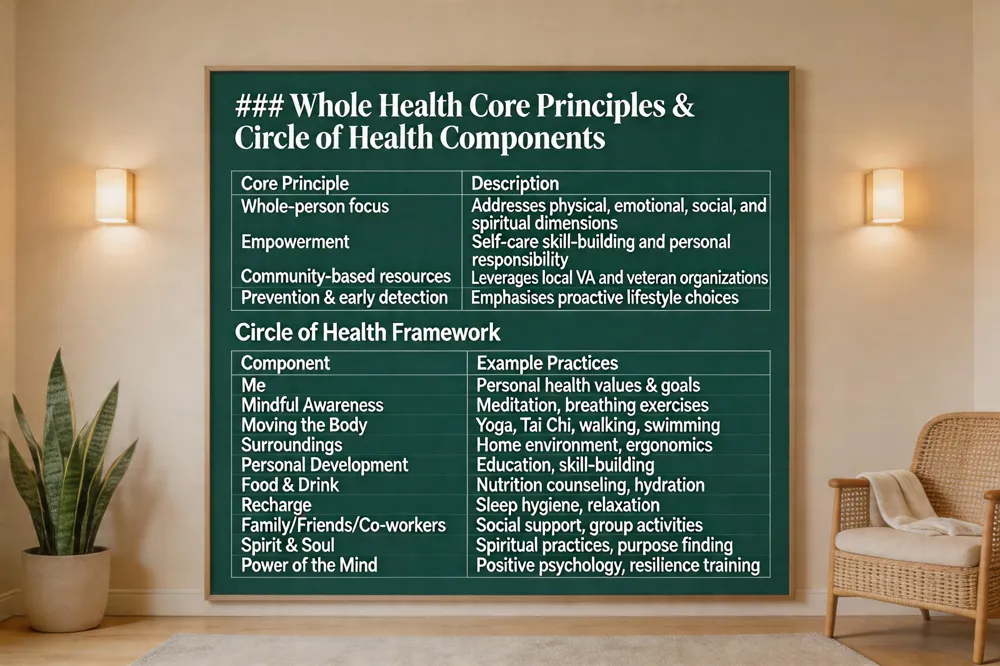 Whole Health is an integrative, patient‑centered philosophy that treats health as a dynamic resource for living well. It goes beyond treating disease by addressing physical, emotional, social, and spiritual dimensions, and by tackling behavioral, environmental, and social drivers such as nutrition, movement, relationships, and stress management. The VA’s Whole Health approach uses the Circle of Health framework—Me, Mindful Awareness, Moving the Body, Surroundings, Personal Development, Food & Drink, Recharge, Family/Friends/Co‑workers, Spirit & Soul, and Power of the Mind—to create personalized plans that blend conventional care with complementary services like chiropractic adjustments, yoga, Tai Chi, nutrition counseling, and mental‑health support. Core principles include: 1) a focus on the whole person rather than isolated symptoms, 2) empowerment through self‑care and skill‑building, 3) community‑based resources, and 4) prevention and early detection. Unlike disease‑focused care, which centers on diagnosing and treating specific illnesses, Whole Health emphasizes proactive lifestyle choices, interdisciplinary collaboration, and the therapeutic relationship to improve overall vitality and quality of life. This holistic blueprint enables veterans to achieve lasting well‑being by integrating evidence‑based medical treatment with mind‑body practices, nutrition, sleep hygiene, and social connection.
Whole Health Systems: Integrated Care for Veterans
Multidisciplinary Care Model & Integrated Therapies
| Discipline | Role in Whole Health System |
|---|---|
| Physician | Diagnosis, medical management |
| Nurse | Care coordination, education |
| Dietitian | Nutrition counseling, meal planning |
| Mental‑health Clinician | Therapy, stress reduction |
| Physical Therapist | Mobility, functional rehab |
| Chiropractor | Spinal adjustments, pain management |
| Wellness Coach | Goal setting, accountability |
| Peer Specialist | Veteran‑to‑veteran support |
Integrated Therapy Example
| Condition | Integrated Plan |
|---|---|
| Chronic low‑back pain | Chiropractic adjustment + PT exercise + mindfulness meditation + anti‑inflammatory diet |
| PTSD | Mind‑body practice (Yoga/Tai Chi) + counseling + sleep hygiene + community support |
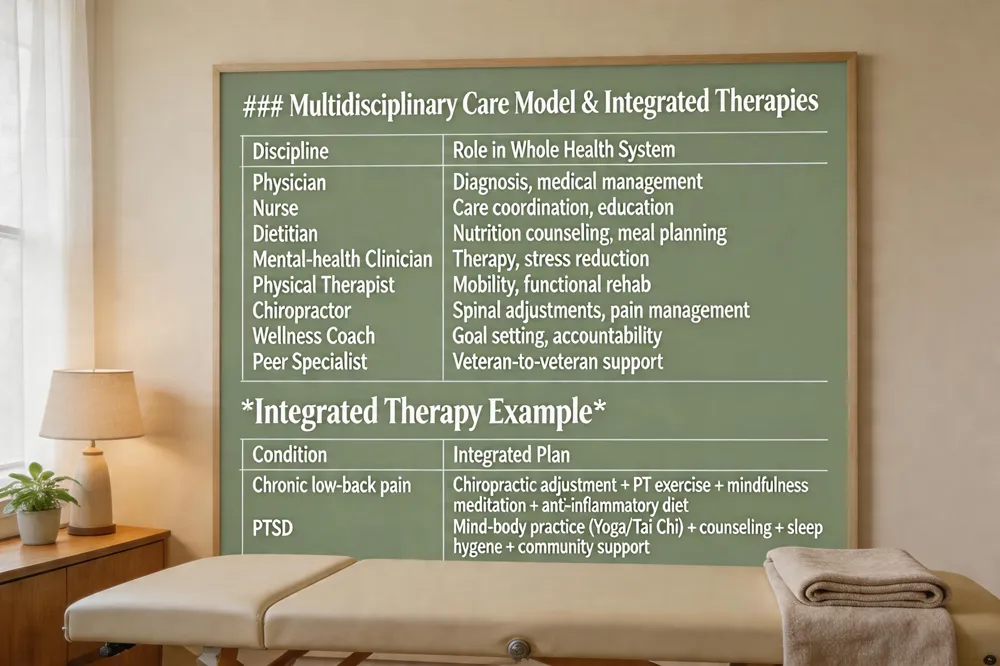 Whole health systems are patient‑centered, multidisciplinary care models that address the physical, mental, emotional, social, and spiritual dimensions of well‑being. They blend conventional Western medicine with complementary approaches—such as chiropractic adjustments, nutrition counseling, yoga, meditation, laser therapy, and acupuncture—to create personalized treatment plans that empower veterans to manage their health proactively.
Multidisciplinary care models: At VA facilities and partner organizations, physicians, nurses, dietitians, mental‑health clinicians, physical therapists, and chiropractors work together in shared clinics or virtual teams. This collaboration enables seamless referrals, coordinated goal setting, and unified documentation, reducing duplication and ensuring that each veteran’s needs are met holistically.
Integration of chiropractic with other therapies: Chiropractic care is offered alongside physical therapy, massage, and mind‑body practices. For example, a veteran with chronic low‑back pain may receive spinal adjustments, a tailored exercise program, mindfulness meditation, and dietary guidance to reduce inflammation—all delivered under a single care plan. Evidence shows such integration lowers opioid reliance and improves functional outcomes.
Patient‑centered coordination: Veterans co‑create a Personal Health Plan that outlines goals for movement, nutrition, sleep, stress reduction, and spiritual fulfillment. Whole Health coaches and peer specialists help track progress, adjust interventions, and connect veterans to community resources such as the Endeavors Veteran Wellness Center or VA’s Healthy Teaching Kitchens. This coordinated approach ensures continuity of care across settings and supports long‑term wellness.
Health and Wellness Coaching: Guiding Veterans Toward Sustainable Change
Wellness Coaching Process & Tools
| Step | Description |
|---|---|
| Assessment | Review current habits, barriers, and motivations |
| Goal‑setting | Create SMART goals (Specific, Measurable, Attainable, Realistic, Timely) |
| Action Planning | Develop step‑by‑step lifestyle plan (nutrition, activity, sleep, stress) |
| Monitoring | Regular check‑ins via phone/video/in‑person; use tracking apps |
| Adjustment | Modify plan based on progress and feedback |
| Accountability | Peer support, coaching reminders, progress reports |
Common Tools
| Tool | Purpose |
|---|---|
| MyHealtheVet app | Track health metrics, appointments |
| Goal‑tracking worksheets | Visual progress monitoring |
| Education handouts (e.g., balanced nutrition) | Knowledge building |
| Wearable activity trackers | Objective activity data |
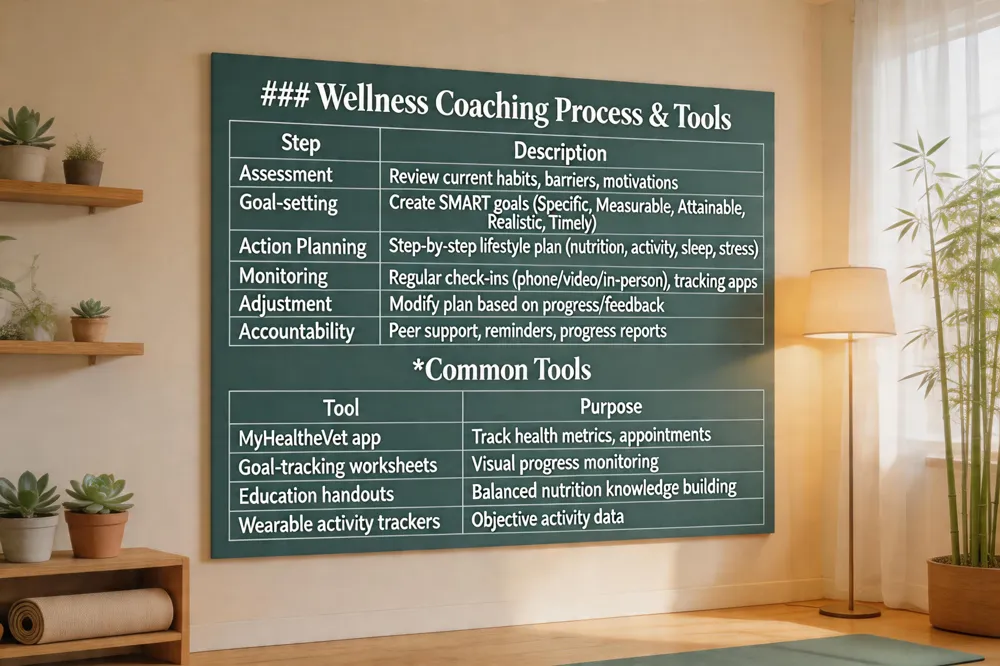 Health and wellness coaching is a collaborative partnership between a coach and client that helps translate health goals into actionable, sustainable lifestyle changes. In a chiropractic setting, the coach works alongside the chiropractor to address nutrition, physical activity, stress management, sleep, and other wellness factors that support spinal health and injury prevention. By identifying personal barriers and leveraging a client’s intrinsic motivation, the coach creates realistic, step‑by‑step plans and provides regular check‑ins—via phone, video, or in‑person visits—to keep momentum and accountability.
Role of a wellness coach – Coaches serve as educators, motivators, and accountability partners. They assess a veteran’s current habits, help set SMART (Specific, Measurable, Attainable, Realistic, Timely) goals, and guide the veteran toward evidence‑based practices such as balanced nutrition, low‑impact aerobic activity, and proper sleep hygiene. Many coaches hold credentials like the NBC‑HWC, ensuring adherence to ethical standards.
Collaboration with chiropractors – The coach and chiropractor coordinate care plans so that adjustments are reinforced by lifestyle changes. For example, a chiropractor may treat chronic back pain while the coach introduces daily stretching, core‑strengthening exercises, and mindfulness techniques that reduce inflammation and stress.
Goal‑setting and accountability – Regular progress reviews, goal‑tracking tools (e.g., MyHealtheVet apps), and supportive check‑ins create a feedback loop that sustains motivation. Veterans report higher satisfaction and better health outcomes when coaching is integrated into their overall wellness strategy.
Physical Activity & Mind‑Body Practices: Staying Active and Balanced
Low‑Impact Aerobic & Mind‑Body Options
| Activity Type | Examples | Primary Benefits |
|---|---|---|
| Low‑Impact Cardio | Walking, stationary biking, swimming, water aerobics | Improves cardiovascular health, weight management |
| Group Sports/Classes | MWR basketball, VA fitness classes, veteran community leagues | Social connection, accountability |
| Mind‑Body Practices | Yoga, Tai Chi, guided meditation | Reduces anxiety, PTSD symptoms, improves balance & flexibility |
| Strength & Flexibility | Bodyweight circuits, resistance bands, Pilates | Supports joint health, injury prevention |
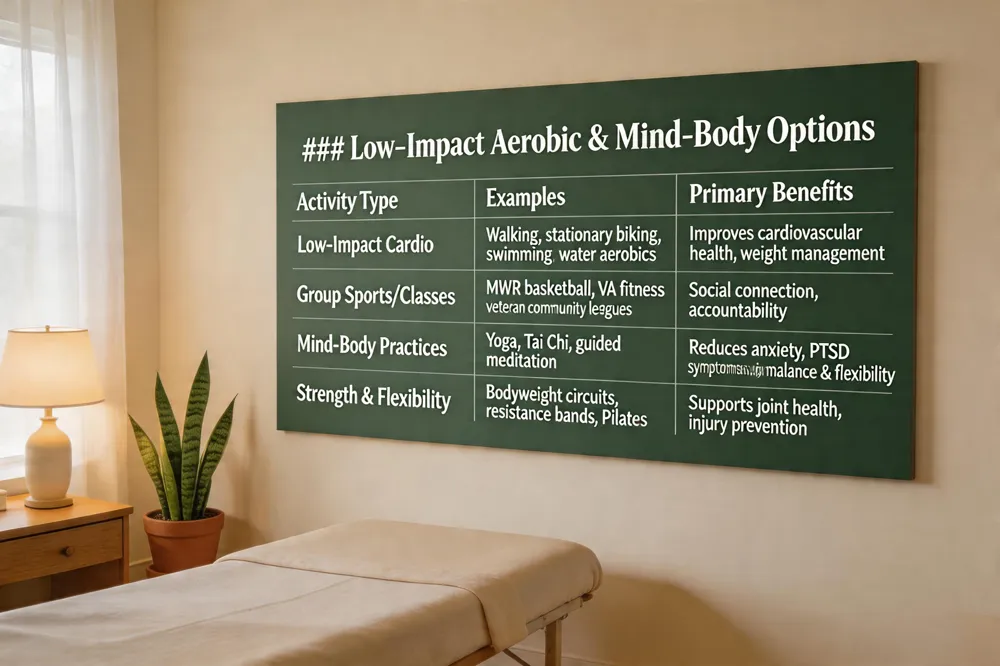 Low‑impact aerobic options such as walking, biking, and swimming are ideal for veterans who may have joint or back concerns; these activities raise heart rate, support cardiovascular health, and help maintain a healthy weight without aggravating service‑related injuries. Group sports and community fitness classes—often offered through Morale, Welfare and Recreation (MWR) programs, local VA Wellness Centers, or veteran‑focused organizations—provide accountability, camaraderie, and a structured environment that encourages consistent exercise. Mind‑body practices including Yoga, Tai Chi and meditation are highlighted across VA Whole Health resources and nonprofit veteran programs for their ability to lower anxiety, lessen PTSD symptoms, and improve mood while also enhancing balance, flexibility, and joint health. By integrating low‑impact cardio, social sport opportunities, and mindfulness‑based movement, veterans can achieve a balanced routine that supports both physical fitness and mental well‑being.
Beyond the Body: Mental Health, Nutrition, and Financial Wellness
Integrated Support Resources
| Domain | Resources | Key Actions |
|---|---|---|
| Mental Health | VA counseling, Telehealth, Wellness Command Post, Wounded Warrior Project | Attend therapy, join peer groups, practice mindfulness |
| Nutrition | VA nutrition counseling, Healthy Teaching Kitchens, balanced plate guide | Eat fruits/veg, whole grains, lean protein, hydrate 8 cups/day |
| Financial Wellness | Veteran Wellness Center workshops, budgeting webinars, benefits counseling | Create budget, manage debt, access VA benefits |
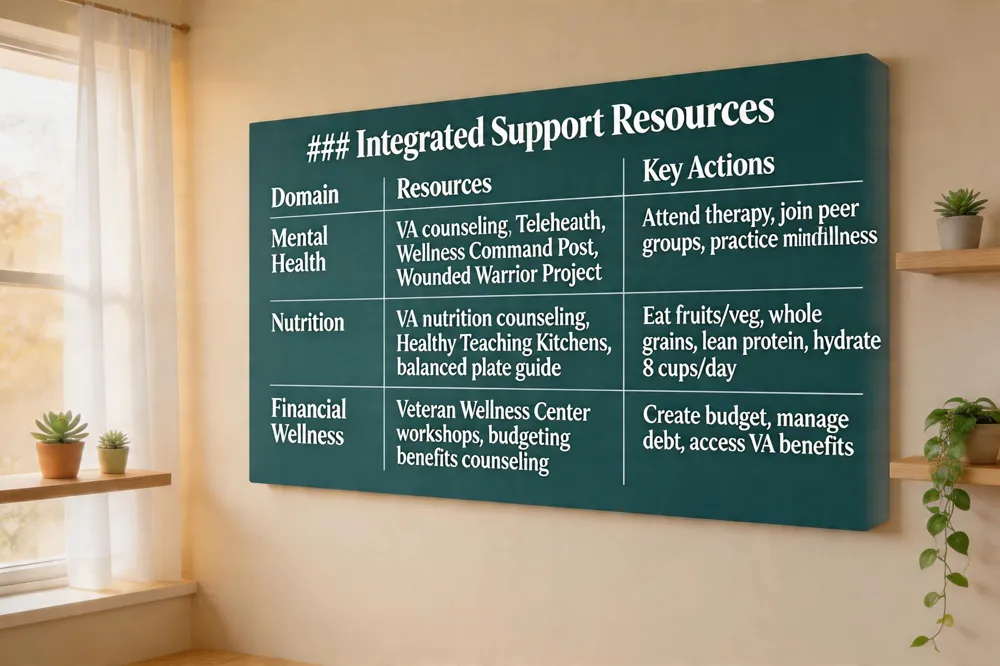 Veterans can protect mental‑health support through multiple channels. Professional counseling—available in‑person, via Telehealth, or in group settings—helps manage depression, PTSD, and anxiety while peer‑support networks and veteran‑focused programs such as the Wellness Command Post or the Wounded Warrior Project add camaraderie and shared coping strategies. Nutrition wise, a balanced plate rich in fruits, vegetables, whole grains, lean protein and healthy fats, combined with regular hydration (at least eight cups of water daily) and simple meal‑planning habits sustains energy, controls weight, and reduces inflammation. Financial stress, a known trigger for mental‑health challenges, can be mitigated by leveraging free financial‑literacy resources offered by the Veteran Wellness Center and community workshops that teach budgeting, debt management, and access to benefits. Together, these integrated approaches support a holistic, resilient post‑service life.
Conclusion
Veteran wellness hinges on a balanced blend of physical activity, nutritious eating, adequate sleep, and mental‑health support. Regular low‑impact exercise, mindful practices such as yoga or tai chi, and evidence‑based therapies like chiropractic care can reduce pain, improve mobility, and lessen reliance on medications. The VA’s Whole Health model encourages veterans to craft a personal health plan that integrates these components with spiritual and social well‑being. As a next step, schedule a chiropractic evaluation—either through a VA on‑site clinic or the Community Care Program—to address musculoskeletal concerns and receive a tailored maintenance schedule. Simultaneously, explore VA Whole Health resources, including nutrition counseling, mindfulness apps, and peer‑support groups. Leverage community assets such as local fitness classes, Veteran Wellness Centers, and free online tools (e.g., Move! Coach, Mindfulness Coach) to stay engaged, track progress, and build a supportive network. By combining professional care with accessible community and digital resources, veterans can sustain long‑term health and resilience.